Kinugawa Onsen
Near Nikko, Tochigi Prefecture, Japan
A large hotel spa town in the Kinugawa River gorge north of Nikko, under two hours from Asakusa by direct train, where most soaking is done at hotel day baths.
Photos: 掬茶 (CC BY-SA 3.0); Kzaral (CC BY 2.0); くろふね (CC BY 4.0). Resized and cropped for this page.


- Water temperature
- Not published
- Entry
- Paid
- Getting in
- Drive-up
- Type
- Resort or spa
- Direct Tobu limited express trains reach Kinugawa-Onsen Station from Asakusa in about 1 hour 50 minutes.
- The water is a clear, odourless alkaline simple spring that is gentle on the skin.
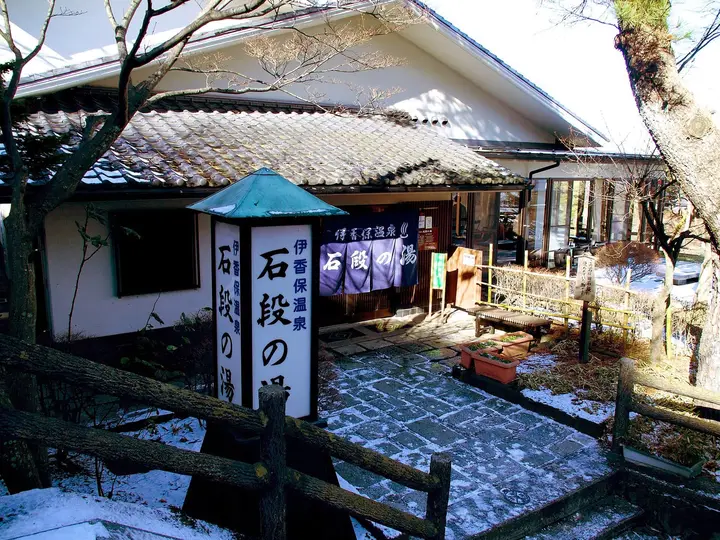
- Kinugawa Nioson Plaza sells day baths with an open-air tub for ¥700, near Tobu World Square Station.
- Kinuta-no-yu, the foot bath in front of the station, is free from 9:00 to 18:00.
What to expect
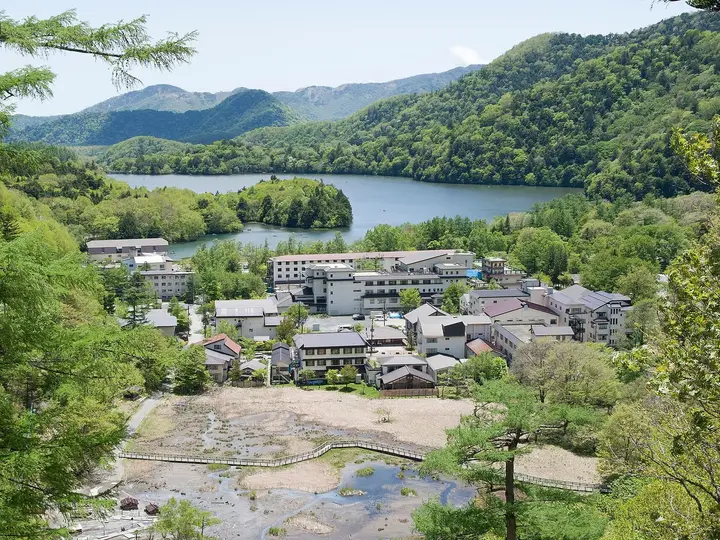
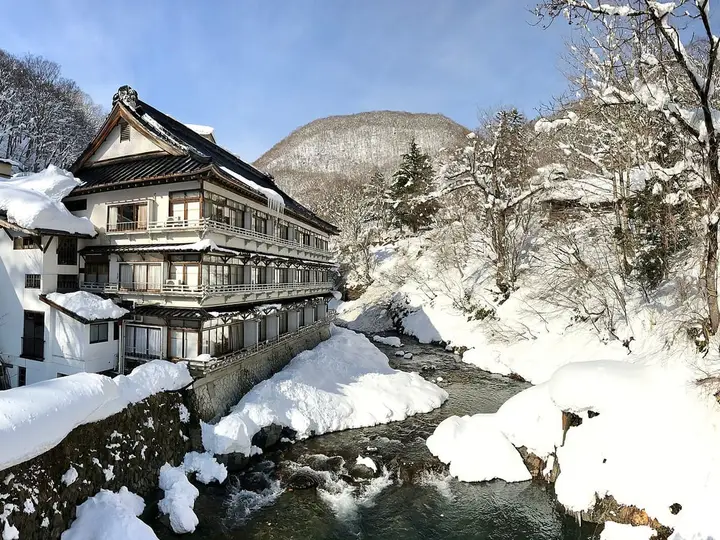
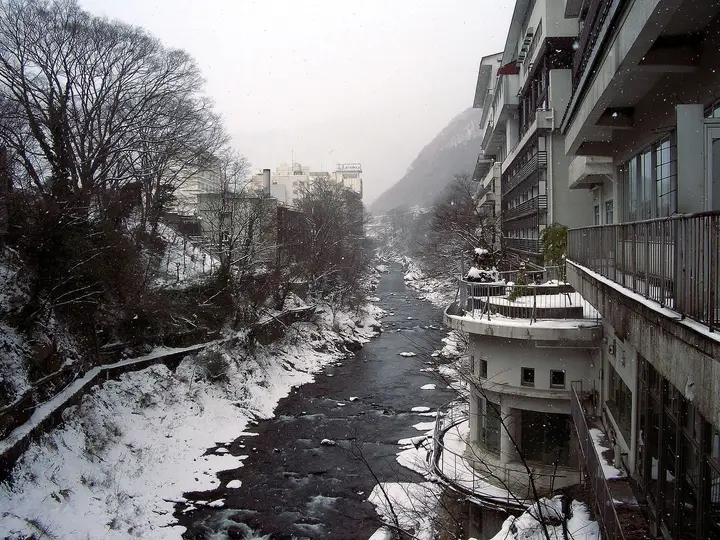
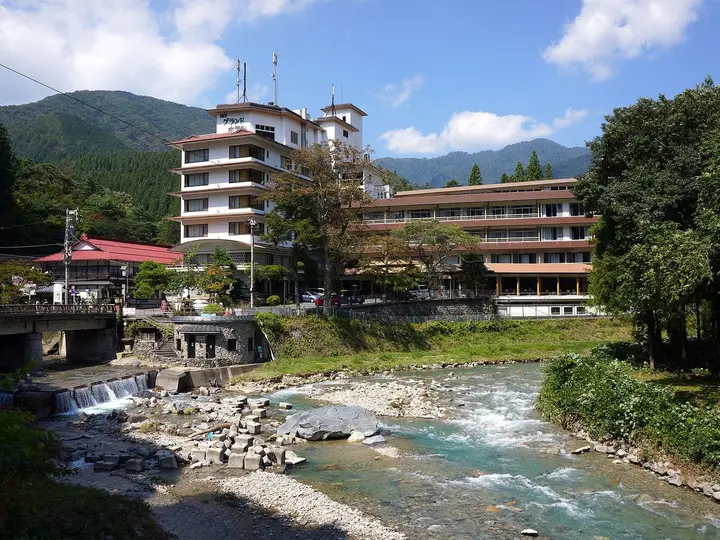
Kinugawa Onsen lines the Kinugawa River gorge in Nikko City, Tochigi Prefecture, about 30 minutes by car from the World Heritage shrines of central Nikko. The spring was found in the Edo period. The Nikko City Tourism Association says that at first only monks and lords making the pilgrimage to Nikko were allowed to bathe. Since it opened to the public from the Meiji era it has grown into one of the largest spa towns in the Kanto region, with big hotels stacked along both sides of the gorge.
That size shapes a visit. Kinugawa is a hotel town, not a bathhouse town. There is no grand public bathhouse at the centre, and most soaking happens in hotel baths, either as an overnight guest or on a day-bath ticket. What you get in return is easy access from Tokyo, a lot of choice, and river views from many of the open-air baths.
The water is an alkaline simple spring: clear, tasteless and odourless, and mild on the skin, which is why the association promotes it as a “beauty bath”. It is the opposite of the sharp sulfur water of places like Kusatsu (/hot-springs/kusatsu-onsen-japan).
Day baths
The Nikko City Tourism Association’s day-bath map for Kinugawa and Kawaji (May 2026) lists these hotels and halls in Kinugawa. Prices are adults / children, before bath tax. Last entry is in brackets.
| Place | Walk from station | Hours | Price |
|---|---|---|---|
| Kinugawa Nioson Plaza (0288-76-2721) | 5 min from Tobu World Square Sta. | 9:00-21:00 (20:00) | ¥700 / ¥350 |
| Hotel Sunshine Kinugawa | 12 min from Kinugawa-Onsen Sta. | 11:00-20:00 (19:00) | ¥1,000 / ¥700 |
| Kinugawa Park Hotels (0288-77-1289) | 5 min from Kinugawa-Onsen Sta. | 12:00-18:00 (17:00) | ¥1,100 / ¥550 |
| Hotel Shirakawa Yunokura (0288-76-0020) | 14 min from Kinugawa-Onsen Sta. | 14:00-20:00 (19:00) | ¥1,000 / ¥500 |
| Issinkan (0288-77-0008) | 18 min from Kinugawa-Onsen Sta. | 14:00-21:00 (20:00) | ¥1,700 / ¥880 |
| Kinugawa Onsen Hotel (0288-77-0025) | 19 min from Kinugawa-Onsen Sta. | 14:00-17:00 (16:00), days vary | ¥1,700 / ¥880 |
| Hotel Otaki (0288-77-3355) | 14 min from Kinugawa-Onsen Sta. | 16:00-23:00 (22:00) | ¥700 |
Most have an open-air bath, and several have a sauna. Issinkan also has an onsen pool, so pack a swimsuit if you want to use it. Some hotels close on irregular days, and a few, such as Kinugawa Kankou Hotel and Hotel Kinugawa Gyoen, charge more at weekends and in peak season. The map warns that day visitors may be refused when a hotel is busy, so call ahead.
Free foot baths: Kinuta-no-yu is right in front of Kinugawa-Onsen Station (9:00-18:00), handy while you wait for a train. Kinuko-no-yu, another free foot bath, is open 9:00-17:00.
Kinugawa Park Iwaburo, the old municipal bath in Kinugawa Park that many guides still list, is not on the 2026 map. Visitor reports say it closed on March 31, 2024 because the building had aged. We found no official notice, so do not plan around it.
Getting there
- From Tokyo by train: Tobu limited express trains (SPACIA and others) leave from Tobu Asakusa Station. A direct train takes about 1 hour 50 minutes to Kinugawa-Onsen Station. Otherwise ride about 1 hour 40 minutes to Shimo-Imaichi and change to the Tobu Kinugawa Line for about 20 minutes. Kinugawa-Kōen and Tobu World Square stations, one stop either side, are closer to some hotels.
- By car: about 20 minutes from Imaichi IC on the Nikko-Utsunomiya Road.
- Local buses (Nikko Kōtsū and Tobu Bus) leave from Kinugawa-Onsen Station for the surrounding area.
When to go
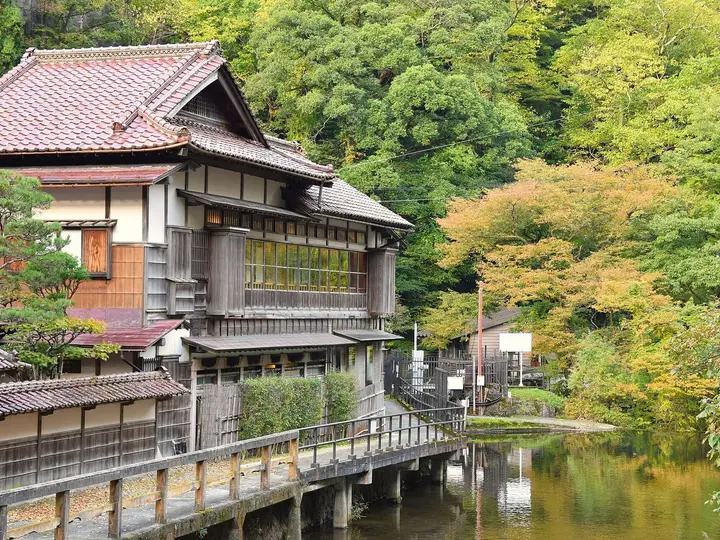
Kinugawa works all year, and because it is so close to Tokyo it fills at weekends and holidays. Autumn is the high point, when the gorge turns red and gold. December brings a yuzu bath campaign around the winter solstice, when Kinugawa and Kawaji inns float citrus in the baths. Summer has river activities and fireworks events. Winter is quieter and colder, with occasional snow.
Prices and booking
Day-bath prices above are from the tourism association’s May 2026 map. Bath tax (nyūtō-zei) is added on top. Towel rental and lockers vary by hotel. No booking is needed for day bathing, but the hours are short at many places, so phone first, especially at weekends.
Overnight rates vary widely between the big resort hotels and smaller inns, and the Nikko City Tourism Association links to booking options. An overnight stay gives you the baths in the evening and early morning, when they are quietest.
Onsen etiquette
- Wash at the showers before getting in.
- Bathe naked in the gender-split baths. Towels stay out of the water.
- Swimsuits only where a hotel runs a pool area, such as Issinkan’s onsen pool.
- Tattoos: check with each hotel. There is no town-wide rule.
- Keep phones out of changing rooms and baths.
Where to stay nearby
The town is lined with large hotels and ryokan, many with river-view rooms and open-air baths. Kawaji Onsen, a few stops further up the line, is smaller and quieter, and the day-bath map lists Kawaji Onsen Yakushi-no-Yu, which has a mixed open-air bath, along with free foot baths at Kawaji Fureai Park. Yunishigawa Onsen lies further into the mountains. Central Nikko is about 30 minutes away for the shrines, and Okunikko Yumoto Onsen, beyond Lake Chūzenji, is a mountain spa with a very different character.
Nearby stops worth adding
The Kinugawa Line Kudari boat ride runs down the gorge, and the Ryūōkyō gorge north of town has a riverside walking trail. Tobu World Square and Edo Wonderland are both close to the stations.
Safety notes
- Heat: keep soaks short and drink water, especially if you visit several baths.
- Alcohol: do not bathe after drinking.
- Riverside paths: gorge trails and steps are slippery after rain.
- Traffic: autumn weekend traffic between Kinugawa and central Nikko can be very heavy. Allow extra time or take the train.
Map and nearby springs
GPS: 36.82432, 139.71686
Kinugawa Onsen: common questions
Where can day visitors bathe at Kinugawa Onsen?
Mostly at hotels. The Nikko City Tourism Association's 2026 day-bath map lists about a dozen in Kinugawa, from Kinugawa Nioson Plaza (¥700) and Hotel Otaki (¥700, evenings) to Kinugawa Park Hotels (¥1,100) and Issinkan (¥1,700, with an onsen pool). Hours are short at many hotels and bath tax is extra.
Is the Kinugawa Park Iwaburo open?
It does not appear on the tourism association's May 2026 day-bath map. Visitor reports say the city-run bath in Kinugawa Park closed on March 31, 2024 because the building was worn out. We could not find a city notice, so treat it as closed unless the city says otherwise.
How do you get to Kinugawa Onsen from Tokyo?
Take a Tobu limited express (SPACIA) from Tobu Asakusa Station. The direct train takes about 1 hour 50 minutes. Other services take about 1 hour 40 minutes to Shimo-Imaichi, then about 20 minutes on the Tobu Kinugawa Line. By car, Kinugawa is about 20 minutes from Imaichi IC on the Nikko-Utsunomiya Road.
Are tattoos allowed at Kinugawa Onsen?
There is no town-wide rule. Each hotel sets its own, and the tourism association's map does not list them. Call the hotel before you go.
What kind of water does Kinugawa Onsen have?
The tourism association describes it as an alkaline simple spring: clear, tasteless and odourless, with little irritation to the skin. It is the kind of water that suits people who find sulfur springs harsh.
Closest hot springs to Kinugawa Onsen