Higashiyama Onsen
Near Aizu-Wakamatsu, Fukushima Prefecture, Japan
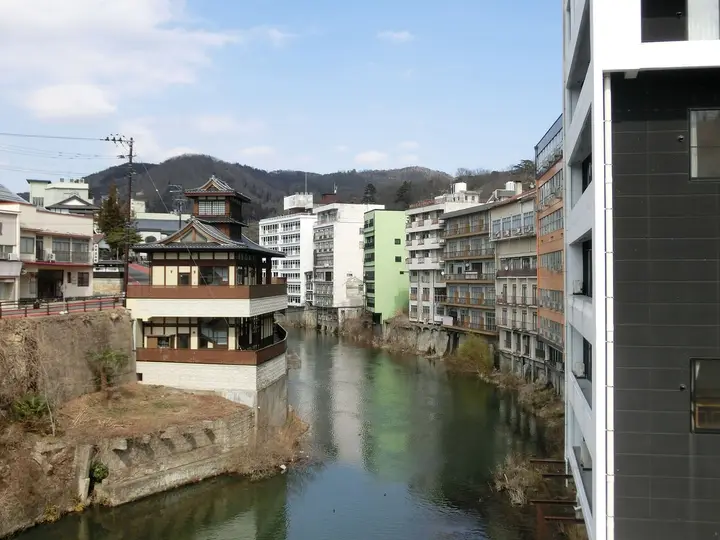
An old onsen town in a narrow river valley on the edge of Aizu-Wakamatsu, with about a dozen inns along the Yukawa, working geisha and day bathing at several inns from ¥700.
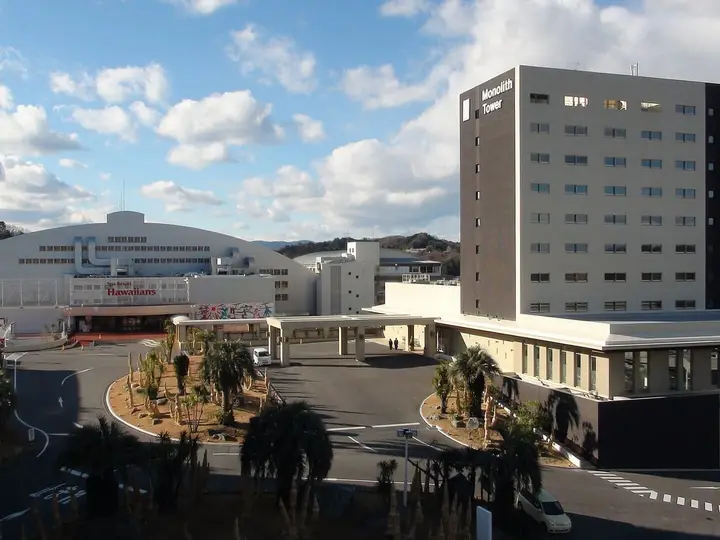
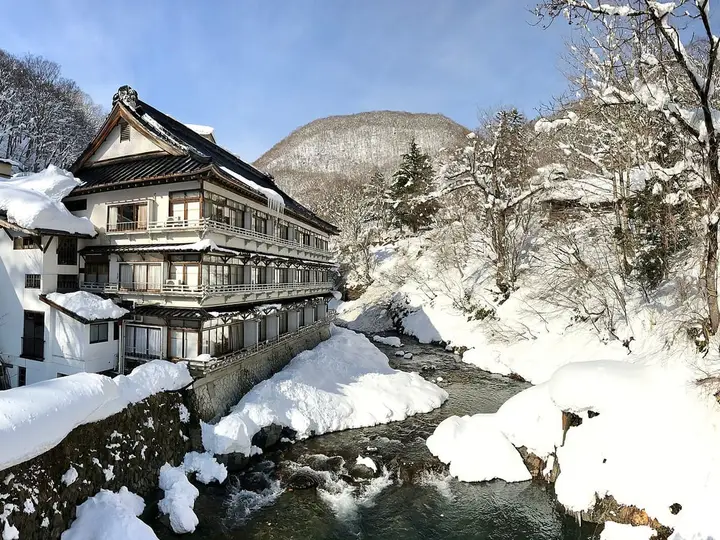
Photos: Raita Futo from Tokyo, Japan (CC BY 2.0); Fumihiko Ueno (CC BY 3.0). Resized and cropped for this page.


- Water temperature
- Not published
- Entry
- Paid
- Getting in
- Drive-up
- Type
- Resort or spa
- Said to have been founded by the monk Gyoki about 1,300 years ago, and used as a retreat by Aizu domain samurai in the Edo period.
- Seven inns take day bathers, from ¥700 at Niko Ryokan and Hotel Fushimiso to ¥1,400-1,800 at Onyado Toho.
- Geisha still work here, a tradition the town traces to the Edo period, and you can book them through the local geisha cooperative.
- The town loop buses from Aizu-Wakamatsu Station stop at Higashiyama Onsen Station, about 10 minutes by car from the city centre.
What to expect
Higashiyama Onsen is the hot spring town of Aizu-Wakamatsu, the old castle town of western Fukushima. It lies in a narrow wooded valley on the Yukawa (also called the Hagurogawa) just southeast of the city, so you get a river-and-forest setting while staying close to Tsuruga Castle and the samurai sights. There are several other places in Japan called Higashiyama Onsen, including ones in Hokkaido and Gifu; this page is about the one in Aizu.
The town’s own story is long. Local tradition says the monk Gyoki found the spring about 1,300 years ago, led there by a three-legged crow, and the town dates its opening to the Tenpyo era in the 8th century. In the Edo period it became the bathing retreat of the Aizu domain, a kind of back parlour for the castle town. The spring turns up in the Aizu folk song about Ohara Shosuke, and the painter Takehisa Yumeji and the poet Yosano Akiko both spent time here.
Today about a dozen inns and hotels line the river, from small traditional ryokan to large modern hotels, with restaurants and souvenir shops between them. The tourism association lists 13 lodgings. The water is a sulfate spring (calcium and sodium sulfate with chloride), between 122-140°F50 and 60°C at the source, flowing at about 1,500 litres a minute in total.
There is no big public bathhouse. You bathe either at the inn where you stay or as a day guest at one of the inns that open their baths to visitors.
Day bathing
The tourism association’s 2026 list of inns that take day bathers:
- Irori no Yado Ashina: 18:00-20:30, ¥1,000. Private baths from ¥2,200 per person, booking required.
- Onyado Toho: 13:30-16:00 (last entry 15:00), adults ¥1,400 (¥1,800 weekends and holidays), children ¥700 (¥1,000).
- Shosuke no Yado Takinoyu: Saturdays, Sundays and holidays only, 13:00-15:00, adults ¥1,200, children ¥600. Its baths look out on Fushimi Falls.
- Niko Ryokan: adults ¥700, children free; call for hours.
- Higashiyama Grand Hotel (Ooedo Onsen Monogatari): 7:00-10:00 and 15:00-24:00 (last entry 22:00), adults ¥1,000 (¥1,250 weekends and holidays), children ¥500 (¥600).
- Harataki: 13:00-20:00, adults ¥1,080, children ¥540; call ahead before holidays.
- Hotel Fushimiso: 16:00-20:00, adults ¥700, children ¥400.
The association says day-bathing hours change from day to day and can be cancelled without notice, so phone the inn before you go. Bring your own towel unless the inn says it supplies one.
Getting there
By train: JR Aizu-Wakamatsu Station is on the Ban-etsu West Line. The usual route from Tokyo is the Tohoku Shinkansen to Koriyama, then the Ban-etsu West Line.
By bus: The city’s two loop buses, Haikara-san and Akabe, run from Aizu-Wakamatsu Station past the Aizu Bukeyashiki samurai house to Higashiyama Onsen Station, the bus stop at the entrance to the town. Each runs about every 30 minutes, Haikara-san from 8:00 to 17:30 and Akabe from 9:15 to 16:15, in opposite directions. The fare is ¥210 for adults and ¥110 for children, and a one-day pass for both buses is ¥600 (children ¥300). Allow 35-40 minutes.
By car: The town is about 10 minutes from central Aizu-Wakamatsu. Tsuruga Castle is about 10 minutes away, Aizu Bukeyashiki about 5 minutes and Iimoriyama about 15 minutes.
When to go
Higashiyama is open all year and works as a base for Aizu sightseeing in any season. Aizu gets real snow in winter, so check road and bus conditions if you visit then, and book early for autumn and holiday weekends.
Two summer events are worth planning around. On August 10, the Oyu-kake festival sends young men and geisha through the town splashing hot spring water on the crowd, while geisha on a portable shrine throw good-luck coins. During Obon, the Higashiyama Bon dance brings all the geisha out in yukata to dance to the Aizu Bandaisan song.
Geisha
Geisha still work in Higashiyama. They perform at inn banquets: dancers (tachikata) and musicians (jikata) on shamisen, voice and drums. Their repertoire includes dances on the Byakkotai story of the young Aizu samurai. You do not book through the inn; book through the Higashiyama Onsen geisha cooperative (0242-27-8351, 12:00-15:30, closed Sundays). Prices are posted only as images on the association’s site, so ask when you call.
Onsen etiquette
Wash and rinse your whole body before you get in, and do not wear clothes or a swimsuit in the bath. Keep your small towel out of the water. A national tourism text on Higashiyama warns that some baths refuse people with tattoos, while others let you cover a small one with a plaster or book a private bath; ask the inn first. Keep your voice down in the shared baths and in the street at night.
Nearby stops worth adding
- The waterfalls: the Yukawa forms four waterfalls in town, including Fushimi Falls. The city tourism site puts them about a 15-minute walk from Higashiyama Onsen Station.
- Haguro-san Yugami Shrine: about a 20-minute walk from Higashiyama Onsen Station, at the top of an approach of 1,225 steps, a popular climb for the first shrine visit of the New Year.
- Aizu-Wakamatsu: Tsuruga Castle, Aizu Bukeyashiki and Iimoriyama are all within about 15 minutes by car.
Where to stay nearby
The inns in town are the base. The association lists Irori no Yado Ashina, Onyado Toho, Konjakutei, Shosuke no Yado Takinoyu, Tsuki no Akari, Niko Ryokan, Higashiyama Grand Hotel, Higashiyama Park Hotel Shinfugetsu, Harataki, Hotel Fushimiso, Mukaitaki, Motoyu Arimaya and YUKKURA Inn. Its booking page and phone line (0242-27-7051) help with vacancies. For chain hotels, stay near Aizu-Wakamatsu Station and ride the loop bus out.
Safety notes
- Hot water: the source runs at 122-140°F50-60°C, far too hot to bathe in straight from the ground. Test each bath and keep soaks short.
- Stairs and paths: the shrine steps and riverside paths are steep and slippery when wet or icy.
- Bus times: the loop buses stop running in the late afternoon, so plan a taxi if you bathe in the evening and are not staying.
Map and nearby springs
GPS: 37.47796, 139.96223
Higashiyama Onsen: common questions
Can you take a day bath at Higashiyama Onsen?
Yes. The tourism association lists seven inns that take day bathers, including Irori no Yado Ashina (¥1,000, evenings), Onyado Toho (¥1,400, ¥1,800 on weekends and holidays), Shosuke no Yado Takinoyu (¥1,200, weekend afternoons only), Harataki (¥1,080), Hotel Fushimiso (¥700) and the Higashiyama Grand Hotel (¥1,000, ¥1,250 on weekends). Hours change day to day and can be cancelled, so phone first.
How do you get to Higashiyama Onsen from Aizu-Wakamatsu Station?
Take one of the town loop buses, Haikara-san or Akabe, to Higashiyama Onsen Station. Each runs about every 30 minutes, the fare is ¥210 for adults and ¥110 for children, and a one-day pass for both is ¥600. The ride takes 35-40 minutes because the loop stops at the sights on the way; by car it is about 10 minutes from the city centre.
Can you see geisha at Higashiyama Onsen?
Yes. Higashiyama geisha perform dances and songs at banquets in the inns, a tradition the town traces back to the Edo period. Book through the Higashiyama Onsen geisha cooperative (0242-27-8351, 12:00-15:30, closed Sundays). They also appear at the Oyu-kake festival on August 10 and the summer Bon dance.
Are tattoos allowed at Higashiyama Onsen?
It depends on the inn. A national tourism text on Higashiyama warns that some baths refuse tattoos, while others let you cover small ones with a plaster or book a private bath. Ask the inn before you go.
What kind of water does Higashiyama Onsen have?
The tourism association describes it as a sulfate spring (calcium and sodium sulfate with chloride) that leaves the ground at 122-140°F50-60°C, with a combined flow of about 1,500 litres a minute.
Closest hot springs to Higashiyama Onsen