Okunikko Yumoto Onsen
Near Nikko, Tochigi Prefecture, Japan
A small sulfur-spring village at the head of Lake Yunoko, deep in Nikko National Park, where milky white water feeds inn baths, a free foot bath and a rare temple bathhouse.
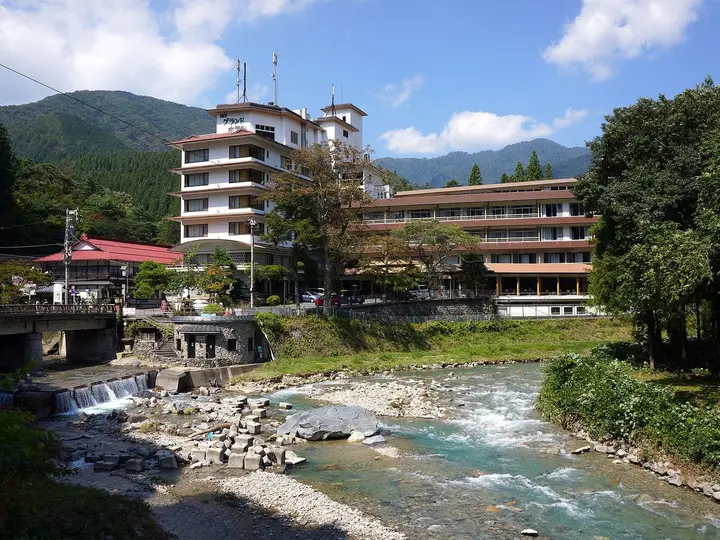
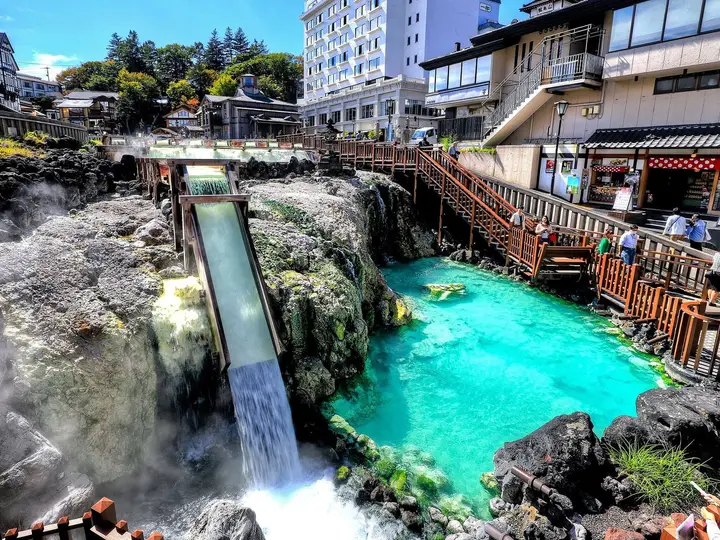
Photos: Σ64 (CC BY 3.0); くろふね (CC BY 3.0). Resized and cropped for this page.


- Water temperature
- Not published
- Entry
- Paid
- Getting in
- Drive-up
- Type
- Resort or spa
- Onsenji, a sub-temple of Rinno-ji, has its own bath inside the temple grounds for ¥500, open late April to late November.
- Kyukamura Nikko Yumoto calls the water the fourth most concentrated sulfur spring in Japan; it turns milky or green on contact with air.
- Anyo-no-yu, the town foot bath, is free from 9:00 to 20:00 between mid-April and mid-December.
- Long-time inn Yumori Kamaya closed on November 25, 2024; older guides still list it.
What to expect
Okunikko Yumoto Onsen (Yumoto Onsen in Nikko, not to be confused with Hakone-Yumoto) is the last stop of the road into the Okunikko highlands. Beyond Lake Chuzenji and the Senjogahara marsh, the road ends at Lake Yunoko, and on its north shore is a small, quiet cluster of inns. The Nikko City Tourism Association calls it the “inner parlour” of Nikko. The setting is the draw: a mountain lake, forest all around, hiking trails, and in winter a small ski area.
The water was found, according to tradition, about 1,200 years ago by Shodo Shonin, the monk who founded Nikko’s temples. It is a milky white sulfur spring, and you smell it as soon as you step off the bus. The spring source area (Yumoto Onsen gensen) lies at the back of the village; it is for looking at, not bathing.
Day visitors have three choices:
- Inn day baths. The Okunikko Yumoto Onsen Ryokan Cooperative says every facility in the village is an onsen inn, and many open their baths to day visitors for a few hours.
- Onsenji, a temple with its own bath, open in the warmer months.
- Anyo-no-yu, a free foot bath on spring water, also seasonal.
The water
Yumoto’s water is clear when it leaves the ground and turns milky white, or sometimes greenish, when it meets light and air. Kyukamura Nikko Yumoto describes it as the fourth most concentrated sulfur spring in Japan. Banzo Ryokan gives its source as a mix of the Okunikko Kaihatsu No. 5 and No. 6 wells, classed as a sulfur-containing calcium-sodium sulfate, bicarbonate and chloride spring. Several inns, including Itaya, Hotel Sangetsu and the Okunikko Mori no Hotel, advertise their baths as gensen kakenagashi, fed straight from the source without recirculation. The Nikko tourism association says the water has long been used for nerve pain and rheumatism, a traditional claim rather than a medical one.
Day baths and prices
These are from the ryokan cooperative’s inn pages in 2026. Times can change with the day’s bookings, and the tourism association asks you to call the inn first.
| Inn | Adults | Children | Day-bath hours | Notes |
|---|---|---|---|---|
| Banzo Ryokan | ¥600 | 11:00-17:00 | Towel ¥100; no open-air bath | |
| Hotel Sangetsu | ¥800 | ¥500 | 13:00-15:00 | Its Goshiki-no-yu: ¥1,000 / ¥600, 11:30-18:00 |
| Yumoto Itaya | ¥1,000, face towel included | 12:30-15:00 | Open-air bath; irregular closures, call first | |
| Kyukamura Nikko Yumoto | ¥1,200 (tax and bath tax included) | ¥600 | 12:30-14:00 | Indoor, open-air and tsubo tubs; may refuse when busy |
| Shiunso | ¥875 to ¥2,500 per person by group size | 12:00-15:00, last entry 14:10 | Private 50-minute bath; closed Monday and Thursday |
Others on the cooperative’s list include Okunikko Kogen Hotel, Spa Village Kamaya, Okunikko Mori no Hotel, Hotel Hananoki (men’s and women’s baths only) and Park Lodge Miyama (call first). Yumori Kamaya, the old inn whose family held the temple-appointed role of spring keeper, ended operations on November 25, 2024, although some guides still list it.
The cooperative’s information office (0288-62-2570) was closed in 2026, and the tourism association asks visitors to contact each inn directly.
The Onsenji temple bath
Onsenji, a temple of Nikkozan Rinno-ji, is dedicated to Yakushi Ruriko Nyorai, the Buddha of healing. The tourism association notes it is one of very few temples in Japan with a bath inside its grounds. Entry to the temple is free; bathing costs ¥500 for adults (junior high and up) and ¥300 for children aged 4 to elementary school. It opens 8:00 to 17:00 (last entry 16:30) from late April to late November, and in 2026 it opened for the season on April 11. You can also try sutra copying there (9:00 to 15:00). It is about a 2-minute walk from the Yumoto Onsen bus stop.
Anyo-no-yu foot bath
The city-run Anyo-no-yu is a large free foot bath on Yumoto spring water, open 9:00 to 20:00 from mid-April to mid-December, about 2 minutes from the bus stop. It shut briefly for a breakdown from June 27, 2026 and reopened on July 3. Use nearby car parks; it has none of its own.
Getting there
- By bus: from JR Nikko Station or Tobu-Nikko Station, Tobu buses bound for Yumoto Onsen take about 90 minutes, climbing the Irohazaka hairpins past Lake Chuzenji and across Senjogahara. Get off at the Yumoto Onsen terminal.
- By car: about 40 minutes from Kiyotaki IC at the end of the Nikko-Utsunomiya Road. In winter, carry chains or use studless tyres; snow and ice are normal.
Autumn weekends bring heavy traffic on the Irohazaka. The tourism association publishes a congestion guide each year.
When to go
Summer is cool at this height, and it is hiking season around Lake Yunoko, Yudaki falls and the Senjogahara marsh. Autumn colour around the lake is the busiest time; the Nikko tourism association posts colour reports on its site. Winter is quiet and snowy; the inns stay open and the village has a small ski area, but many Okunikko facilities close. The cooperative points to the tourism association’s map of winter closures. Note that the Akechidaira ropeway near Lake Chuzenji is suspended from January 16, 2026 to August 31, 2027.
Onsen etiquette
- Baths are split by sex and you bathe naked; towels stay out of the water.
- Rinse off before getting in. Sulfur water is strong, so keep the first soak short.
- Remove silver jewellery, which sulfur water tarnishes.
- No tattoo rule is published for the village. Ask the inn before you go.
Where to stay nearby
The village has about a dozen inns, from the 63-room Kyukamura Nikko Yumoto on the lakeshore (rooms from ¥17,500) to the five-room Shiunso, with Banzo, Itaya, Hotel Sangetsu and others in between; the cooperative lists them all. Down the valley, Chuzenji Onsen sits on Lake Chuzenji. For a big hotel town with an easy train link to Tokyo, Kinugawa Onsen is east of central Nikko, about 1 hour 50 minutes from Asakusa by direct Tobu train.
Safety notes
- Sulfur gas and heat: keep to the paths at the source area behind the village, and get out if you feel light-headed in an indoor sulfur bath.
- Cold: winter nights are well below freezing. Dress warmly between baths and the bus.
- Wildlife: this is national park forest. Follow posted advice on the hiking trails.
- Roads: the Irohazaka and the mountain road beyond are icy in winter. Drive slowly.
Map and nearby springs
GPS: 36.80684, 139.42445
Okunikko Yumoto Onsen: common questions
Where can day visitors bathe at Okunikko Yumoto Onsen?
Every building in the village is an onsen inn, and the ryokan cooperative lists day bathing at several: Banzo Ryokan (¥600, 11:00-17:00), Hotel Sangetsu (¥800, 13:00-15:00, or ¥1,000 at its Goshiki-no-yu, 11:30-18:00), Yumoto Itaya (¥1,000 with face towel, 12:30-15:00), Kyukamura Nikko Yumoto (¥1,200, 12:30-14:00) and Shiunso (private 50-minute bath, ¥875 to ¥2,500 each). The Onsenji temple bath costs ¥500 from late April to late November.
What is the Onsenji temple bath?
Onsenji is a temple of Nikkozan Rinno-ji at the Yumoto spring, dedicated to Yakushi Nyorai. Unusually, it has a bath inside the temple grounds, which visitors can use for ¥500 (adults) or ¥300 (children aged 4 through elementary school). It is open 8:00 to 17:00, last entry 16:30, from late April to late November; in 2026 it opened on April 11.
How do you get to Yumoto Onsen from Nikko?
Take the Tobu bus bound for Yumoto Onsen from JR Nikko or Tobu-Nikko Station. It climbs the Irohazaka road past Lake Chuzenji and takes about 90 minutes to the Yumoto Onsen terminal. By car it is about 40 minutes from Kiyotaki IC. In winter you need chains or studless tyres.
Is Yumoto Onsen open in winter?
Yes, the inns stay open and their baths take day visitors when they can. The Onsenji bath (late November to late April) and the Anyo-no-yu foot bath (mid-December to mid-April) close, and many Okunikko facilities shut for the season. The Akechidaira ropeway is out of service from January 16, 2026 to August 31, 2027.
Is Okunikko Yumoto the same as Kinugawa Onsen?
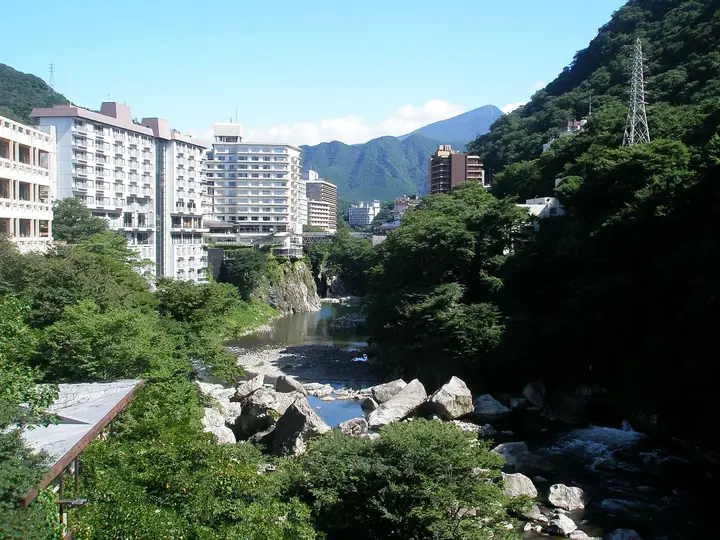
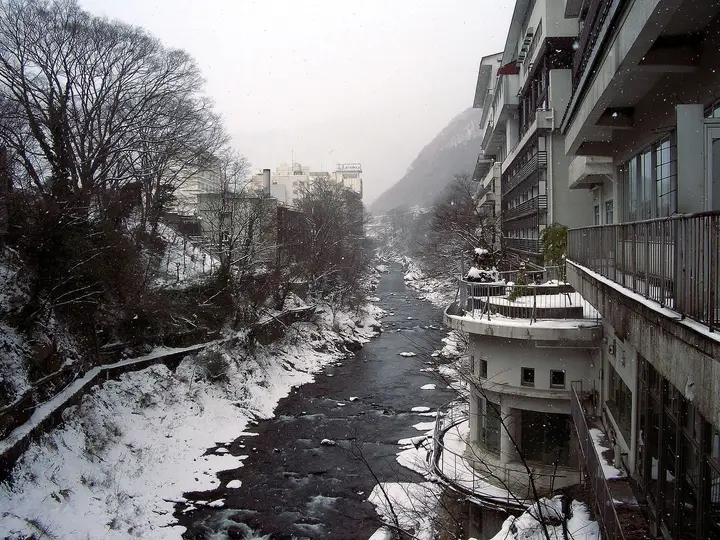
No. Kinugawa is a large hotel town in a river gorge about 30 minutes east of central Nikko. Yumoto is a small mountain village at the far end of the Okunikko highlands, past Lake Chuzenji and the Senjogahara marsh, with very different, sulfur-heavy water.
Closest hot springs to Okunikko Yumoto Onsen
Sources we checked (6)
- nikko-kankou.org/spot/17
- nikkoyumoto.com/onsen/
- nikko-kankou.org/spot/1399
- nikko-kankou.org/spot/602
- nikkoyumoto.com/yado/%E4%BC%91%E6%9A%87%E6%9D%91%E6%97%A5%E5%85%89%E6%B9%AF%E5%85%83/
- nikkoyumoto.com/news/%E5%A5%A5%E6%97%A5%E5%85%89%E5%9C%B0%E5%9F%9F%E5%86%AC%E5%AD%A3%E9%96%89%E9%8E%96%E4%B8%80%E8%A6%A7%E5%9B%B3/