Minakami Onsen
Near Minakami, Gunma Prefecture, Japan
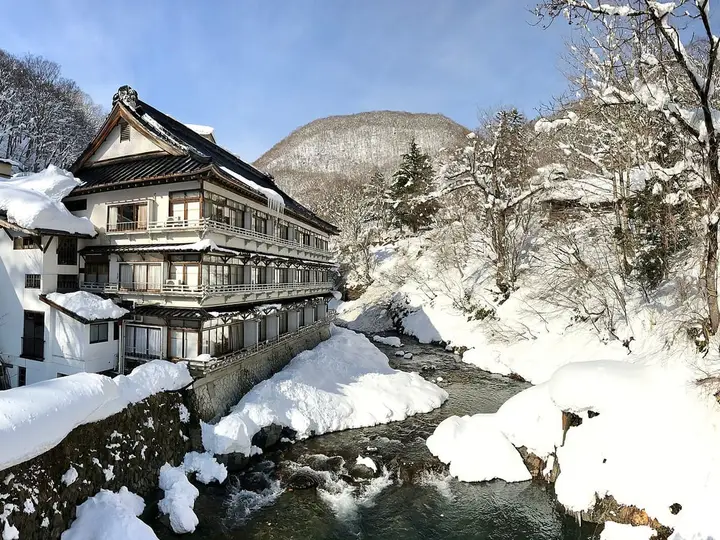
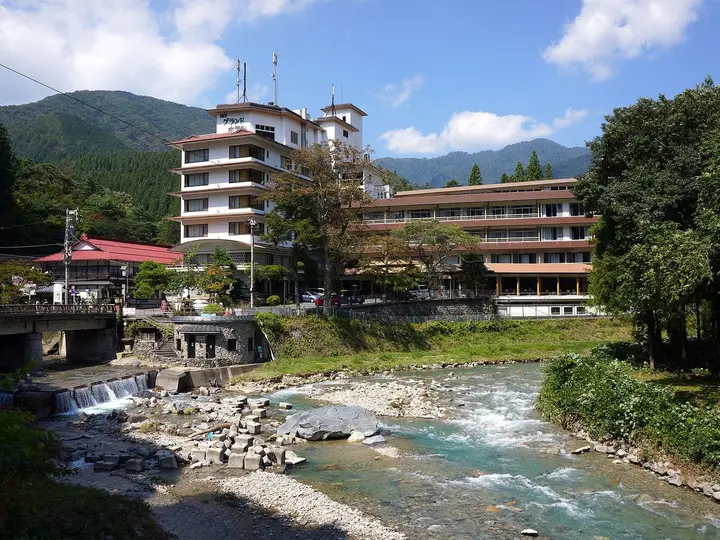
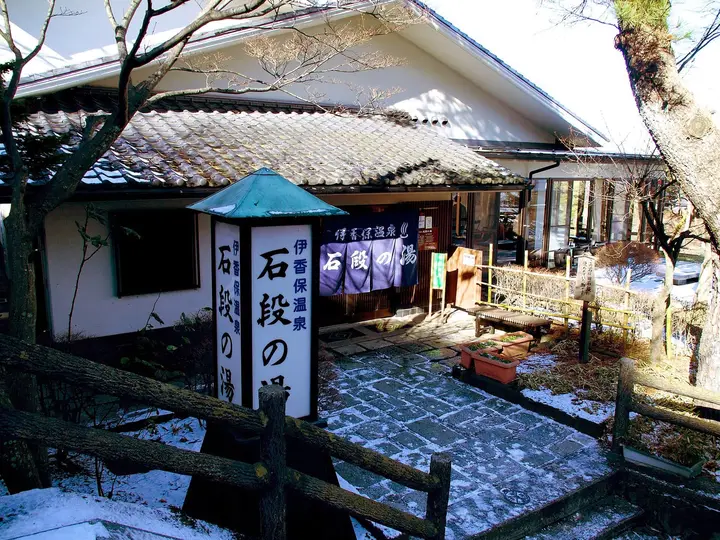
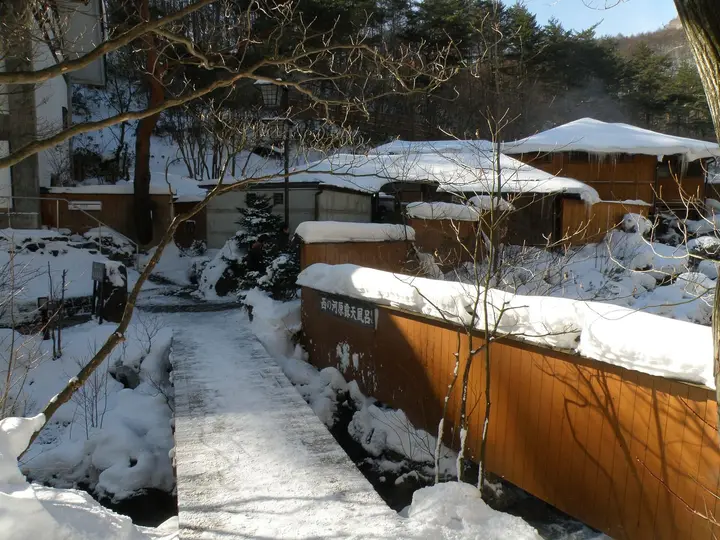
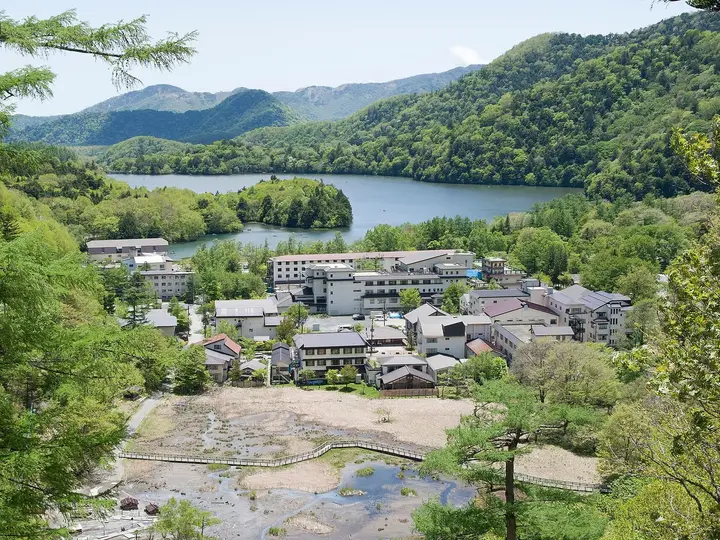
The central hot spring town of the Minakami 18 spa group, set along the Tone River gorge below Mt. Tanigawa, with a small public bathhouse near the station and big ryokan lining the river.
Photos: David Reilly from Philadelphia, USA (CC BY 2.0); photo: Qurren ( talk ) Taken with Canon PowerShot G9 X (CC BY-SA 4.0); photo: Qurren ( talk ) Taken with Canon IXY 430F (Digital IXUS 245 HS) (CC BY-SA 3.0); くろふね (CC BY 3.0). Resized and cropped for this page.


- Water temperature
- Not published
- Entry
- Paid
- Getting in
- Drive-up
- Type
- Public pool
- Fureai Koryukan, a 12-minute walk from JR Minakami Station, has a public indoor bath (¥700 for 2 hours), a footbath and the town tourist information desk.
- Minakami Onsen is one of 18 hot spring areas in Minakami town, from Takaragawa to Hoshi, so it works as a base for a bath crawl.
- The water is a calcium-sodium sulfate and chloride spring, according to the town tourism association.
- The town traces the spring to a priest who saw steam rising from a cliff over the Tone River in the 16th century.
What to expect
Minakami Onsen is the old hot spring town at the heart of Minakami, a mountain municipality in the far north of Gunma Prefecture. Hotels and ryokan line both sides of the Tone River where it cuts a rocky gorge below Mt. Tanigawa, and souvenir shops and small restaurants fill the streets above. The area used to be called Yubara Onsen, and the district around the main bathhouse is still Yuhara.
According to the local story, a priest named Kaio saw steam rising from a cliff above the Tone River during the Eiroku era (1558-1570) and found the spring. For centuries it was a remote mountain bath. That changed when the Joetsu Line opened in 1931 and Minakami became a weekend trip from Tokyo. Large concrete hotels followed in the postwar boom, and some of them now stand empty, including the shell of a former hotel in front of Minakami Station. The town is in the middle of a slow refresh: several old inns have been rebuilt or renamed in recent years.
This page covers Minakami Onsen itself. The town’s tourism association promotes 18 hot spring areas across the municipality, and many visitors use Minakami as a base for the others.
The water
The tourism association lists Minakami Onsen’s water as a calcium-sodium sulfate and chloride spring. It is generally clear, with little smell. Individual inns draw from different sources, so the details vary. Ask the inn or check the analysis sheet posted in the changing room if you want to know whether a bath is diluted, heated or recirculated. The main public bath, Fureai Koryukan, does not publish this.
Public baths and day bathing
- Fureai Koryukan (Yuhara 801, tel. 0278-72-8885) is the bath most day visitors use. It sits in the centre of the onsen town, a 12-minute walk from Minakami Station, and doubles as the tourist information centre. Inside are indoor baths only, split into men’s and women’s sides, plus a rest area. There is a free footbath too. Entry is ¥700 for adults for 2 hours, ¥350 for children aged 3 to elementary school, free for under-3s, and ¥450 with a disability certificate. Hours are 11:00 to 20:30 with last entry at 20:00 (one listing gives 10:00 to 20:00, so check). It closes on Tuesdays, or Wednesday when Tuesday is a public holiday. Towels, bath towels and shampoo cost extra; soap and hair dryers are free. There is a free 15-car lot, and a town car park nearby gives the first hour free.
- Ryokan day bathing: several riverside inns accept day visitors for their larger baths, some with outdoor tubs over the river. Policies, prices and hours change, so check the tourism association’s day-bathing list or phone ahead.
- Mitsumine no Yu (Gokan 2265, tel. 0278-62-1022) is a town-run bath in the Tsukiyono area to the south, about 3.2 km (2 miles) from Gokan Station. It has an indoor bath and an outdoor bath in the woods, alkaline simple water with a source temperature of 117.9°F47.7°C, and listed prices of ¥600 for adults and ¥300 for children. It opens 10:00 to 19:30 and closes on the third Wednesday of each month and January 1.
- Yu Terme Tanigawa in Tanigawa Onsen, a short drive up the valley, is a town hot spring facility open 12:00 to 20:00 (last entry 19:00), closed Mondays, Fridays and New Year’s Day.
Getting there
- By train: the JR Joetsu Line stops at Minakami Station, about 5 minutes on foot from the edge of the onsen town and 12 minutes from Fureai Koryukan. From Tokyo, most people take the Joetsu Shinkansen to Jomo-Kogen, then a local bus or train to Minakami. Kan-Etsu Kotsu buses link Jomo-Kogen with the onsen areas.
- By car: leave the Kan-Etsu Expressway at Minakami IC and follow Route 291 toward Yuhara, about 4 km (2.5 miles).
- Taxis: there are stands at Jomo-Kogen and Minakami stations, but the tourism association warns there may be none after about 16:00, so book ahead.
When to go
Minakami works all year. Autumn (October to early November) is the most popular time for the Tone River gorge and Mt. Tanigawa. Winter brings snow and skiers to the surrounding resorts, and a hot bath after a day on the slopes is the main reason many people stay. Summer is rafting and canyoning season on the Tone, and the town gets busy with groups. Weekdays are quieter than weekends at any time of year.
Prices and booking
- Fureai Koryukan: ¥700 adults (2 hours), ¥350 children, no booking.
- Mitsumine no Yu: ¥600 adults, ¥300 children, no booking.
- Ryokan day bathing: prices and hours are set by each inn. Call ahead, because some only take day visitors at certain times.
- Overnight: rooms range from large hotels to small family inns. The Minakami Tourism Association (tel. 0278-62-0401, weekdays 8:30 to 17:30) can help with bookings.
Onsen etiquette
Wash at the seated showers before you get in. Bathe naked; swimsuits are not worn in Japanese public baths. Keep small towels out of the water and long hair tied up. Do not bathe after drinking. No tattoo policy is published for the public baths, and ryokan set their own rules, so ask before you pay.
Where to stay nearby
The onsen town itself has the most choice, from big hotels on the Tone River to small inns and pensions. Up the valley, Tanigawa Onsen and Yubiso Onsen are quieter. Takaragawa Onsen Osenkaku, known for its huge riverside outdoor baths, is in the same town further up the Tone. Gunma’s other big spa towns, Kusatsu Onsen, Ikaho Onsen and Shima Onsen, make a longer Gunma trip.
Safety notes
- Heat: keep soaks short, drink water, and get out if you feel dizzy.
- River: the Tone River runs fast here. Rafting and canyoning should only be done with a licensed operator.
- Winter driving: snow tyres are needed in winter on the roads beyond the town.
- Floors: tiled bathrooms and stone steps get slippery. Walk, do not hurry.
Map and nearby springs
GPS: 36.76758, 138.96992
Minakami Onsen: common questions
Where can day visitors bathe in Minakami Onsen?
The easiest public bath is Fureai Koryukan at Yuhara 801, a 12-minute walk from Minakami Station. It costs ¥700 for adults for 2 hours and ¥350 for children 3 to 11, and is open 11:00 to 20:30 (last entry 20:00), closed Tuesdays. Several ryokan in town also take day bathers. The tourism association lists them on enjoy-minakami.jp.
Is Minakami Onsen the same as Takaragawa or Tanigawa Onsen?
No. Minakami town promotes 18 separate hot spring areas, known as the Minakami 18 spas. Minakami Onsen is the main town by the Tone River. Tanigawa, Yubiso, Takaragawa and Hoshi Onsen are separate areas in the same municipality, some a long bus ride away.
How do I get to Minakami Onsen from Tokyo?
By train, take the Joetsu Shinkansen to Jomo-Kogen and change to a local bus or the JR line, or ride the JR Joetsu Line to Minakami Station, which is about 5 minutes on foot from the onsen town. By car, leave the Kan-Etsu Expressway at Minakami IC and follow Route 291 about 4 km (2.5 miles).
Does Fureai Koryukan have an outdoor bath?
No. It has indoor baths only, with a separate men's and women's side and a footbath. Towels and shampoo cost extra; soap and hair dryers are free. For an outdoor bath, book day bathing at one of the riverside ryokan or try the town-run Mitsumine no Yu in Tsukiyono.
Are tattoos allowed at Minakami Onsen?
There is no town-wide rule, and the public bath listings we checked do not mention tattoos. Ryokan set their own policies. Call before you go, or book a private (kashikiri) bath.
Closest hot springs to Minakami Onsen