Ikaho Onsen
Near Shibukawa, Gunma Prefecture, Japan
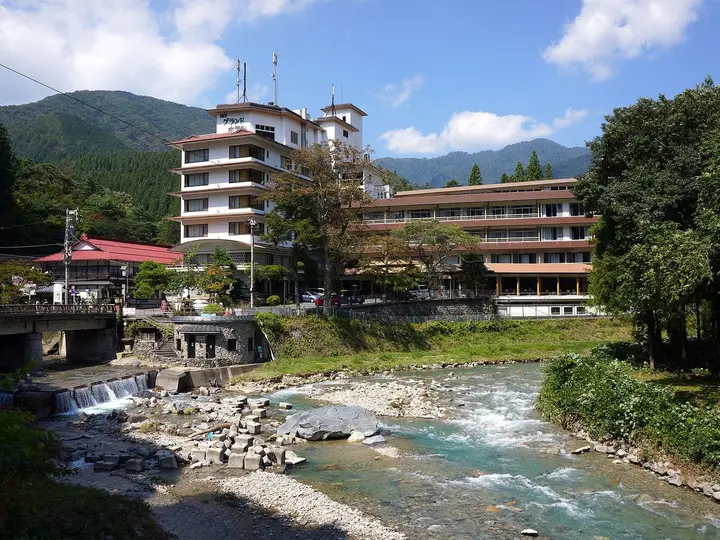
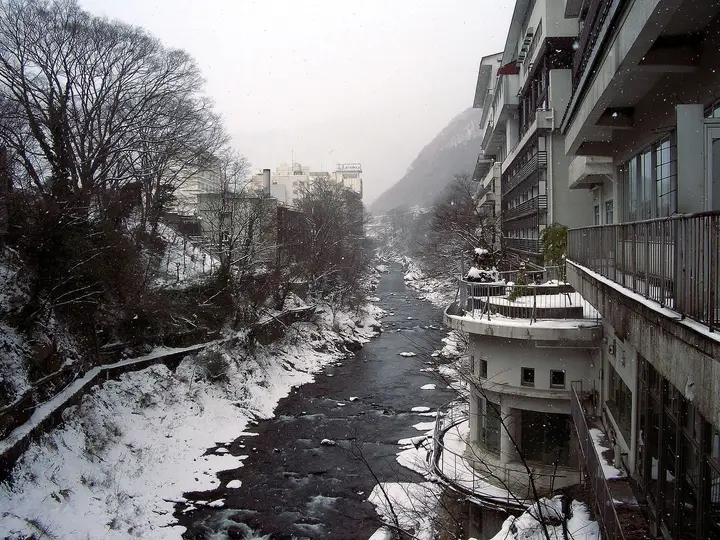
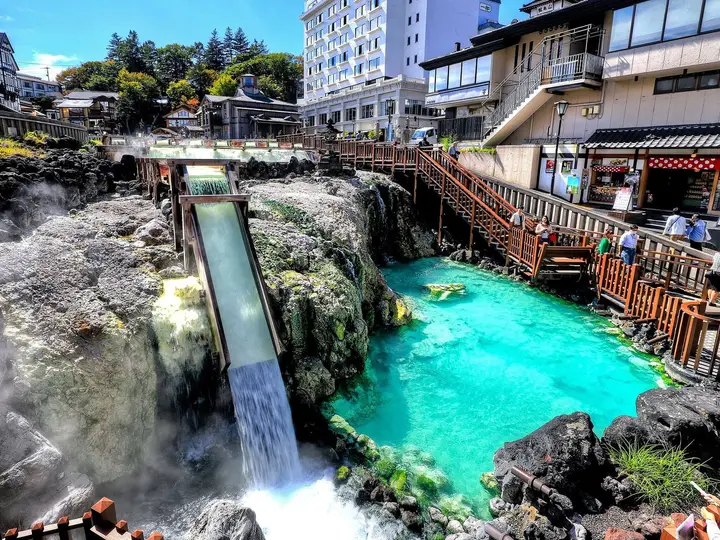
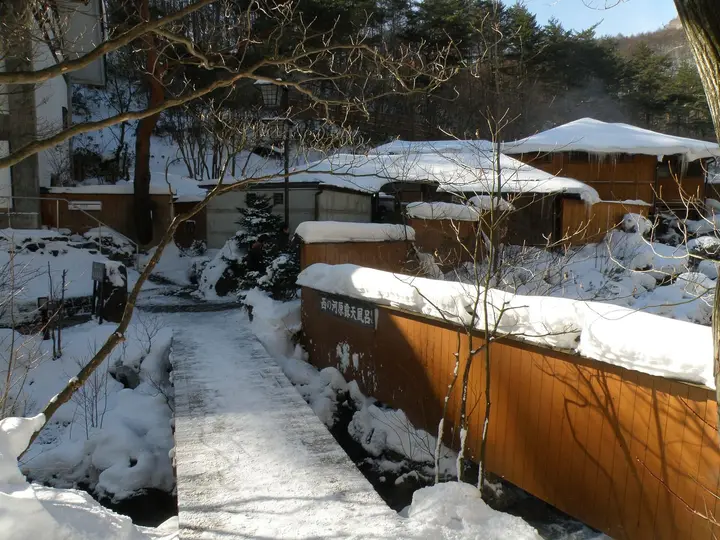
Gunma's old spa town built around a 365-step stone stairway on the slopes of Mount Haruna, with a city-run bathhouse on the steps and an outdoor bath beside the Kogane no Yu source.
Photos: Norimasa Hayashida (CC BY 2.0); Abasaa (Public domain); NMaia (CC BY-SA 4.0); Tomo (CC BY 2.0). Resized and cropped for this page.


- Water temperature
- Not published
- Entry
- Paid
- Getting in
- Drive-up
- Type
- Public pool
- The town climbs a 365-step stone stairway lined with inns and shops, with the Kogane no Yu source flowing beneath it.
- Ishidan no Yu, the city-run bathhouse halfway up the steps, costs ¥800 and takes cards and IC cards.
- Ikaho Rotenburo, an outdoor bath next to the source, runs the Kogane no Yu water free-flowing for ¥600.
- The only place in Ikaho where you can drink the Kogane no Yu water is a fountain on the path to the Rotenburo.
What to expect
Ikaho Onsen climbs the eastern slope of Mount Haruna above Shibukawa in Gunma Prefecture. It is Gunma’s other famous spa town after Kusatsu, and its layout is unlike most: the centre is a single steep stone stairway of 365 steps, lined on both sides with ryokan, souvenir shops, old shooting galleries and noodle shops. The city says the steps took shape around the 1570s. Beneath them runs the Kogane no Yu source, which is split off to the inns through 16 small outlets called koma-guchi.
Ikaho has a long literary and resort history. Nine poems in the 8th-century Man’yōshū mention it, and in the Meiji era it had an imperial villa and drew writers such as Tokutomi Roka, whose novel Hototogisu made the town famous. The Hawaiian Kingdom’s minister to Japan even had a summer house here, which is now open to visitors.
Most visitors stay at a ryokan and bathe there. For day visitors there are two public baths, one on the steps and one at the source at the top of town.
The water
Ikaho has two waters. Kogane no Yu (“golden water”) is the original source: a calcium-sodium sulphate-bicarbonate-chloride spring, neutral and low in minerals overall. Shirogane no Yu (“silver water”) was developed in 1996, when the number of inns outgrew the old supply. It is a cold mineral spring that qualifies as an onsen under Japanese law through its metasilicic acid content.
The Ikaho Rotenburo uses Kogane no Yu free-flowing. Ishidan no Yu does not state which source it uses on the city’s page. Ikaho had a scandal in 2004 when some inns were found to be advertising tap water as hot spring water, so ask your inn which water it uses if it matters to you.
The public baths
Ishidan no Yu (36 Ikaho, 0279-72-4526) is the city-run bathhouse halfway up the stone steps. It has separate men’s and women’s indoor baths and makes an easy stop in the middle of a walk up the steps. Hours are 10:00 to 20:00, last entry 19:30, a schedule that started on April 1, 2024. It closes on the 2nd and 4th Tuesday of each month (the next day if that Tuesday is a holiday), and occasionally for inspections. Upcoming closures listed by the city are October 27, November 10 and November 24, 2026.
Ikaho Rotenburo (581 Ikaho, 0279-72-2488) is an outdoor bath next to the source, a little beyond Ikaho Shrine at the top of the steps. It is surrounded by trees and has separate men’s and women’s sides. There is no washing area, so it is a soak only. Babies under 1 are not allowed. On the path up from the shrine is a drinking fountain, the only place in Ikaho where you can taste Kogane no Yu. The city lists it as a bath traditionally associated with fertility and women’s health; we pass that on as a local tradition only.
A third day bath, Kogane no Yu-kan, was listed by the tourism association as temporarily closed in October 2026.
Prices and booking
Prices are from the city and tourism association in 2026.
| Bath | Adults | Reduced |
|---|---|---|
| Ishidan no Yu | ¥800 | ¥400 (elementary age, 65+, disability certificate) |
| Ishidan no Yu, Shibukawa residents | ¥500 | ¥250 |
| Ikaho Rotenburo | ¥600 | ¥300 (elementary age and under); ¥150 with a disability certificate |
At Ishidan no Yu, adults are junior high age and up and preschoolers are free. Its ticket machine takes cash, Visa, Mastercard, JCB, American Express, Diners and Discover, transit IC cards such as Suica and PASMO, and PayPay and other QR apps. Ikaho Rotenburo sells towels for ¥400 and bath towels for ¥1,200. Neither bath takes bookings.
Onsen etiquette
The usual rules apply: wash first (or at least rinse with bath water at the Rotenburo), bathe naked, keep towels out of the water and do not bathe after drinking. Shibukawa City supports special bath covers for people with scars from breast cancer surgery or skin grafts and asks other bathers to accept them. Neither public bath publishes a tattoo policy, so phone ahead.
Getting there
- By train and bus: from JR Shibukawa Station (Jōetsu and Agatsuma lines), Kan-etsu Kōtsū buses to Ikaho Onsen take about 30 minutes. From JR Takasaki Station, Gunma Bus takes about 1 hour 10 minutes. For the Rotenburo, the Ikaho Onsen town bus (route 1) stops at Yumoto, about 3 minutes’ walk away.
- By express bus: the Jōshū Yumeguri-gō runs from Shinjuku and Nerima to Ikaho Onsen via Shibukawa.
- By car: about 10 km (6 miles) from Shibukawa-Ikaho IC on the Kan-etsu Expressway via the Shibukawa-Matsuida prefectural road. City lots near the steps include Yachiyo Bridge (39 cars, ¥500 for the first 2 hours) and Monogiki (62 cars, ¥300 for 2 hours, staffed). For the Rotenburo, the free Kajika Bridge lot (about 20 cars) is a 5-minute walk.
When to go
Ikaho is busy on weekends and holidays, and the steps are crowded in the middle of the day. Arrive at the Rotenburo when it opens on a weekday, or bathe at Ishidan no Yu in the evening. In winter the town sits high enough for snow and ice, and the city posts road snow updates.
Where to stay nearby
The stone steps and the streets around them are lined with ryokan of every size, listed by the Shibukawa Ikaho Onsen Tourism Association. The Ikaho Ropeway climbs from town to a viewpoint at about 955 m, and Mizusawa Kannon, known for its udon, is a short drive away. For another hillside onsen town, compare Ginzan Onsen in Yamagata, or Bessho Onsen in Nagano.
Safety notes
- Steps: 365 stone steps are steep and slick in rain or frost. Wear proper shoes rather than inn sandals, especially going down.
- Heat and length: the city’s bathing advice is to keep the first soaks to 3 to 10 minutes and, for people with high blood pressure or heart disease, to bathe at 108°F42°C or below.
- Alcohol: do not bathe after drinking or on a very full or empty stomach.
- Winter roads: check the city’s road snow information before driving up in winter.
Map and nearby springs
GPS: 36.49843, 138.91646
Ikaho Onsen: common questions
How much does Ishidan no Yu cost?
Adults (junior high and up) pay ¥800, and elementary school children, seniors 65 and over and visitors with a disability certificate pay ¥400 (2026). Preschoolers are free. Shibukawa residents pay ¥500 and ¥250. The ticket machine takes cash, major credit cards, transit IC cards and several QR payment apps.
What are the hours of Ikaho Rotenburo?
From April to September it opens 9:00 to 18:00, and from October to March 10:00 to 18:00, with last entry at 17:30 all year. It closes on the 1st and 3rd Thursday of each month, but stays open when that day is a public holiday and every day in August.
What is the difference between Kogane no Yu and Shirogane no Yu?
Kogane no Yu ("golden water") is Ikaho's original source, a calcium-sodium sulphate-bicarbonate-chloride spring. Shirogane no Yu ("silver water") was developed in 1996 and is cooler; it counts as a hot spring under Japanese law because of its metasilicic acid content. Ikaho Rotenburo uses Kogane no Yu.
Can I wash at Ikaho Rotenburo?
No. It is an outdoor bath with no washing area, so rinse with the bath water before getting in and save the full wash for your inn. Towels can be bought for ¥400 and bath towels for ¥1,200.
How do I get to Ikaho Onsen from Tokyo?
Take the train to JR Shibukawa Station, then a Kan-etsu Kōtsū bus to Ikaho Onsen, about 30 minutes. From JR Takasaki Station a Gunma Bus takes about 1 hour 10 minutes. The Jōshū Yumeguri-gō express bus runs from Shinjuku and Nerima via Shibukawa. By car, it is about 10 km (6 miles) from Shibukawa-Ikaho IC on the Kan-etsu Expressway.
Closest hot springs to Ikaho Onsen
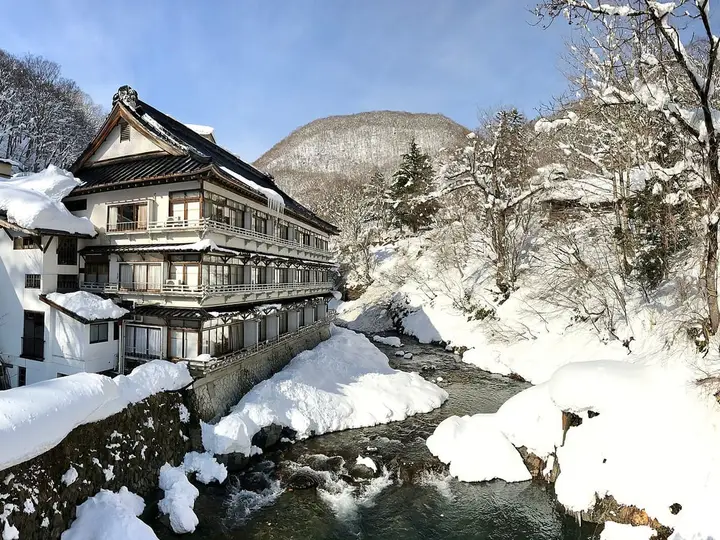
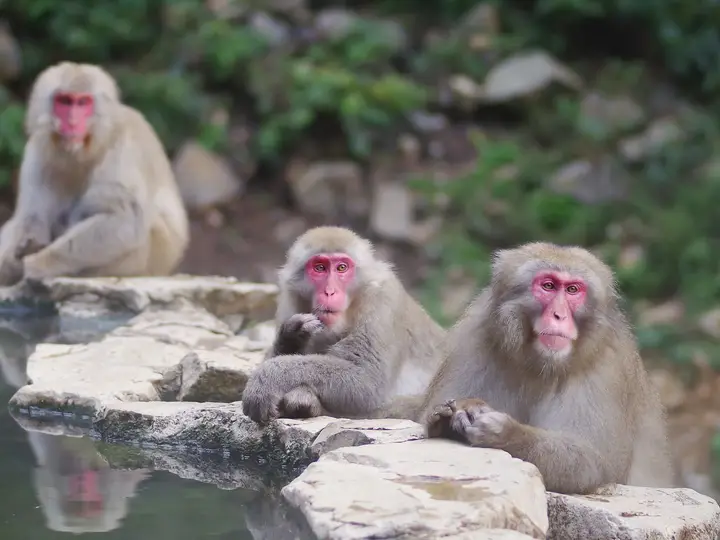
Jigokudani Yaen-kōen (Snow Monkey Park)
Nagano Prefecture, Japan
30 mi away, ~45 min drive
Temp n/a Paid Hike in
Sources we checked (6)
- city.shibukawa.lg.jp/kankou-site/kankou/000357/000361/p003077.html
- ikaho-kankou.com/spring/spa1/
- city.shibukawa.lg.jp/kankou-site/kankou/000357/000361/p000219.html
- city.shibukawa.lg.jp/kankou-site/kankou/000357/000359/p000209.html
- city.shibukawa.lg.jp/kankou-site/kankou/000357/000358/p000215.html
- ja.wikipedia.org/wiki/%E4%BC%8A%E9%A6%99%E4%BF%9D%E6%B8%A9%E6%B3%89