Ginzan Onsen
Near Obanazawa, Yamagata Prefecture, Japan
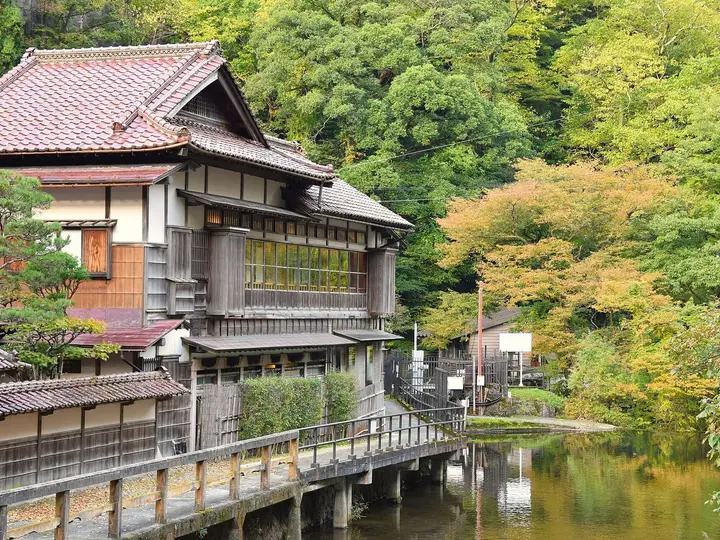
A short street of multi-storey wooden inns from the Taisho and early Showa eras facing each other across the Ginzan River, with one small communal bath and a free riverside foot bath for day visitors.
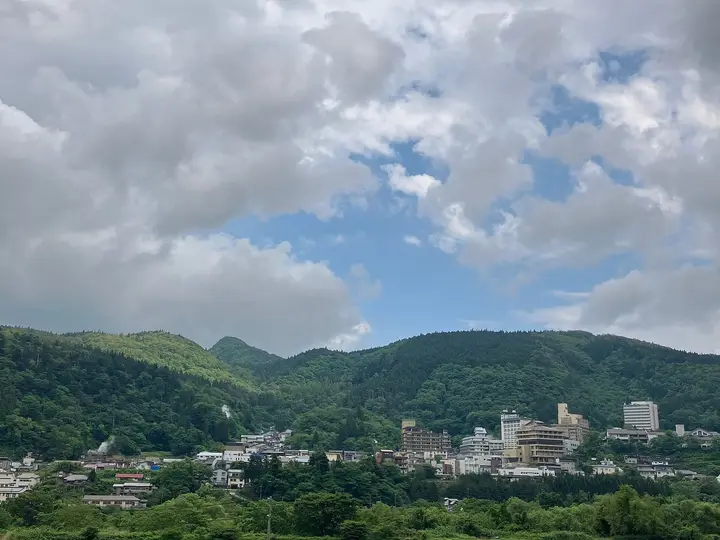
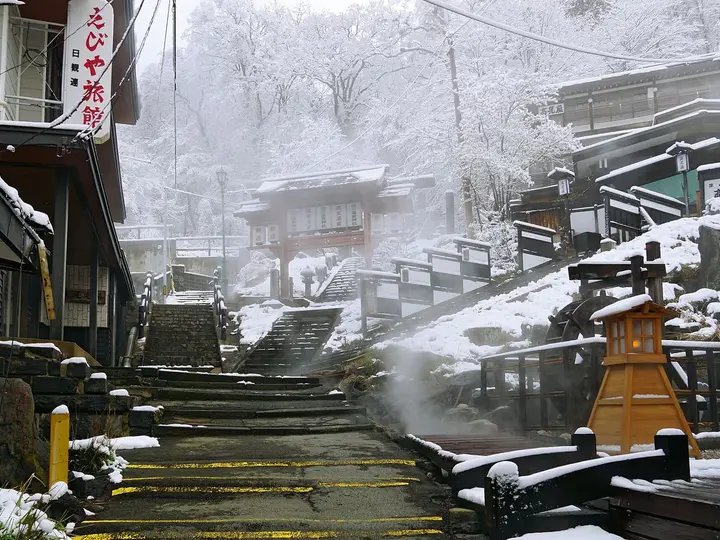
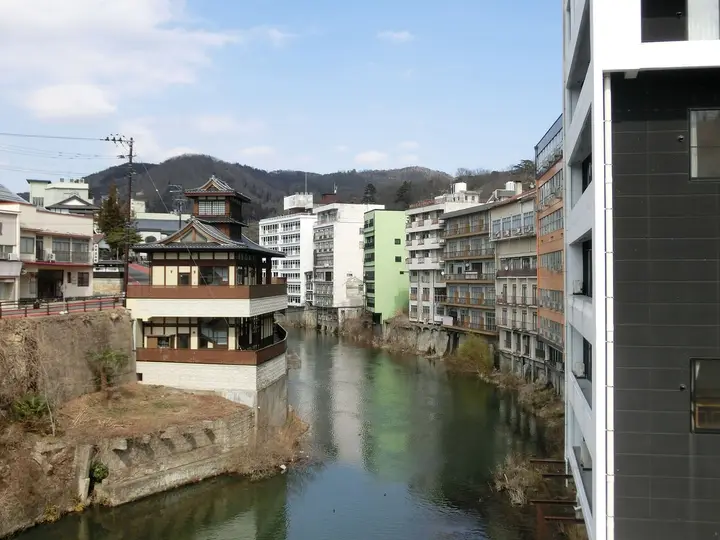
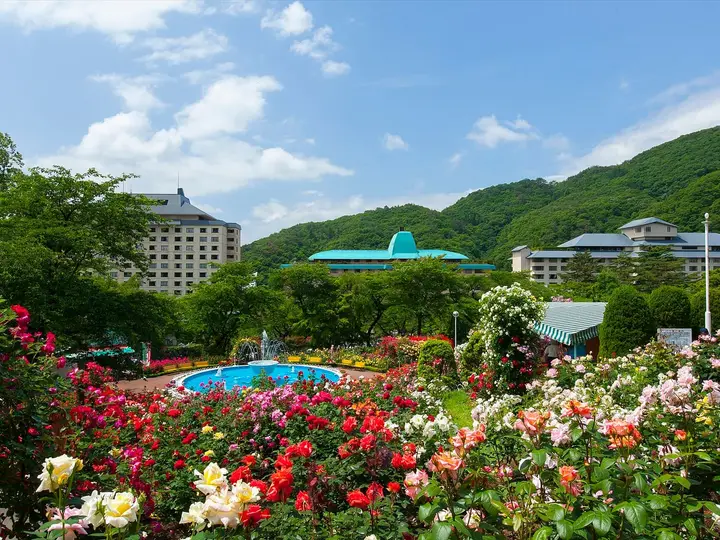
Photos: indri (CC BY 2.0); pakku (CC BY 3.0); 掬茶 (CC BY-SA 4.0); さかおり (CC BY-SA 4.0). Resized and cropped for this page.


- Water temperature
- Not published
- Entry
- Paid
- Getting in
- Short walk
- Type
- Public pool
- Wooden inns several storeys high line both banks of the Ginzan River, most of them built in the Taisho and early Showa eras.
- Day visitors soak at the Shirogane-yu communal bath (¥500) or the free Wakura foot bath, which runs straight from the source.
- In winter, day visitors who drive must park at Taisho Romankan and take a timed shuttle; overnight guests are exempt.
- Shirogane Falls, a 22 m (72 ft) waterfall, is at the top of the street, with a trail on toward the old silver mine.
What to expect
Ginzan Onsen is one street, and a short one. The Ginzan River runs down the middle, and on both banks stand multi-storey wooden inns, most of them built in the Taisho and early Showa eras with Western touches in their design. Footbridges link the two banks. At night the gas lamps come on, and in winter, with snow on every roof and ledge, the street looks the way it does on posters for Yamagata.
The name means “silver mountain”. The town grew up beside the Nobezawa silver mine, which was at its peak in the early Edo period. When the mine declined, so did the town. A flood in 1913 (Taisho 2) swept away most of the inns, and the hot water that supplies the street today came from a boring in 1926. The rebuilt inns are what you see now. The one obvious modern building is Fujiya, redesigned by the architect Kengo Kuma.
Be clear about what kind of soak this is. Ginzan is mainly a place to stay the night at an inn and use its baths. For people who are not staying, there is one small communal bath, Shirogane-yu, and a free foot bath. It is a lovely place to walk, eat and take photos, but a day visitor gets a short, simple soak, not a spa afternoon.
The baths
- Shirogane-yu is the communal bath in the street. It has a men’s side and a women’s side, and they swap each day. A 2026 listing gives the price as ¥500 for adults and ¥200 for primary school children and under, towels ¥200, and hours of about 9:00 to 16:00 with last entry at 15:30. It is a simple local bath, so expect to wait at busy times.
- Wakura foot bath sits by the river at the entrance to the street. It takes water straight from the source and is free. A listing gives its hours as 6:00 to 22:00. Bring a small towel to dry your feet.
- Omokage-yu is a private family bath that the town association lists for 50-minute bookings, taken from 10:00 to 17:00 through the Choromatsu izakaya (0237-28-2493). One recent guide says it is suspended, so call before you plan around it.
- The association’s walking page also lists an older bath, Ōyu (Kajika-yu), at ¥300. Ask at the information desk (0237-28-3933) whether it is open when you visit.
Getting there
By train and bus: Take the JR Yamagata Shinkansen from Tokyo to Oishida Station, about 3 hours 20 minutes. Local buses run from Oishida to Ginzan Onsen in about 35-40 minutes, but only every 60 to 90 minutes, and the Japan Rail Pass does not cover them. Check the return times before you set off.
By car: From Tokyo it is about five hours via the Tohoku and Yamagata expressways and the Tohoku Chuo Expressway to Obanazawa IC, then about 30 minutes to the onsen. From Sendai, allow about two hours via Route 48 and Route 13. The town warns drivers not to use Prefectural Route 29 over the Sebuari Pass from Murayama, which is a very narrow mountain road, and Route 347 from the Furukawa side is closed in winter. Even outside winter you cannot park in the street itself; use the lots outside the centre.
Winter park and ride
Ginzan’s popularity in snow season caused traffic jams, cars stuck in drifts and blocked emergency access, so the town now runs a park-and-ride scheme for day visitors.
How it worked in 2025-26: From December 20, 2025 to March 1, 2026, private cars, rental cars, taxis from outside Yamagata, charter buses, motorcycles and bicycles could not drive Prefectural Road 188 from Taisho Romankan to the onsen. Day visitors parked at Taisho Romankan and boarded a shuttle that left at :00, :20 and :40 past each hour from 9:00. The last bus into town left at 18:00 and the last one back left at 19:30. The ride takes about 10 minutes and stops at Ginzanso-mae, about a 10-minute walk from the street. Fares depended on when you boarded: ¥800 from 9:00 to 10:59, ¥500 from 11:00 to 13:59 and ¥1,000 from 14:00 to 18:00, round trip, with primary school children free. A Priority Pass that fixed your seat cost ¥500 extra. Overnight guests with proof of a booking could drive in.
What is planned for 2026-27: The official winter page, still marked as a draft in October 2026, plans the scheme from December 2026 to early March 2027 with fares of ¥1,300 (9:00-10:40), ¥1,000 (11:00-13:40) and ¥1,500 (14:00-18:00). It says advance booking is strongly recommended, only a very small number of same-day seats will be sold, and your return bus is tied to your outbound time, usually 1 hour 20 minutes later. The booking link was not yet live. Treat these figures as provisional and check the page again in late November.
Do not try to walk the road from the car park. The organisers say it is dangerous in snow, and snowplows work the area from 20:00 to 10:00.
When to go
Winter, from late December to February, is when Ginzan looks its best and is also when it is most crowded and most regulated. Midday shuttle slots are cheapest and the 11:00-14:00 band also lets you stay for lunch. Late afternoon and the lamp-lit evening are the most popular times, so they sell out first.
Spring to autumn is easier. You still park outside the centre, but there is no shuttle booking, the trail to the silver mine opens, and the street is quieter on weekdays. The scheme has also run on a few busy autumn foliage weekends (six days in November 2025), so check the official site in autumn too.
The best way to see the street without crowds is to stay overnight. Once the last shuttle leaves, the street belongs to inn guests.
Onsen etiquette
Wash and rinse your whole body at the taps before you get in, keep your towel out of the water, and do not wear a swimsuit. Keep soaks short at Shirogane-yu when others are waiting. The official site gives no tattoo policy for the communal bath, so ask at the information desk if this matters to you. The organisers ask visitors to keep noise down and respect residents’ privacy.
Where to stay nearby
The inns along the river are the reason most people come, and winter weekends fill early, so book as soon as your dates are fixed. The town’s own booking portal lists vacancies. If Ginzan is full, Obanazawa town and the area around Oishida Station have more ordinary lodging, and Yamagata city is about an hour away by train for a wider choice.
Nearby stops worth adding
Walk to the top of the street to Shirogane Falls, which drops 22 m (72 ft). From there a path continues to the site of the Nobezawa silver mine, a national historic site where you can look into old tunnels for free. The direct route is about 1.4 km (0.9 miles) and takes about an hour, but it closes from the first snow until Greenery Day in early May because the footing gets bad.
Safety notes
- Ice and snow: The street is cleared, but surfaces freeze. Wear boots with good grip or strap-on cleats, and dress for temperatures well below freezing.
- Roads: Snowy mountain roads, narrow lanes and the Sebuari Pass are a bad combination. If you are not used to winter driving, take the train and bus.
- Heat: Hot baths after a cold walk can make you light-headed. Drink water and get out slowly.
- Weather changes: Heavy snow warnings can suspend or change the shuttle. Check the official site and social media on the day.
Map and nearby springs
GPS: 38.57098, 140.53038
Ginzan Onsen: common questions
Can you visit Ginzan Onsen as a day trip in winter?
Yes, but not by driving into town. During the winter scheme, day visitors who arrive by car, rental car, out-of-prefecture taxi or charter bus park at Taisho Romankan and ride a shuttle in. In 2025-26 it ran from December 20 to March 1, every 20 minutes from 9:00, with the last bus in at 18:00 and the last bus out at 19:30. The 2026-27 scheme is planned for December 2026 to early March 2027.
How much is the Ginzan Onsen winter shuttle?
In 2025-26 the round trip cost ¥800 if you boarded between 9:00 and 10:59, ¥500 between 11:00 and 13:59, and ¥1,000 between 14:00 and 18:00, with primary school children free. A Priority Pass that guarantees a timed seat cost ¥500 more. The draft 2026-27 page plans ¥1,300, ¥1,000 and ¥1,500 for the same three bands, so check the final figures before you go.
Where can day visitors bathe at Ginzan Onsen?
The main option is Shirogane-yu, a small communal bath in the street with separate men's and women's sides that swap daily. It costs ¥500 for adults and ¥200 for children. The Wakura foot bath by the river at the entrance to the street is free. Most inns are for overnight guests, so do not count on walking in to an inn bath.
Do overnight guests have to use the shuttle?
No. Guests with a booking at an inn in the town are exempt from the car restriction, but you need to show a reservation number, confirmation screen or the inn name at the checkpoint. Check the arrangements with your inn before you set off.
How do you get to Ginzan Onsen without a car?
Take the JR Yamagata Shinkansen to Oishida Station, about 3 hours 20 minutes from Tokyo, then a local bus to Ginzan Onsen, about 35-40 minutes. Buses leave Oishida only every 60-90 minutes, and the Japan Rail Pass does not cover them. In winter, route bus riders without a shuttle booking may be asked to change at Taisho Romankan.
Can you walk from the parking area into Ginzan Onsen in winter?
No. The organisers ask people not to walk the road between Taisho Romankan and the town in winter because of snow, ice and snowplows. Use the shuttle.
Closest hot springs to Ginzan Onsen
Sources we checked (6)
- ginzanonsen.jp/winter/2026/
- ginzanonsen.jp/%E3%80%90%E8%8B%B1%E4%B8%AD%E8%AA%9E%E3%80%912025%E5%86%AC%E3%83%9E%E3%82%A4%E3%82%AB%E3%83%BC%E8%A6%8F%E5%88%B6%E6%A1%88%E5%86%852.pdf
- ginzanonsen.jp/access/
- ginzanonsen.jp/ginzan/walk.html
- japan.travel/en/spot/1798/
- mapple.net/region/a0202050101_g04000000_s-situation=family/spot/