Hanamaki Onsen
Near Hanamaki, Iwate Prefecture, Japan
A resort onsen outside Hanamaki in Iwate where three linked hotels and a ryokan share one company, one hot spring source and a large rose garden with a flower bed designed by the writer Kenji Miyazawa.
Photos: なはん弁 (CC BY-SA 4.0); 663highland (CC BY 2.5); Tomofumi Sato (CC BY-SA 3.0). Resized and cropped for this page.


- Water temperature
- Not published
- Entry
- Paid
- Getting in
- Drive-up
- Type
- Resort or spa
- Stay at one of the three hotels and you can bathe free in the other two, linked by a covered walkway and an on-site shuttle.
- The rose garden holds over 6,000 plants of about 450 varieties, plus a sundial flower bed designed by Kenji Miyazawa.
- Day visitors pay ¥1,200 on weekdays for one hotel's baths; the newer Hanamaki Manten no Yu garden bath costs ¥1,500.
- The free shuttle from Shin-Hanamaki and Hanamaki stations runs only on reservation.
What to expect
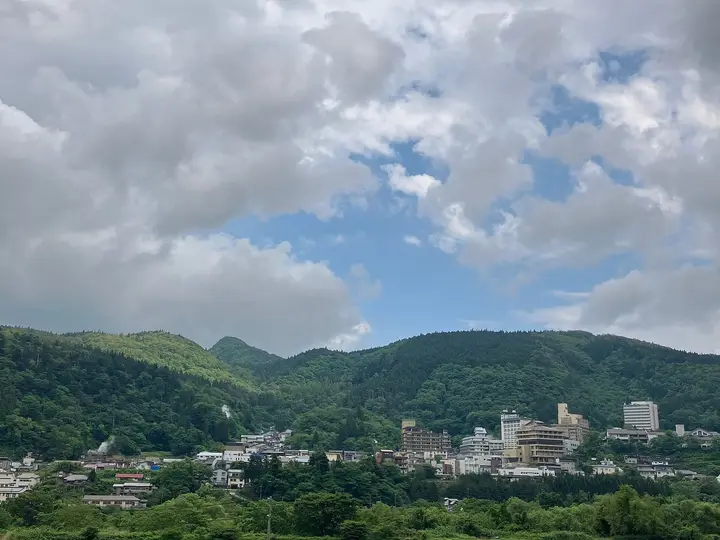
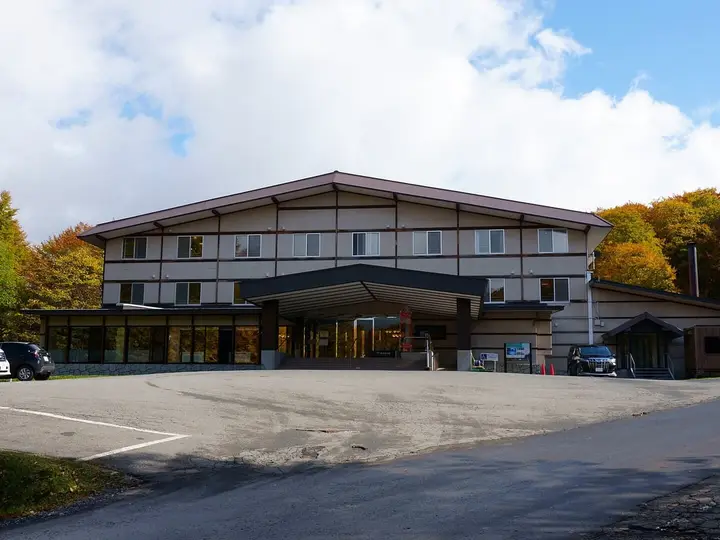
Hanamaki Onsen is a planned resort rather than an old onsen village. It sits in the hills northwest of Hanamaki city in Iwate, a few minutes off the Tohoku Expressway, and one company, Hanamaki Onsen Co., runs almost everything: three large hotels (Hotel Senshukaku, Hotel Hanamaki and Hotel Koyokan), a smaller upmarket ryokan (Kashoen) and the rose garden that ties them together.
The three hotels are linked by a covered walkway called Bara no Komichi and by an on-site shuttle, the Yumeguri-go. If you stay at any one of them, you can use the main baths at the other two for free, so a night here becomes a small bath crawl. Day visitors can bathe too, one building per ticket.
The water is a weakly alkaline simple spring, pH 7.7, clear, tasteless and odourless. It leaves the source at 142.9°F61.6°C, which is far too hot to bathe in straight from the ground. The operator is upfront that the baths are circulated and filtered and that chlorine is used, so this is a comfortable hotel soak, not a free-flowing rustic spring.
Note the name. Locals and tourism sites also talk about the Hanamaki onsen villages, a group of separate hot spring areas around the city such as Dai, Osawa, Namari and Shidotaira onsen. This page covers Hanamaki Onsen itself, the resort at 1-125 Yumoto.
The baths
- Senshu no Yu (Hotel Senshukaku, basement): indoor baths with a sauna, a waterfall shower bath (utase-yu) and a pot bath. From May to October the women’s side runs a rose bath, 14:00-21:30.
- Hanamaki no Yu (Hotel Hanamaki, second floor): a rock outdoor bath and a sauna.
- Hanamaki Manten no Yu (Hotel Hanamaki, ground floor): a garden outdoor bath that opened in November 2024. It has no indoor bath or sauna, and it closes on Thursdays from 10:00 to 15:00 for cleaning.
- Momiji no Yu (Hotel Koyokan, basement): a rock outdoor bath, a sauna and a pot bath.
- Private baths (Hotel Hanamaki, basement): four rooms, 45 minutes each, 6:30-23:00.
- Foot and hand baths: free, 6:00-18:00 (to 21:00 in summer), closed in winter.
- Hōrai-yu, the small local public bath, has been closed since April 10, 2026 because of an uncertain heavy-oil supply, with no reopening date.
Prices and booking
Day bathing (2026, tax included):
- Senshu no Yu, Hanamaki no Yu or Momiji no Yu: adults ¥1,200 and children ¥600 on weekdays; ¥1,500 and ¥750 on weekends, holidays and special dates. Hours are 8:00-10:00 and 12:00-21:00 at Senshu no Yu and Momiji no Yu, and 8:00-12:00 and 14:00-21:00 at Hanamaki no Yu.
- Hanamaki Manten no Yu: adults ¥1,500 and children ¥750 on weekdays; ¥1,800 and ¥900 on weekends and holidays. Hours 8:00-12:00 and 14:00-21:00.
- Private baths: ¥3,300 per room on top of each person’s day-bathing ticket. Towels included; booking recommended.
- Books of tickets: 5 visits for ¥6,000 or 10 for ¥12,000, valid six months.
- Towels: bath towel rental ¥300; face towels ¥200 to buy at the Senshukaku front desk or the onsen bakery.
The operator warns that baths can be closed for inspections or work on short notice. All facilities close from January 11 to 17, 2027 for maintenance.
Overnight: rooms are booked through the Hanamaki Onsen reservation system, which moved to a new platform on October 1, 2026. Previous members have to register again. The reservation centre is 0198-37-2111, 9:00-18:00.
The rose garden
The rose garden covers about 5,000 tsubo (roughly 1.6 ha, or 4 acres) and holds more than 6,000 plants of about 450 varieties, including a dozen bred here. Work on it began in 1958, and it opened in 1960. Its best-known feature is a sundial flower bed designed by Kenji Miyazawa, the Hanamaki-born poet and children’s author. It first stood in the courtyard of Hotel Koyokan and was later moved into the garden.
Peak bloom comes in three waves: late May to late June, early to mid August, and mid September to mid October. Hours are 8:00-17:00 (8:00-16:30 in winter). Adults pay ¥1,000 in the early summer peak, ¥500 from early July to early October and ¥800 in October; outside those periods, and for primary school children at any time, it is free.
Getting there
- By shuttle: Hanamaki Onsen runs a free bus from JR Shin-Hanamaki Station (Tohoku Shinkansen) and JR Hanamaki Station, but only on reservation. Without a booking it does not run. Afternoon pickups reach the resort between about 15:00 and 17:45, and morning returns leave from about 8:10. Book online or by phone.
- By local bus: Iwate Kenkotsu buses from Hanamaki Station toward Dai Onsen take about 20 minutes to the Hanamaki Onsen stop. Local buses from Morioka Station take about 40 minutes.
- By air: Hanamaki Airport is about 15 minutes away by car or taxi. On Wednesdays and Saturdays an evening bus runs from the airport; from October 28, 2026 to March 27, 2027 it leaves at 17:30 and 17:45.
- By car: From Hanamaki IC on the Tohoku Expressway, drive about 4 km (2.5 miles) straight along Prefectural Route 37 to the white Hanamaki Onsen gate, about 5 minutes. Parking is free for about 600 cars. Navigation systems sometimes send you to the back of the hotels by address, so search by hotel name or phone number.
- From Sendai: the Kenji Liner highway bus stops at Hanamaki Onsen on weekdays only.
When to go
Late May to late June is the main rose season, when the garden charges its top price. Autumn brings the third rose bloom and colour on the hills around Kamabuchi Falls, near Hotel Koyokan. Winter is quiet and snowy, the foot bath closes, and the whole resort shuts for a week in mid January 2027. Weekday day bathing is ¥300 cheaper than weekends.
Onsen etiquette
Wash and rinse your whole body at the taps before you get in, keep towels out of the bath, and do not wear a swimsuit. Men’s and women’s baths are separate. The operator does not publish a tattoo policy, so call the reservation centre before you go if this affects you.
Where to stay nearby
The four Hanamaki Onsen properties are the obvious base. Hotel Senshukaku has the widest choice of room types, Hotel Hanamaki and Hotel Koyokan have the rock outdoor baths, and Kashoen is the upmarket ryokan, known for seafood and local mountain cooking. The other Hanamaki onsen areas, such as Osawa and Namari, have their own inns, and Hanamaki city has more ordinary hotels around the station.
Safety notes
- Heat: Saunas and hot baths in a row raise your heart rate. Drink water and cool down between soaks.
- Winter roads: Iwate gets snow and ice in winter. If you drive, make sure your car has winter tyres.
- Children: The baths are fine for families, but children should be supervised in the hotter pools and the sauna.
Map and nearby springs
GPS: 39.45166, 141.06963
Hanamaki Onsen: common questions
Can you visit Hanamaki Onsen for a day bath?
Yes. Senshu no Yu (Hotel Senshukaku) and Momiji no Yu (Hotel Koyokan) take day bathers from 8:00 to 10:00 and 12:00 to 21:00, and Hanamaki no Yu (Hotel Hanamaki) from 8:00 to 12:00 and 14:00 to 21:00. Adults pay ¥1,200 on weekdays and ¥1,500 on weekends and holidays; children pay half. One ticket covers one building. The baths can close for inspections, so call 0198-37-2111 first.
How much is the Hanamaki Onsen rose garden?
Adults (junior high and up) pay ¥1,000 from late May to early July, ¥500 from early July to early October and ¥800 from early to mid October. Entry is free the rest of the year and always free for primary school children. Hotel guests get a discount coupon at the front desk. It opens 8:00-17:00, closing at 16:30 in winter.
Is there a shuttle bus to Hanamaki Onsen?
Yes, a free shuttle runs from JR Shin-Hanamaki Station and JR Hanamaki Station, with some morning runs calling at Hanamaki Airport, but it only runs if someone has booked it. Reserve online or call 0198-37-2111 (9:00-18:00). Without a booking, take a local bus from Hanamaki Station (about 20 minutes) or a taxi.
Is Hanamaki Onsen closed in January 2027?
Yes. Hanamaki Onsen says all of its facilities will close from January 11 to 17, 2027 for maintenance inspections. Plan winter trips around those dates.
Is Hanamaki Onsen the same as Hanamaki Onsenkyo?
Not quite. Hanamaki Onsen is the single resort run by Hanamaki Onsen Co. with four lodgings. The city's tourism site also lists more than ten other hot spring areas within Hanamaki, including Dai, Osawa, Namari and Shidotaira onsen, which people often group together as the Hanamaki onsen villages.
What is the water like at Hanamaki Onsen?
It is a clear, tasteless and odourless weakly alkaline simple spring, pH 7.7, that leaves the source at 142.9°F61.6°C. The operator says the bath water is circulated, filtered and chlorinated.
Closest hot springs to Hanamaki Onsen
Near Semboku (Tazawako)
Resort or spa