Nyuto Onsenkyo
Near Semboku (Tazawako), Akita Prefecture, Japan
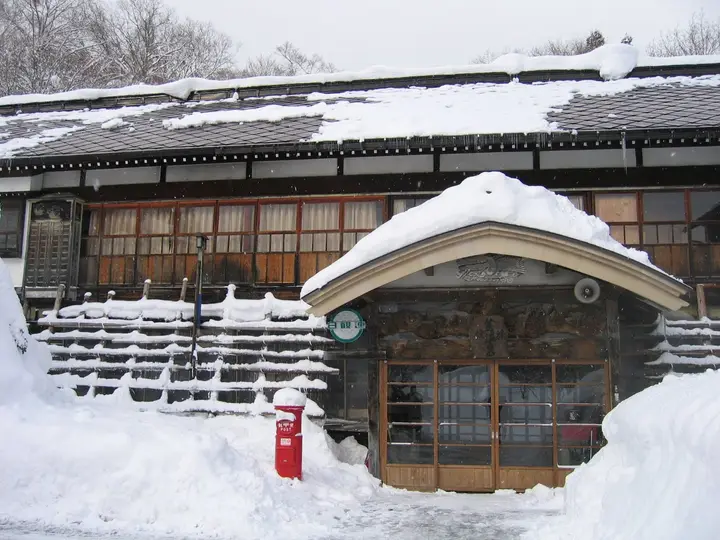
Seven separate onsen inns, each with its own springs, spread along a beech-forested valley below Mt. Nyuto in Akita, linked by a shuttle bus and the guests-only Yumeguri-cho bath pass.
Photos: Bjckashiwa (CC BY-SA 4.0); 掬茶 (CC BY-SA 4.0). Resized and cropped for this page.


- Water temperature
- Not published
- Entry
- Paid
- Getting in
- Drive-up
- Type
- Resort or spa
- Seven inns belong to the Nyuto Onsen union: Tsurunoyu, Taenoyu, Ganiba, Ogama, Magoroku, Kuroyu and Kyukamura. The union says the area has more than ten different springs.
- Overnight guests can buy the ¥2,500 Yumeguri-cho, good for one bath at each of the seven inns and the Yumeguri-go shuttle for a year.
- Ogama stopped taking overnight guests on Jan 1, 2026 but still runs day bathing.
- Kuroyu, the inn at the head of the valley, closes for the winter, and the shuttle stops short of Kuroyu and Magoroku from late November.
What to expect
Nyūtō Onsenkyō is not a town. It is seven separate inns spread along a forest road in the upper valley below Mt. Nyūtō (1,478 m), east of Lake Tazawa in Semboku, Akita Prefecture. The whole area sits inside Towada-Hachimantai National Park, and the national government lists it as a designated health-resort hot spring area. Each inn draws its own water, and the local union says there are more than ten different springs between them, from milky sulfur water to clear, soft simple springs.
The seven inns in the Nyūtō Onsen union are:
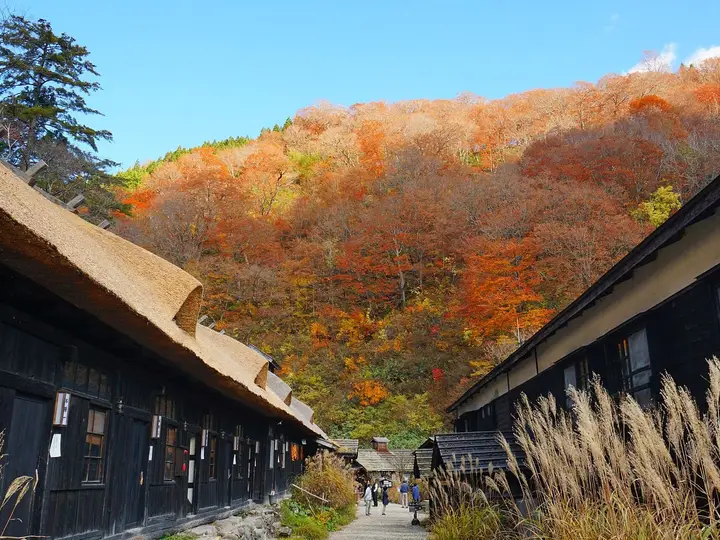
- Tsurunoyu (Tsuru-no-yu): the oldest, with a thatched row house called the Honjin and four springs rising within 50 m of each other. It has its own listing, Tsurunoyu Onsen.
- Taenoyu: a riverside inn with two springs, gold and silver, and a modern Japanese style. See our separate Nyuto Onsenkyo Taenoyu page.
- Ganiba: named for the crabs in the nearby stream, with an open-air bath in the forest about 50 m from the main building.
- Ōgama: a former wooden schoolhouse moved to the site. Overnight stays have been suspended since Jan 1, 2026 for maintenance, but day bathing continues.
- Magoroku: an old hot-spring cure inn with its bath buildings down by the river, now the only Nyūtō inn with a barrel sauna.
- Kuroyu: at the head of the valley, with a source steaming right beside the inn and an open season of roughly mid-April to mid-November.
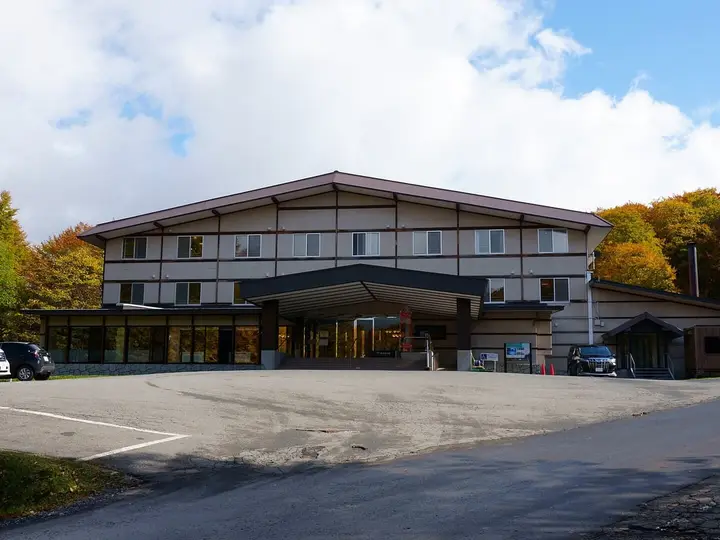
- Kyukamura Nyuto Onsenkyo: a modern lodge with a campground in the beech forest. See Kyukamura Nyuto Onsenkyo.
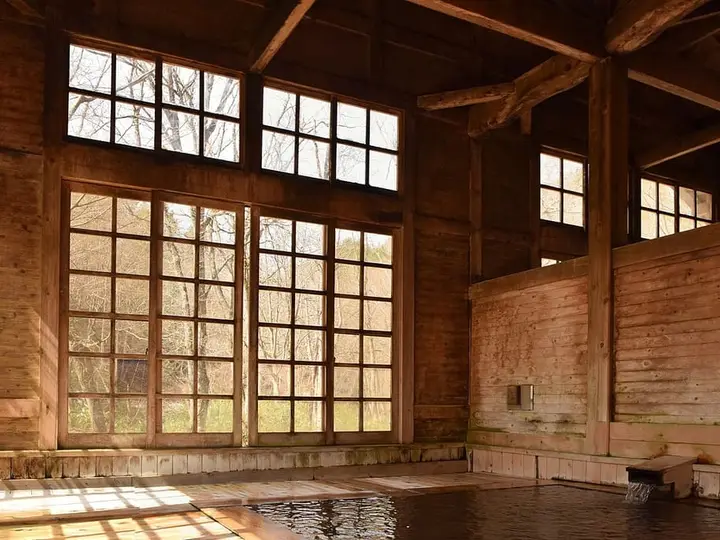
Expect rustic buildings, wooden tubs and steam rising from the woods. Several inns have mixed open-air baths alongside their men’s and women’s baths, so read the rules at each door.
The Yumeguri-chō pass and the shuttle
The union’s Yumeguri-chō booklet is the classic way to see the area: ¥2,500 (¥1,000 for children), valid for one year, with one bath at each of the seven inns and free rides on the Yumeguri-gō shuttle. It is sold only to overnight guests at a participating inn, cash only, at the front desk. You can buy it before check-in.
Day visitors can buy the Yumeguri map for ¥1,000, which covers the shuttle for that day only. Each bath is then paid at the door. The union says the map is sold from April to November.
The shuttle runs a loop from Tsurunoyu past Yamanoyado, Kyukamura, Taenoyu, Ōgama and Ganiba to Kuroyu and Magoroku. The timetable in force from April 15, 2026 has five departures a day from Tsurunoyu, at 8:40, 10:18, 12:50, 14:38 and 16:11. In winter it runs only between Tsurunoyu and Ganiba. The 2025-26 winter timetable began on Nov 10, 2025, with five runs a day. Pick up the current sheet when you arrive.
Kyukamura, Taenoyu, Ōgama and Ganiba sit close together, and Taenoyu gives walking times of 3 minutes from Ganiba to Ōgama, 2 minutes from Ōgama to Taenoyu and 5 minutes on to Kyukamura. Kuroyu is about 25 minutes on foot from Kyukamura, and Magoroku about 5 minutes beyond Kuroyu. Tsurunoyu is off on its own side road, so use the shuttle for it.
Day bathing at each inn
Prices and hours below come from the union site and the inns’ own pages in October 2026. Each inn sets its own rules and closing day, and they change.
| Inn | Adults | Day-bath hours | Closed to day visitors |
|---|---|---|---|
| Tsurunoyu | ¥700 (children ¥300) | 10:00-15:00 | Mondays |
| Taenoyu | ¥1,000 | 10:30-15:00, last entry 14:00 | Tuesdays |
| Ganiba | ¥800 | 9:00-16:00 | Wednesdays |
| Ōgama | ¥700 (children ¥350) | 9:00-16:30, last entry 16:00 | Thursdays |
| Magoroku | ¥700, plus ¥2,300 for the bathing-wear zone | reception 10:00-14:30, out by 15:00 | Fridays |
| Kuroyu | ¥800 | 9:00-16:30, last entry 16:00 | Wednesdays from 11:00; closed in winter |
| Kyukamura | ¥800 | 11:00-15:00 | see its page for the Nov-Dec 2026 bath works |
Tsurunoyu moves its cleaning day to the nearest weekday when Monday is a holiday. Magoroku’s extra ¥2,300 covers its mixed sauna, mixed open-air bath and mixed indoor bath, where its own bathing wear is used. Ōgama sells face towels for ¥300 and rents bath towels for ¥500, and says it has no staff who speak foreign languages.
Kyukamura is renovating its bathrooms from Nov 4 to Dec 3, 2026 and is running a single shared tub on a timetable for those weeks.
Getting there
The gateway is JR Tazawako Station on the Akita Shinkansen. The union gives these rail times to Tazawako: about 2 hours 55 minutes from Tokyo, 1 hour 15 minutes from Sendai, 40 minutes from Morioka and 55 minutes from Akita.
From the station, the Ugo Kōtsū bus bound for Nyūtō Onsen takes about 50 minutes to the end of the line and costs ¥820 one way. Stops serve Kyukamura, Taenoyu and Ganiba directly. For Tsurunoyu, the city says to get off at the Tsurunoyu-iriguchi stop and walk about 50 minutes, so most people use the Yumeguri-gō shuttle instead. The city also notes a pickup bus to Tsurunoyu from the Alpa Komakusa visitor centre, by reservation. A taxi from Tazawako takes about 30 minutes and Taenoyu puts the fare at around ¥7,000. The reserved Akita Airport Liner runs from Akita Airport to the inns in about 2 hours 10 minutes.
By car, it is about an hour from the Morioka IC on the Tohoku Expressway, or about 1 hour 30 minutes from Akita city, using Route 46 and Route 341. The last stretch climbs through forest. Snow tyres are needed from about mid-November to late April.
When to go
Autumn colour in the beech forest, usually from late September through October, is the busiest season. Winter is the other big draw, with snow banked around the open-air baths, but some services shrink: Kuroyu closes, the shuttle is cut back, and phone lines at some inns may not be answered. The city asks winter visitors to call the Tazawako tourist information centre, Folake, on 0187-43-2111 if an inn cannot be reached.
Day visitors crowd the best-known baths, Tsurunoyu in particular, from late morning on weekends. Arrive soon after opening or stay overnight and bathe in the early morning. Remember that most inns stop letting day visitors in by mid-afternoon.
Where to stay nearby
Staying in the valley is the only way to get the Yumeguri-chō. Tsurunoyu and its annex Yamanoyado, Taenoyu, Ganiba, Kuroyu, Magoroku and Kyukamura all take overnight guests. Magoroku is now a small, high-end inn for about 12 guests, and the union lists its rooms from ¥45,100. Kyukamura also runs a campground in the forest. Book early for autumn and winter weekends, since the inns are small. Below the valley, Tazawako Kōgen Onsen and the hotels around Lake Tazawa are on the bus route back to Tazawako Station.
Onsen etiquette
- Wash before you get in, keep towels out of the water and bathe naked in the regular baths.
- In mixed baths, follow the inn’s rules. Taenoyu allows a wrapped bath towel in its mixed open-air baths and has women-only hours. Magoroku’s mixed zone uses its own bathing wear. Tsurunoyu’s rules are on its own listing.
- No photos in or near the baths.
- The union asks bathers to watch for yuatari, the dizziness and fatigue that come from soaking in too many strong springs in one day.
Safety notes
- Strong water: several springs are acidic or sulfurous. Rinse off after a soak if your skin is sensitive, and keep the number of baths per day sensible.
- Snow and roads: winter driving is serious here. Fill up with fuel and draw cash in Tazawako, since the Yumeguri-chō is cash only.
- Walking between inns: the forest paths can be icy or muddy. Use the shuttle in bad weather and after dark.
- Remote area: the valley has nothing but the inns and the forest. Carry what you need for the day, including cash.
Map and nearby springs
GPS: 39.80484, 140.79665
Nyuto Onsenkyo: common questions
What is Nyuto Onsenkyo?
It is a group of seven onsen inns scattered along the valley at the foot of Mt. Nyuto in Semboku, Akita Prefecture, inside Towada-Hachimantai National Park. Each inn has its own springs. There is no central bathhouse and no town, just the inns, a campground and the forest road between them.
Can day visitors buy the Yumeguri-cho pass?
No. The union sells the ¥2,500 Yumeguri-cho (¥1,000 for children) only to people staying at one of the seven inns, cash only, at the inn front desks. Day visitors can buy the ¥1,000 Yumeguri map, which covers the shuttle bus only, and pay each inn's bath fee at the door. The union says the map is sold from April to November.
How much does day bathing cost at the Nyuto inns?
Adults pay ¥700 at Tsurunoyu and Ogama, ¥800 at Ganiba, Kuroyu and Kyukamura, and ¥1,000 at Taenoyu. Magoroku charges ¥700 for its separate men's and women's indoor baths and adds ¥2,300 for its bathing-wear zone with mixed baths and a sauna. Prices are from the union and inn sites in October 2026.
Are the baths at Nyuto Onsen mixed?
Some are. Every inn has baths for men and women, but several also have mixed open-air baths, including Tsurunoyu's best-known pool. Taenoyu lets you wear a bath towel in its mixed baths and sets women-only hours. Magoroku's mixed area requires its bathing wear and an extra fee. Check each inn's rules.
Is Nyuto Onsen open in winter?
Six of the seven inns stay open all year. Kuroyu runs only from about mid-April to mid-November. In winter the Yumeguri-go shuttle runs only between Tsurunoyu and Ganiba; for Magoroku, get off at Ogama and walk about 15 minutes if the road allows.
How do I get to Nyuto Onsen from Tokyo?
Take the Akita Shinkansen to JR Tazawako Station, about 2 hours 55 minutes from Tokyo, then the Ugo Kotsu bus bound for Nyuto Onsen, about 50 minutes. A taxi from Tazawako takes about 30 minutes. By car it is about an hour from the Morioka IC on the Tohoku Expressway.
Closest hot springs to Nyuto Onsenkyo
Near Semboku (Tazawako)
Resort or spa