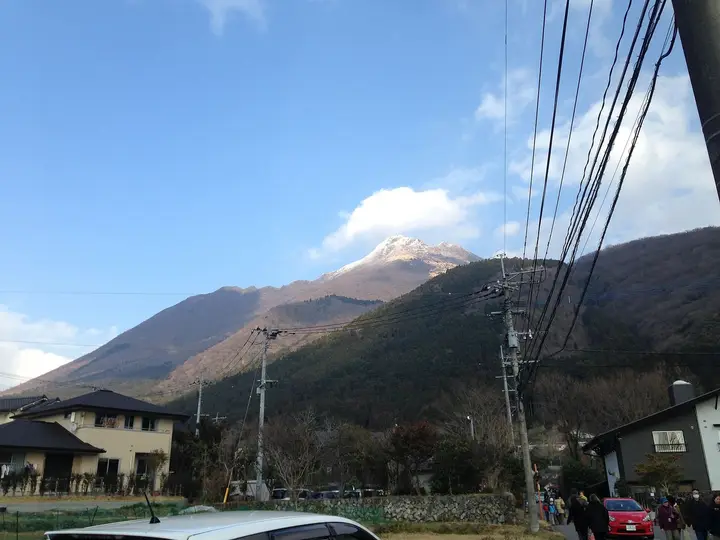
Unzen Onsen
Near Unzen, Nagasaki Prefecture, Japan
A mountain spa town on the Shimabara Peninsula built around the Unzen Jigoku, a steaming field of fumaroles. Milky, acidic sulfur water from the hells feeds three old communal baths that cost ¥200 to ¥500.
Photos: David Pursehouse from Kawasaki, Japan (CC BY 2.0); lienyuan lee (CC BY 3.0); Opqr (CC BY-SA 3.0); 663highland (CC BY 2.5). Resized and cropped for this page.


- Water temperature
- 104-109°F40-43°C
- Entry
- Paid
- Getting in
- Drive-up
- Type
- Public pool
- Shin-yu and Yunosato, the two neighbourhood communal baths, cost ¥200 for adults and stay open until 22:00.
- Kojigoku Onsenkan, a wooden bathhouse dating from 1919, draws milky sulfur water from a hot pool right behind the building.
- The waters are acidic: about pH 2.3 at Yunosato and pH 4.3 at Kojigoku, piped from the hells with no water added at Yunosato.
- Unzen was at the heart of Japan's first national park, designated in 1934.
What to expect
Unzen Onsen is a hot spring town at about the middle of the Shimabara Peninsula in Nagasaki Prefecture, set in the hills below the Unzen volcano. The centre of town is the Unzen Jigoku (“Unzen hells”), a bare, sulfur-stained basin of hissing vents and boiling pools with walkways through it. The smell of sulfur meets you as you arrive, and the hot water for the inns and public baths comes from these vents.
Unzen became the centrepiece of Japan’s first national park when it was designated in 1934, and it has been a mountain resort since well before that. Today it is a compact town of hotels and ryokan, with a few old communal baths that local people still use every day.
The tourism association describes three hot spring areas: Furuyu (the oldest), Shin-yu and Kojigoku. The water varies from one to the next, and locals say its colour and strength change from day to day. Most of it is acidic sulfur water, cloudy white to clear, with a source temperature of about 140°F60°C. Down on the coast, 20 minutes away by car, the town of Obama has a completely different spring: clear, salty and much hotter.
The public baths
Shin-yu Onsenkan (雲仙新湯温泉館)
A plain, old-fashioned communal bath tucked a little back from the Jigoku walking paths, opposite the Miyazaki Ryokan. The tourism site says the present building dates from about 1957, and the bath has been kept up by the neighbourhood for over a century. Inside are a wide changing room, stone-tiled bathroom and small tubs filled straight from the hells through hot and medium taps. A floating thermometer read 106°F41°C on the association’s visit, and the water was acidic sulfur at about pH 2.4. There is a cup for drinking a little of the water; the association suggests one cupful at most. Shampoo and soap are not provided, but you can buy them.
- ¥200 adults, ¥100 children
- 9:00 to 22:00, closed Wednesdays
- Free parking for 4 cars; 3 minutes’ walk from the Unzen Oyama no Jōhōkan bus stop
- Tel. 0957-73-3233
Yunosato communal bath (湯の里共同浴場), Furuyu
Known locally as the Dankyū-buro. When the bath moved here from the riverside in 1934, the story goes, a huge pickled-scallion (rakkyō, “dankyū” in local dialect) barrel was cut in half to make the men’s and women’s tubs. Today there is a single oval tub, and it is deep: the association warns that standing in the middle the water comes up to your chest, so sit on the inner step. The water is strongly acidic (about pH 2.3), comes in at about 149°F65°C and is cooled naturally with no water added, reaching the tub at about 109°F43°C.
- ¥200 adults, ¥100 children
- 9:00 to 22:00, closed Tuesdays
- Tel. 080-5286-2576
Kojigoku Onsenkan (小地獄温泉館)
A tall-ceilinged wooden bathhouse run by the nearby Seiunsō hotel, which says it opened in 1919. Behind the building is the hot pool, at about 142°F61°C, that feeds it directly. The water is a simple sulfur spring at pH 4.3, often milky white with flakes of yu-no-hana floating in it. There are two tubs, one at about 109°F43°C and one at about 104°F40°C, and a rest room for cooling off afterwards.
- ¥500 adults, ¥250 elementary age and under, free for 3 and under
- 9:30 to 19:00 (may change without notice), closed Wednesdays
- Tel. 0957-73-3273 (Seiunsō)
Unzen Yokayu
A modern day spa on Route 57 with men’s and women’s baths, open-air pools among the trees and four private family baths. The water is gathered from Shin-yu sources, cooled naturally and run straight through at about 106°F41°C. ¥500 adults, ¥250 children, 10:00 to 21:00, closed Thursdays (tel. 0957-73-2003).
Prices and booking
Shin-yu prices are from the tourism association’s current spot page. The others come from its 2022 guide to the communal baths, so allow for small changes. None of the public baths takes bookings. Bring your own towel and soap to the communal baths. Many hotels also sell day bathing; Seiunsō, which runs Kojigoku, has its own spring piped straight into its baths.
Cameras and phones are not allowed in the bathing areas.
Onsen etiquette
These are neighbourhood baths with regulars who come at the same time every day. Say hello, rinse off before getting in, keep your towel out of the water and do not swim or splash. Sulfur water tarnishes silver, so take off jewellery.
No tattoo policy is published for any of the baths. Call first if you have visible tattoos.
Getting there
Isahaya is the gateway. It is on the Nishi-Kyushu Shinkansen (about 20 minutes from Takeo-Onsen) and on JR lines from Nagasaki (about 30 minutes) and Sasebo.
- Bus: Isahaya Station to Unzen, about 80 minutes.
- Fixed-fare taxi: Isahaya to Unzen, about 60 minutes.
- From Nagasaki Airport: bus to Isahaya, about 50 minutes, then the Unzen bus.
- By car: about 60 minutes from Isahaya.
If you are coming from Saga, Ureshino Onsen is one stop up the same Shinkansen line and makes an easy pairing.
When to go
Unzen sits high on the mountain, so it is noticeably cooler than the coast in summer and cold in winter. The mountain is known for spring azaleas and autumn leaves. Early morning is the best time for the Jigoku, when the steam shows up most against the cool air. Locals fill the communal baths in the late afternoon; mid-morning is quieter. Check the closing days before you go, since Shin-yu and Kojigoku both shut on Wednesdays and Yunosato on Tuesdays.
Where to stay nearby
Hotels and ryokan line the streets around the Jigoku. The tourism site profiles Seiunsō, which opened as a youth hostel in 1959 and was renovated in 2022, and the Unzen Sky Hotel, a 70-year-old hotel near the hells with the largest bath in town. For a sea view, stay down the hill at Obama Onsen, about 20 minutes by car, which has its own communal baths and a seawall open-air bath at the Hotel Orange Bay.
Other Kyushu onsen towns on this site include Beppu, Kirishima and Ibusuki.
Safety notes
- Volcanic ground: the hells reach boiling point and give off sulfur gases. Stay on the paths and fences, do not let children run ahead, and leave if you feel unwell.
- Acidic water: the pH 2.3 water at Yunosato and Yokayu can sting cuts and sensitive skin and irritate eyes. Rinse with fresh water if it bothers you.
- Deep and hot tubs: Yunosato’s tub is chest-deep in the middle and 109°F43°C. Ease in, keep soaks short and drink water.
- Winter roads: the mountain roads can ice up in cold snaps; check conditions before driving.
Map and nearby springs
GPS: 32.73799, 130.26392
Unzen Onsen: common questions
How much do the Unzen public baths cost?
The Shin-yu Onsenkan and the Yunosato communal bath in the Furuyu district each charge ¥200 for adults and ¥100 for children. Kojigoku Onsenkan charges ¥500 for adults and ¥250 for children of elementary age and under; children 3 and under are free. The Unzen Yokayu day spa charges ¥500 and ¥250.
What is the water like at Unzen Onsen?
Milky to clear sulfur water, piped from the volcanic hells around the town. The tourism site gives the source at around 140°F60°C. Yunosato's water is strongly acidic at about pH 2.3 and cooled naturally with no water added; Kojigoku is a simple sulfur spring at pH 4.3 with tubs at about 109°F and 104°F43°C and 40°C.
Is there mixed bathing at Unzen?
Not at the public baths covered here. Shin-yu, Yunosato, Kojigoku and Yokayu all have separate men's and women's baths. Yokayu also rents four private family baths.
How do I get to Unzen Onsen?
Take a train to Isahaya, which has Nishi-Kyushu Shinkansen and JR services, then a bus up the mountain, about 80 minutes. A fixed-fare taxi from Isahaya takes about 60 minutes. Nagasaki Airport to Isahaya is about 50 minutes by bus.
Are tattoos allowed in the Unzen baths?
No tattoo policy is published for the communal baths. Call ahead: Shin-yu 0957-73-3233, Yunosato 080-5286-2576, or Kojigoku through Seiunsō on 0957-73-3273.
Can you visit the Unzen Jigoku without bathing?
Yes. The hells are a free walking area in the middle of the town, with paths and boardwalks between the steam vents. Stay on the marked paths: the ground and water are scalding and volcanic gas collects in hollows.
Closest hot springs to Unzen Onsen
Near Takachiho
Public pool
Takachiho Onsen (Takachiho no Yu)
Miyazaki Prefecture, Japan
61 mi away, ~1.5 hr drive
Temp n/a Paid Drive-up
108°F42°C
Resort or spa