Ruby Valley Hot Springs
Near Jiggs, Nevada, United States
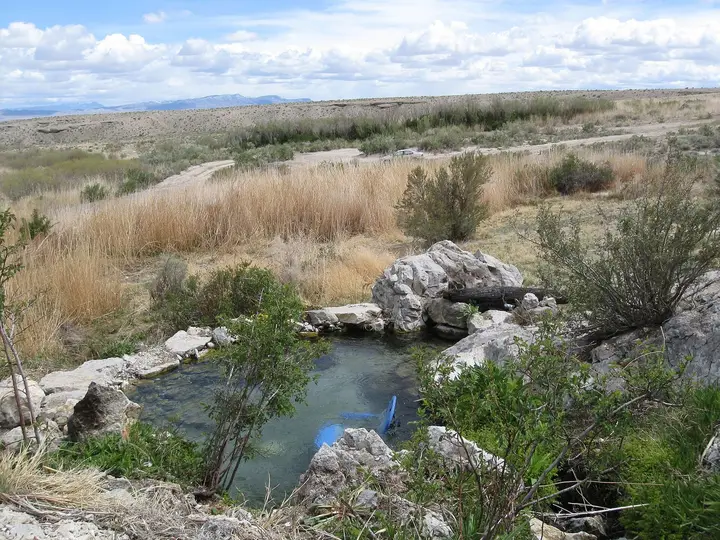
A group of deep, clear spring pools on the floor of Ruby Valley, below the Ruby Mountains and just north of Ruby Lake National Wildlife Refuge. The main pool is about 30 feet across and close to 100°F38°C.
- Water temperature
- 100°F38°C
- Entry
- Free
- Getting in
- 4WD road
- Type
- Wild & natural
- The largest pool is about 30 feet across and deep enough to swim in, with a small wooden dock on one side.
- The main pools sit close to 100°F38°C, but some of the smaller springs nearby are scalding. Test before you get in.
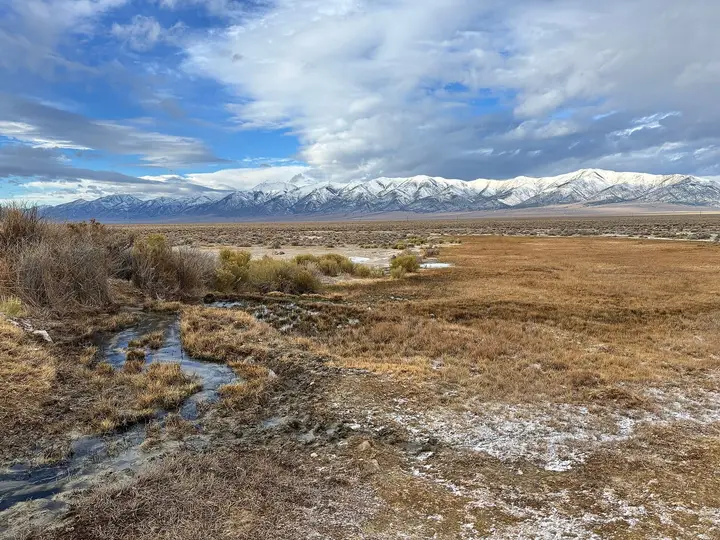
- The Ruby Mountains rise straight up on the west side of the valley, and Ruby Lake National Wildlife Refuge starts just to the south.
- There are no facilities. The nearest campground, South Ruby, is about 17 miles away by road.
What to expect
Ruby Valley Hot Springs, also called Smith Ranch Hot Springs, is a cluster of natural spring pools on the open floor of Ruby Valley in northeastern Nevada. The valley sits at about 6,000 feet. To the west the Ruby Mountains climb steeply above the sagebrush, and just south of the springs the marshes of Ruby Lake National Wildlife Refuge begin. Travel Nevada places the springs between the refuge and Franklin Lake Wildlife Management Area to the north.
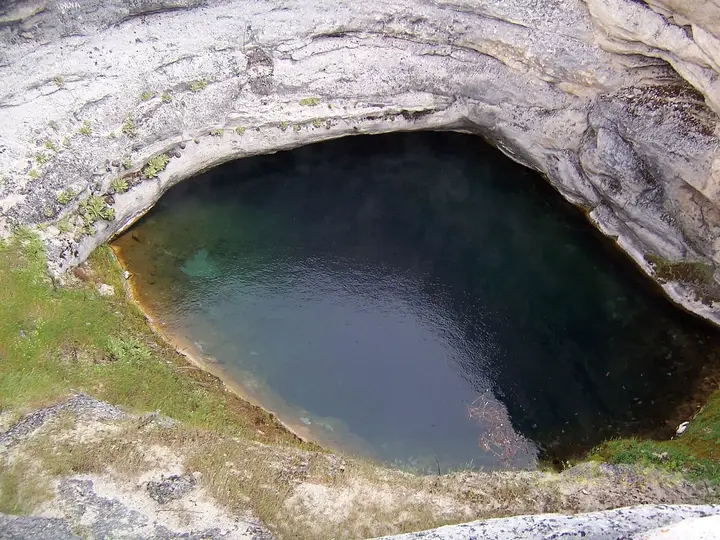
There are several pools. The biggest is roughly 30 feet across and deep, with clear water that looks blue-green against the pale bottom. It is the kind of pool you can actually swim across, not a shallow tub. The water in the main pool and the smaller pools beside it is usually close to 100°F38°C. A few of the small springs around the edges run much hotter and can scald, so test every pool before you get in.
The site is almost untouched. Apart from the dirt track in, the only built things are a small wooden dock beside the main pool and a metal ladder on another. There are no toilets, no shade, no trash cans and no drinking water. You bring everything and you take everything back out.
The open valley gives big views in every direction and a very dark night sky. Because it is so open, wind can make a cold day feel colder once you are out of the water.
Getting there
Elko is the starting point. The springs are about 60 miles away, and most people take a bit more than an hour on the shortest route. Download or print your directions before you leave town: cell service fades fast, and app routing on these back roads is unreliable.
- Via Harrison Pass (shortest): From Elko, take NV-227 (Lamoille Highway) and then NV-228 south through Jiggs. Continue on Harrison Pass Road over the Ruby Mountains and down into Ruby Valley, then follow county dirt roads east across the valley floor to the springs. Fish and Wildlife Service describes the 4.2-mile pass as steep, rough and winding, never suitable for large trailers or motor homes, and not passable in winter. It can be impassable from October to May.
- Via Secret Pass (longer): Leave I-80 at exit 321 and follow the road through Secret Pass and down Ruby Valley Road. The refuge says this route to its headquarters is about 67 miles, mostly dirt and gravel, and can be very muddy in wet weather or snowmelt.
The last few miles to the springs are rough and unpaved. A high-clearance vehicle is the minimum, and 4WD is recommended year-round and needed when the ground is wet. Stay on the established track and park on firm ground well back from the water. The ground around the pools is soft wetland, and vehicles that leave the track have sunk.
Carry a spare tire, extra fuel, food and plenty of water, and tell someone where you are going and when you plan to be back. The bar in Jiggs is a good place to ask about road conditions on the way in.
When to go
Summer and early fall are the realistic season. Harrison Pass is usually open, the roads are dry and the valley is green around the refuge. Water near 100°F38°C is pleasant even on warm afternoons at this elevation, and evenings cool off quickly.
Spring is often muddy. Snowmelt and rain can turn the valley roads into sticky clay.
Winter access is not advised. Harrison Pass is closed by snow, the other routes are long, and a breakdown out here can mean a long, cold wait. If you are thinking about an off-season trip, call Ruby Lake National Wildlife Refuge headquarters at 775-779-2237 for road conditions first.
Rules and etiquette
- No fee and no permit. Travel Nevada lists the springs as free and open to the public year-round.
- Land status: Travel Nevada says the springs are on state land. BLM’s surface-management map shows the spring parcel as non-federal, between BLM land and Ruby Lake National Wildlife Refuge. Obey any signs or fences, and do not wander onto private ground.
- Clothing is optional in practice. Bring a suit in case you share the pools.
- No glass. Broken glass in or near a pool you cannot see the bottom of is a real hazard.
- Keep dogs out of the water and under control near the soft banks.
- Leave no trace. Pack out all trash, including toilet paper, and do not add soap or anything else to the pools.
- Refuge rules apply on the refuge. Ruby Lake National Wildlife Refuge is open from 1 hour before sunrise to 1 hour after sunset (2 hours before sunrise in waterfowl season). Off-road vehicles are not allowed on refuge roads east of Ruby Valley Road.
Where to stay nearby
There is no camping at the springs.
- South Ruby Campground (Humboldt-Toiyabe National Forest) is about 17 miles away by road, at 6,000 feet above Ruby Lake. It has 35 sites, picnic tables, fire rings, vault toilets and drinking water in summer. The main season runs from about early May to late September, and sites can be reserved on Recreation.gov from about Memorial Day to Labor Day. The lower loop often stays open in winter as first come, first served, without water. Ranger station: 775-752-3357.
- Elko, about an hour away, has the nearest motels, restaurants and fuel.
Safety notes
- Scalding springs: The main pools are near 100°F38°C, but some of the small springs nearby are much hotter. Never step into water you have not tested.
- Deep water: The big pool is deep, and the bottom is hard to judge. Weak swimmers should stay near the dock and ladder. Do not dive, and keep your head above water, as with any hot spring.
- Soft ground: The wetland around the pools can trap a vehicle or a foot. Park on firm ground.
- Remoteness: Help is far away and cell service is close to nonexistent. Carry a spare, water and warm layers.
- Weather: Storms build quickly over the Ruby Mountains in summer. Lightning on an open valley floor is a reason to get out of the water.
Nearby stops worth adding
Ruby Lake National Wildlife Refuge covers almost 40,000 acres of marsh and open water at about 6,000 feet, and more than 220 bird species have been recorded there. It has an auto-tour route, though parts can close to protect nesting waterfowl, so check at headquarters. Lamoille Canyon, on the other side of the Ruby Mountains near Elko, makes a good second stop if you come in on NV-227.
Map and nearby springs
GPS: 40.25228, -115.40805
Ruby Valley Hot Springs: common questions
How hot is Ruby Valley Hot Springs?
The main pools are usually about 100°F38°C. Temperature shifts with pool size and the time of year, and some of the small springs around the edge are much hotter. Feel the water with your hand before you climb in.
Do you need 4WD to reach Ruby Valley Hot Springs?
A high-clearance vehicle is strongly advised and Travel Nevada recommends 4WD year-round. The last few miles are rough dirt road, and they turn to mud after rain or snowmelt. Do not drive onto the soft, wet ground around the pools, where vehicles have been stuck.
Is Ruby Valley Hot Springs on public land?
Travel Nevada, the state tourism office, describes the springs as being on state land and open to the public year-round with no fee. BLM's land-status map shows the spring parcel as non-federal, between BLM land and Ruby Lake National Wildlife Refuge. Respect any signs or fences you find, and stay on the existing tracks.
Can you camp at Ruby Valley Hot Springs?
There is no campground at the springs. South Ruby Campground on the Humboldt-Toiyabe National Forest, about 17 miles away by road, has 35 sites, vault toilets and summer drinking water. Elko, about an hour away, has the nearest motels.
Can you visit Ruby Valley Hot Springs in winter?
It is not advised. Harrison Pass, the shortest route from Elko, is steep and is not passable in winter. The longer route through Secret Pass is mostly dirt and gravel and can be muddy or impassable in wet weather. Call Ruby Lake refuge headquarters (775-779-2237) about road conditions from November to May.
Closest hot springs to Ruby Valley Hot Springs
94-104°F34-40°C
Wild & natural
Bishop Creek Hot Springs (12 Mile Hot Springs)
Nevada, United States
73 mi away, ~2 hr drive
94-104°F34-40°C Free 4WD road
Wild & natural
Near Unionville
Wild & natural
All hot springs in NevadaAll hot springs in United StatesOpen the full map
Sources we checked (5)
- travelnevada.com/hot-springs/ruby-valley-smith-ranch-hot-springs/
- hotspringslocator.com/ruby-valley-hot-springs
- fws.gov/refuge/ruby-lake/visit-us
- recreation.gov/camping/campgrounds/232091
- islands.com/1896295/ruby-valley-hot-springs-nestled-nevada-cowboy-corridor-off-beaten-path-multiple-emerald-pools-ideal-temperature