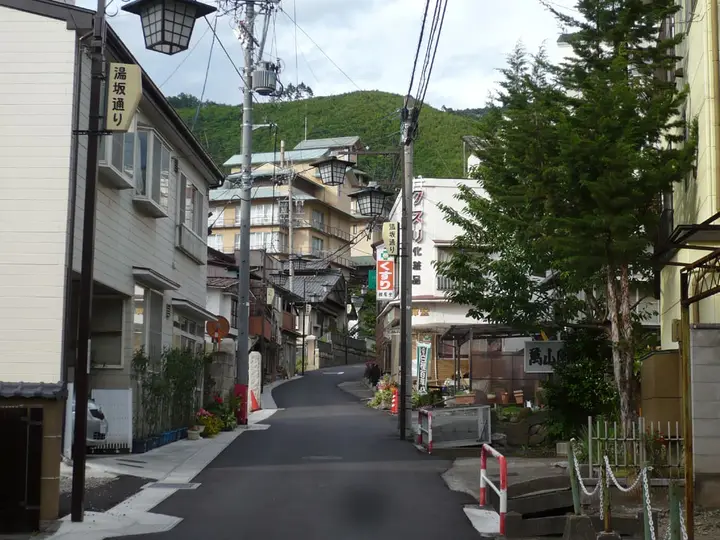
Wakura Onsen (Sōyu public bath)
Near Nanao, Ishikawa Prefecture, Japan
A seaside spa town on Nanao Bay whose salty 181°F83°C spring wells up near the shore. The Sōyu public bath is open, but the town is still rebuilding after the 2024 Noto earthquake, with 11 inns back in business.
Photos: User: (WT-shared) Jpatokal at wts wikivoyage (CC BY-SA 4.0); Totti (CC BY-SA 4.0); Tsubasabbs (CC BY-SA 3.0). Resized and cropped for this page.


- Water temperature
- 106-109°F41-43°C
- Entry
- Paid
- Getting in
- Drive-up
- Type
- Public pool
- The Sōyu public bath is open again, with indoor, standing and open-air baths and a sauna, for ¥500.
- Eleven inns had reopened by July 2026, some in temporary form. Kagaya broke ground on a new building in August 2026 and plans to reopen by the end of fiscal 2028.
- The spring comes out at 181°F82.7°C and is so salty that soap will not lather until you rinse with fresh water.
- At Yumoto no Hiroba you can cook an onsen egg in the source water in about 15 minutes.
What to expect
Wakura Onsen is a spa town on the shore of Nanao Bay, at the base of the Noto Peninsula in Nanao city, Ishikawa Prefecture. Its spring is unusual: it rises from under the sea floor near the shore, and the water is strongly salty. The tourism association gives it as a sodium-calcium chloride spring, hypertonic and weakly alkaline, clear and odourless, coming out at 181°F82.7°C at about 990 litres a minute from a pumped well. A company owned by the townspeople, Wakura Onsen Gōshi Kaisha, manages the source and pipes it to the inns and to the public bath.
The town’s story goes back about 1,200 years. The association says the spring first appeared in the Daidō era (806-810) in a valley inland. After ground movement in the mid-11th century the outlet shifted about 60 m offshore and the old spring dried up, until a fishing couple saw a wounded white heron resting in bubbling seawater and realised it was hot. The name Wakura, from “welling bay”, was fixed in 1674. The Maeda lords of Kaga made it a favourite in the 1600s, and in 1909 the future Emperor Taishō became the first member of the imperial family to visit.
The 2024 earthquake. The January 1, 2024 Noto Peninsula earthquake hit Wakura hard. Inns along the bay were damaged, and the Sōyu stayed shut until the water supply came back. Recovery is under way but incomplete. In October 2026 the town is open to visitors, but you will see gaps, building sites and closed inns, and the association describes its plan as a “creative reconstruction” of the whole town.
The Sōyu public bath
The Sōyu (総湯) is Wakura’s public bathhouse, used by locals and visitors. It reopened with shorter hours in 2024 once water was restored, and in 2026 it lists normal hours again.
Inside are men’s and women’s sides, each with an indoor bath and sauna, a standing bath (tachi-yu) deep enough to stand in, and an open-air bath, at a range of temperatures. The operator says the 198°F92°C water is cooled with a heat exchanger rather than by adding water, and sets the tubs at about 108°F42°C in spring and autumn, 106°F41°C in summer and 109°F43°C in winter. The baths use a filter, but every tub is drained and refilled after closing each night, and spring water keeps overflowing during the day. After bathing there is a large tatami rest room and smaller lounges.
A tip from the operator: the water is so salty that soap will not lather well until you rinse with fresh tap water first. After your soak, they suggest not washing off the spring water.
Outside the entrance there used to be a free foot bath and a tap of drinkable spring water. The Sōyu’s own site still said in October 2026 that these were out of use because of the earthquake, while one listing expected repairs to finish around December 2025. Check when you arrive.
Prices and booking
| Item | Price |
|---|---|
| Adults | ¥500 |
| Elementary school pupils | ¥150 |
| Preschool children | ¥50 |
Prices are from a 2026 listing, as the Sōyu’s own site does not post them. Hours are 7:00 to 21:00. The regular closing day changed in April 2025 from the 25th of each month to the 4th Thursday. The tourism association does not post holiday closures, so call 0767-62-2221 before a special trip. There is a free car park beside the building.
No booking is needed for the Sōyu. For inns, book directly or through the association, and check what is actually open (see below).
Onsen etiquette
Wash at the seated showers before you get in, bathe naked with your small towel kept out of the water, tie up long hair and keep your phone in the locker. The salt in the water stings small cuts, so keep soaks short at first.
The Sōyu publishes no tattoo policy. Call ahead and consider covering small tattoos.
Getting there
By train: JR and the Noto Railway both stop at Wakura-Onsen Station. From there, Hokutetsu Noto buses bound for Wakura Onsen take about 5 minutes to the Wakura Onsen stop, a short walk from the Sōyu. From Nanao Station the same bus takes about 19 minutes.
By car: take the Noto Satoyama Kaidō via the Tokuda-Ōtsu junction and leave at the Wakura IC. The town is about 5 km (3 miles) from the exit along Prefectural Route 47, roughly 7 minutes.
By air: Noto Satoyama Airport and Komatsu Airport both serve the area; the association runs a shared “furusato taxi” from the Noto airport. If you plan to drive on toward Wajima or Suzu, check the association’s notices on Oku-Noto road conditions first.
When to go
The Sōyu is open all year. Autumn is a good time for walks along Nanao Bay; winter brings snow and wind to the Noto coast. Weekday mornings are the quietest time at the bath. Large events have been scaled back since the quake: the 2026 Wakura Onsen fireworks festival was cancelled.
Where to stay nearby
The Wakura Onsen ryokan association listed these inns as operating in its accommodation notice (latest entry July 2026):
- Hanagoyomi, Ajina Yado Hōsenkaku, Yunohana, Nihon no Yado Notoraku and TAOYA Wakura
- Hamazuru (reopened August 9, 2025) and Nōshū Iroha (October 1, 2025, no dinner)
- Biwansō (temporary operation from November 11, 2025) and Hotel Kaibō (temporary operation from December 1, 2025)
- Okudaya (July 9, 2026, no dinner) and Shirasagi no Yu Noto Kaishū (July 16, 2026)
Some of these still have building work, temporary lobbies or limited front-desk service. A few other inns are open only to recovery workers and volunteers, not to regular guests. Kagaya, Wakura’s best-known ryokan, has been closed since the quake. It held a groundbreaking for a new building on August 25, 2026, and plans to reopen at the end of fiscal 2028 (around March 2029).
Nanao city, about 19 minutes away by bus, is the nearest larger town.
Nearby stops worth adding
- Yumoto no Hiroba: the source wells up beside a bronze heron statue. Put raw eggs in the hot spring water and they cook into lightly salty onsen eggs in about 15 minutes; the association suggests 13 to 16 minutes from spring to autumn and 18 to 25 in winter.
- Yuttari Park, Tsumagoi-bune no Yu: a free foot bath looking over Nanao Bay. Its post-quake status was not posted, so check locally.
For a Kaga-side onsen town that escaped the worst of the quake, see Yamashiro Onsen and Kaga Onsen in southern Ishikawa.
Safety notes
- Very hot source: at Yumoto no Hiroba the water is near 176°F80°C. Do not put your hands in, and supervise children.
- Salt and heat: the hypertonic water warms you deeply. Start with 3 to 10 minutes, as the operator advises, and rest and drink water afterwards.
- Earthquake recovery: expect fenced sites, uneven pavements and roadworks around town, and follow posted detours.
- Winter weather: the Noto coast gets snow and strong winds; allow extra time on the roads.
Map and nearby springs
GPS: 37.08867, 136.91654
Wakura Onsen (Sōyu public bath): common questions
Is Wakura Onsen open after the 2024 Noto earthquake?
Partly. The Sōyu public bath is running normal hours, and the inn association listed 11 inns operating by July 2026, from small family inns to large hotels, some still on temporary facilities. Others are closed or only house recovery workers, and the famous Kagaya is being rebuilt. Expect empty lots and construction around town.
When will Kagaya reopen?
Kagaya held a groundbreaking ceremony for its new ryokan building on August 25, 2026. The company says it plans to resume business at the end of fiscal 2028, which means by about March 2029. Until then you cannot stay there.
How much is the Wakura Onsen Sōyu?
The 2026 listing gives ¥500 for adults, ¥150 for elementary school children and ¥50 for preschoolers. Hours are 7:00 to 21:00, and it closes on the 4th Thursday of each month. Call 0767-62-2221 to confirm, since holiday closures are not always posted.
Is the water at the Sōyu straight from the spring?
The operator says the 198°F92°C water is cooled with a heat exchanger instead of being diluted, so no water is added. The tubs run through a filter, but they are drained and refilled every night and topped up with overflowing spring water during the day.
Are tattoos allowed at the Sōyu?
No tattoo policy is published by the Sōyu or the tourism association. Call the Sōyu on 0767-62-2221 before you go.
Closest hot springs to Wakura Onsen (Sōyu public bath)
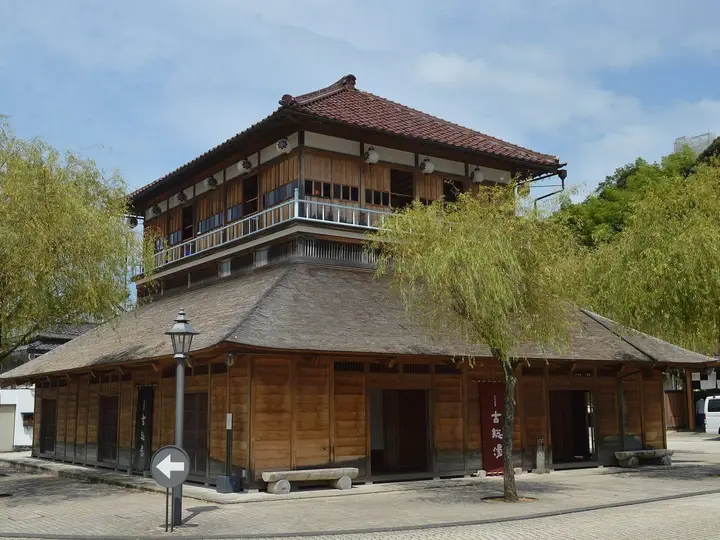
Yamashiro Onsen (Sōyu and Ko-sōyu)
Ishikawa Prefecture, Japan
63 mi away, ~1.5 hr drive
Temp n/a Paid Drive-up
Near Kaga
Public pool
Near Hirayu Onsen (Takayama)
Resort or spa
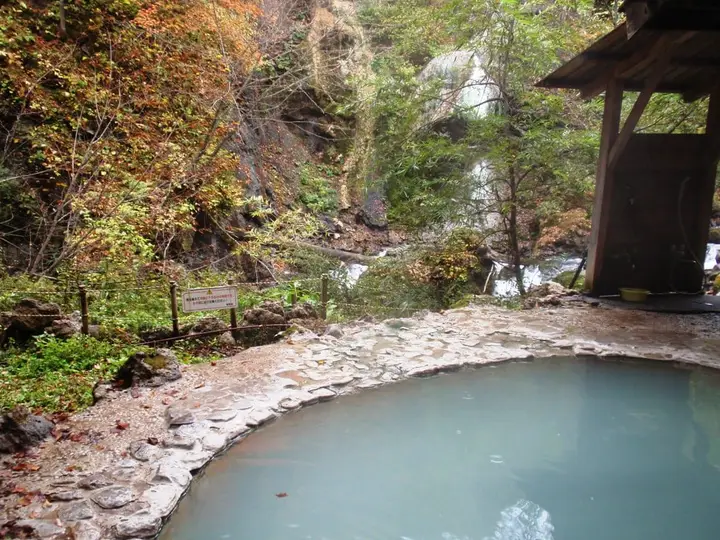
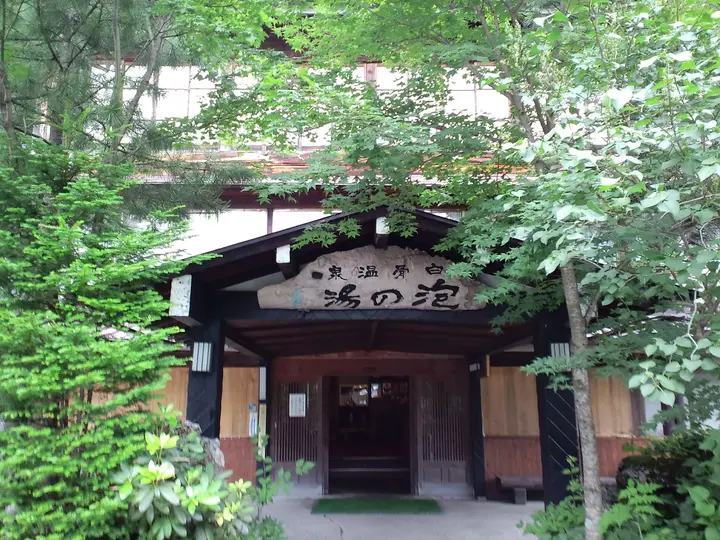
Awanoyu (Shirahone Onsen)
Nagano Prefecture, Japan
76 mi away, ~2 hr drive
99-104°F37-40°C Paid Drive-up