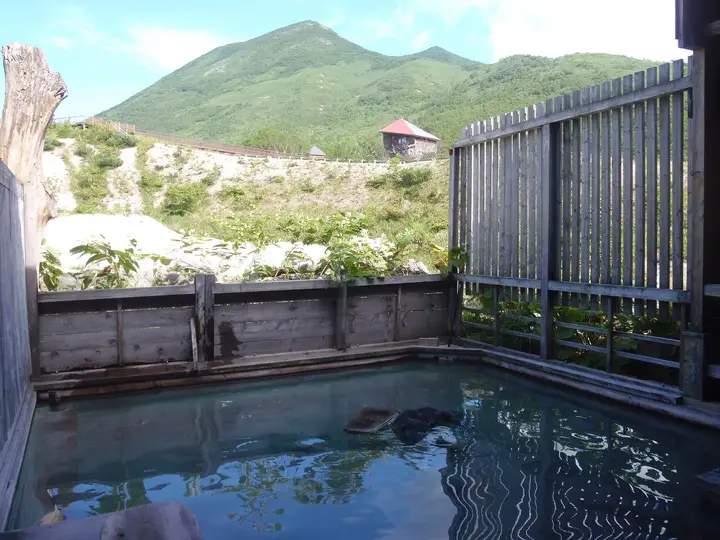
Nukabira Gensenkyō (Nukabira Onsen)
Near Kamishihoro, Hokkaido, Japan
A small onsen village in the forest of Daisetsuzan National Park, about 23 km north of Kamishihoro, where every inn runs its water straight from the source and most sell day baths for ¥400 to ¥1,000.
- Water temperature
- Not published
- Entry
- Paid
- Getting in
- Drive-up
- Type
- Resort or spa
- All the inns use free-flowing source water, declared by the inn association in 2007.
- Day baths at six inns cost ¥400 to ¥1,000, and a free foot bath stands in front of Yumoto-kan.
- The first source was found in 1919 by the founder of Yumoto-kan, which opened in 1925.
- The Taushubetsu River Bridge, a concrete arch of the old Shihoro Line, can be seen from a viewpoint about 8 km up Route 273.
What to expect
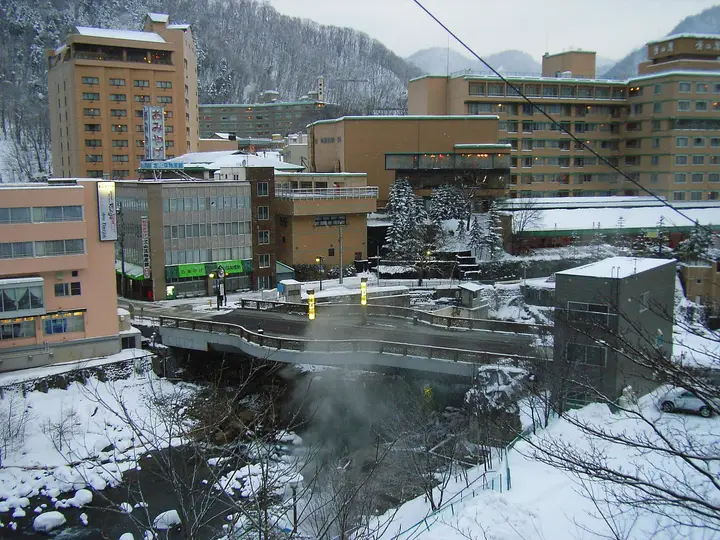
Nukabira is a small onsen village in the forests of eastern Daisetsuzan National Park, on the shore of Lake Nukabira in Kamishihoro town, Tokachi. It lies about 23 km (14 miles) north of the town centre on National Route 273. There is no main street of big hotels. You will find a handful of inns, a youth hostel, log cottages, a small ski area and a bus office, scattered among the trees.
Its claim is the water. In 2007 the local inn association declared that every inn runs its baths on free-flowing source water, without recirculation, and in 2009 the district changed its name from Nukabira to Nukabira Gensenkyō (“source-spring village”), partly to stop people confusing 糠平 with a similar-looking name. You will see both names on signs and maps.
The first source was found in 1919 (Taisho 8) by the founder of Yumoto-kan, who opened the first inn in 1925 (Taisho 14). A railway, the Shihoro Line, reached Nukabira in 1937 and closed in 1987. Its concrete arch bridges are now one of the main reasons people visit.
The baths
The water is clear and colourless, sometimes with small white flakes. Depending on the source, it is a simple spring, a weak salt spring or a bicarbonate spring, neutral and gentle, at about 122-140°F50-60°C at the source. Most inns let you drink it.
There is no public bathhouse. Day visitors use the inns. Kamishihoro town’s 2026 listings give these day-bath prices for adults, elementary school children and younger children, with towel rental:
- Nukabira-kan Kankō Hotel (01564-4-2210): ¥1,000 / ¥500 / ¥300, 11:30-21:00. Open-air baths in natural wood, separate for men and women, swapped at midnight. Bath towel and towel ¥200 each.
- Yumoto-kan (01564-4-2121): ¥1,000 / ¥300 / free, 13:00-19:00, last entry 18:30. Has an open-air bath. Overnight stays are now in a single rented cottage.
- Nakamuraya (01564-4-2311): ¥700 / ¥400 / ¥300, 7:30-10:00 and 14:00-20:00. Has an open-air bath. Meal-and-bath sets need a booking.
- Nukabira Onsen Hotel (01564-4-2001): ¥700 / ¥300 / ¥200, 11:00-19:00. Closes on irregular days, so phone first. No open-air bath.
- Yamanohatago Sankosō (01564-4-2336): ¥500 / ¥200 / ¥100, 15:00-20:00. Known for its cave-style bath; no open-air bath.
- Higashi-Taisetsu Nukabira Youth Hostel (01564-4-2004): ¥400 / ¥200 / free, 15:00-20:00, with a hinoki wood bath.
A free foot bath stands in front of Yumoto-kan.
Onsen etiquette
The inn baths are gender-separated and you bathe naked. Wash and rinse at the taps before you get in, keep your towel out of the water, and keep the noise down, as many guests are staying the night. Day-bath hours end early at some inns; arrive at least 30 minutes before closing. Bring your own towel to save the rental fees.
The town publishes no tattoo policy for any of the inns, and each sets its own rules. Phone ahead.
Getting there
By bus: Tokachi Bus route 51, the Nukabira Line, runs from Obihiro Station to the Nukabira Gensenkyō bus office in about 1 hour 30 minutes. Check the current timetable on the Tokachi Bus site before you set off.
By car: from Obihiro, drive north to Kamishihoro town and continue on National Route 273 for about 23 km to Nukabira. Route 273 runs along the south side of Lake Nukabira and continues north over Mikuni Pass toward Sōunkyō, which is about 1 hour 10 minutes away. The pass is snowy for much of the year.
When to go
Nukabira is open all year. In summer and autumn, people come to walk in the forest, camp and see the bridges. In winter the lake freezes and ice fishing for smelt (wakasagi) begins, along with guided walks across the ice to the Taushubetsu Bridge and to “mushroom ice” and ice-bubble formations. The ice season has a hard end. In 2026 access from Go-no-sawa ended on February 24, fishing at San-no-sawa ended on March 8, and the whole lake was closed from March 9, because gas holes had opened and the ice was thin. Warm spells can bring those dates forward.
The Taushubetsu River Bridge is visible from a viewpoint about 8 km up Route 273 toward Asahikawa: park in the lay-by (about ten cars) and walk 200 m through the trees. You see the bridge from about 750 m away. It is usually visible from snowmelt in April until the reservoir rises over it around September, but in some years it goes under earlier.
Where to stay nearby
Overnight options include the inns above, the log cottages at Kokoro-no-Sato, which have their own baths and a restaurant, and Nukabira campground, open June 25 to October 12 in 2026 (¥600 per adult per night, no booking, no pets, no cars on site). There is no shop selling fresh food in Nukabira, only souvenir shops with drinks and snacks, so stock up in Kamishihoro. For other Hokkaido onsen, see Noboribetsu Onsen in the south and Niseko Goshiki Onsen in the west.
Safety notes
- Bears: this is brown bear country. The town reported a cub at the Taushubetsu viewpoint in September 2021. Make noise on forest paths and do not leave food out.
- Lake ice: only go on the ice in the permitted period, and ideally with a guide. Gas holes act like trapdoors.
- Phones: the town warns that mobile signal around Lake Nukabira is almost non-existent and that ambulances take a long time to arrive.
- Winter driving: Route 273 is snowy and icy from late autumn to spring. Use winter tyres and drive slowly.
Map and nearby springs
GPS: 43.36543, 143.19015
Nukabira Gensenkyō (Nukabira Onsen): common questions
Which inns at Nukabira offer day bathing?
Kamishihoro town lists day baths at Nukabira-kan Kankō Hotel (¥1,000, 11:30-21:00), Yumoto-kan (¥1,000, 13:00-19:00), Nakamuraya (¥700, 7:30-10:00 and 14:00-20:00), Nukabira Onsen Hotel (¥700, 11:00-19:00, phone first), Yamanohatago Sankosō (¥500, 15:00-20:00) and Higashi-Taisetsu Nukabira Youth Hostel (¥400, 15:00-20:00). Prices are for adults.
What does "Gensenkyō" mean?
It means "source-spring village". The district was renamed from Nukabira (糠平) to Nukabira Gensenkyō (ぬかびら源泉郷) in 2009, two years after the inn association declared that every inn uses free-flowing source water without recirculation.
What is the water like?
Clear and colourless, sometimes with small white flakes. The sources are simple springs, weak salt springs and bicarbonate springs, neutral and mild, at about 122-140°F50-60°C at the source.
Can you walk on Lake Nukabira in winter?
Only in midwinter, and only when the town allows it. In 2026 access from Go-no-sawa ended on February 24, ice fishing at San-no-sawa ended on March 8, and the whole lake was closed from March 9 because gas holes and thin ice appeared. The town suggests a guided tour from the Higashi-Taisetsu Nature Guide Center (01564-4-2261).
Are tattoos allowed at Nukabira?
Kamishihoro town does not publish a tattoo policy for the inns. Each inn sets its own rules, so phone before you go.
How do you get to Nukabira Onsen?
Tokachi Bus route 51, the Nukabira Line, runs from Obihiro Station in about 1 hour 30 minutes. By car, follow National Route 273 north from Kamishihoro town for about 23 km (14 miles). From the north, Route 273 comes over Mikuni Pass from the Sōunkyō side.
Closest hot springs to Nukabira Gensenkyō (Nukabira Onsen)
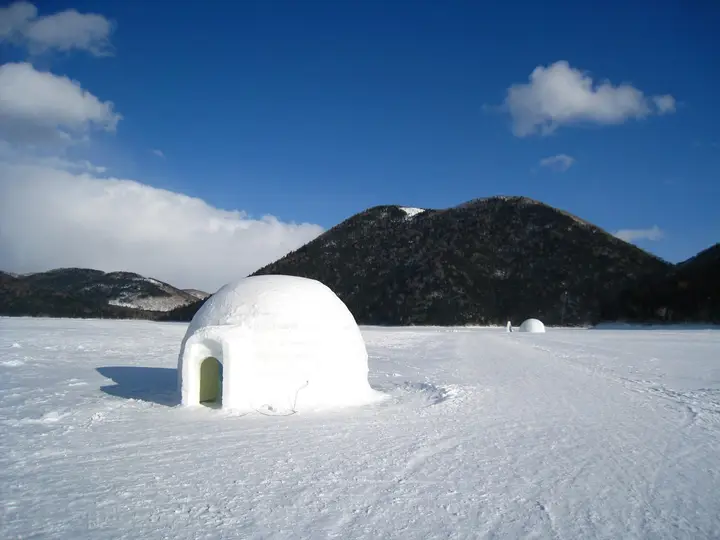
Shikaribetsu-ko Kotan (Lake Shikaribetsu Ice Village)
Hokkaido, Japan
8 mi away, ~10 min drive
Temp n/a Paid Drive-up