Dai-ichi Takimotokan
Near Noboribetsu, Hokkaido, Japan
A large hotel at the foot of Jigokudani in Noboribetsu whose Grand Bath has 35 baths fed by five types of spring water, open to day visitors as well as hotel guests.
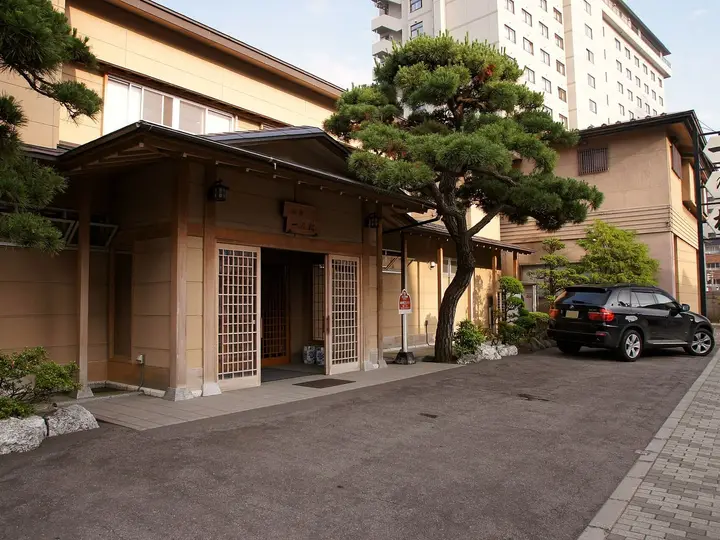
Photos: Jiashiang (CC BY 2.0); T DMY (CC BY 3.0). Resized and cropped for this page.


- Water temperature
- Not published
- Entry
- Paid
- Getting in
- Drive-up
- Type
- Resort or spa
- The Grand Bath has 35 baths across the men's and women's sides, fed by five spring types including sulphur and acidic alum water.
- Day visitors pay ¥2,500 (children ¥1,500), towels included, with entry from 9:00 to 18:00 and no booking.
- A heated swimsuit pool and outdoor jacuzzi with a view over Jigokudani are included in the bath fee.
- The hotel traces its roots to an inn opened by Kinzo Takimoto, a carpenter from Edo, in the 1800s.
What to expect
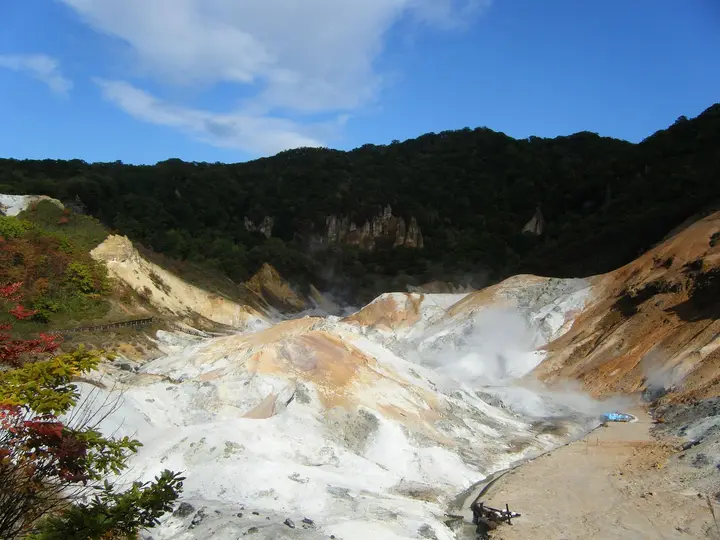
Dai-ichi Takimotokan is one of the big hotels of Noboribetsu Onsen, the spa town in southwest Hokkaido built around Jigokudani (“Hell Valley”), a steaming crater valley of vents and sulphur-yellow rock. The hotel stands at the bottom of the valley, and its bathhouse is the main reason most people come, whether they stay the night or not.
The Grand Bath is huge. The hotel gives its floor area as 1,500 tsubo (roughly 4,950 square metres) and counts 35 baths across the men’s and women’s sides. Expect long indoor halls of tubs at different temperatures, open-air baths, a steam sauna at about 122°F50°C, a dry sauna at about 194°F90°C, a cold plunge and a bubble bath at about 104°F40°C. The men’s and women’s sides are fixed, so they do not swap during the day as they do at some inns. The women’s side includes a sulphur open-air bath, and the hotel describes views over Jigokudani from the open-air area.
Below the bathing floors is a heated indoor pool and an outdoor jacuzzi with a view of Jigokudani. This area is shared by men and women and requires a swimsuit, which you must rent there.
It is a large hotel, not a quiet ryokan, and on Japanese holidays the baths can get busy. Treat it as an onsen theme hall with very good water rather than a place for solitude.
The water
Noboribetsu is known for the variety of its water, and the hotel taps five types:
- sulphur water, listed at pH 2.4
- salt (sodium chloride) water
- acidic alum and green vitriol (iron sulphate) water, the most acidic at pH 2.2
- sodium bicarbonate water
- Glauber’s salt (sodium sulphate) water
The acidic baths can sting cuts and shaving nicks, so start with a short dip. The hotel does not publish a temperature for every tub.
Prices and booking
For day visitors (October 2026 prices):
- Adults: ¥2,500. Children (age 3 through elementary school): ¥1,500. Under 3: free.
- Included: face towel and bath towel rental, tax and the pool.
- Hours: entry from 9:00 to 18:00, and you must be out by 21:00.
- Private rest room: ¥5,500 for 1 to 8 people, 9:00 to 16:00 (no private bath).
- Pool swimsuit rental: ¥1,000 adults, ¥550 children.
- Booking: none needed. There is no pick-up for day visitors.
Hotel guests have longer hours: indoor baths 4:00 to 25:00 (last entry 1:00), open-air baths and saunas 4:00 to 24:00, pool 8:00 to 22:00. Check-in is 14:00 and check-out 10:00.
The bath shop sells disposable bathing garments, and the hotel welcomes them in the baths (not the pool). It also sells stickers for guests with an ostomy.
Onsen etiquette
The Grand Bath follows the usual Japanese rules. Wash and rinse at the seated taps before you enter any tub. Bathe naked except in the pool. Keep your small towel out of the water (people fold it on their head or leave it on the edge). Tie up long hair, keep your voice down and do not take photos in the bathing areas. Rinse your stool and bucket when you leave a washing station.
The hotel’s site does not publish a tattoo policy, and travel blogs disagree about whether covered tattoos are accepted. Phone the hotel before you travel if this applies to you.
Getting there
The hotel’s address is Noboribetsu Onsen 55, Noboribetsu, Hokkaido.
- From JR Noboribetsu Station: take the Dōnan Bus to the Dai-ichi Takimotokan stop (2 minutes’ walk) or the Noboribetsu Onsen bus terminal (about 7 minutes’ walk), about 15 minutes. A taxi takes about 13 minutes and costs roughly ¥2,800.
- From New Chitose Airport: the Dōnan Bus airport express to Noboribetsu Onsen takes about 1 hour 10 minutes and needs a reserved seat. Alternatively, take a limited express train to Noboribetsu Station (about 1 hour) and the local bus.
- From Sapporo: the Dōnan direct highway bus takes about 2 hours 20 minutes, also reserved. The train via Noboribetsu Station takes about 2 hours.
- By car: leave the expressway at Noboribetsu-Higashi IC. Parking is free, with a parking tower and outdoor lots, but on busy days spaces may be kept for hotel guests. Day visitors are then sent to the Noboribetsu Jigokudani car park across the road (¥500 a day).
The hotel’s non-stop shuttle bus is not running, so plan on public transport.
When to go
The hotel is open all year apart from an annual maintenance closure, which in 2027 runs from April 5 to 15. Some baths close in rotation for daytime cleaning.
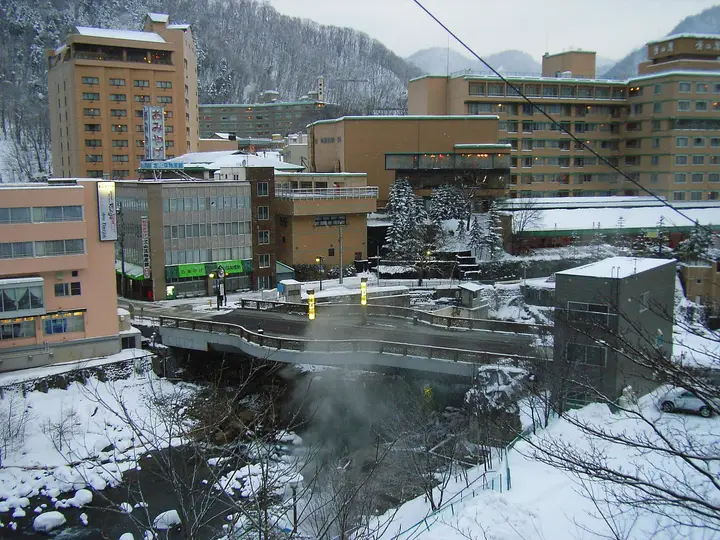
Winter in Noboribetsu is snowy, and an outdoor soak with snow on the rocks and steam rising off the valley is the classic reason to come. Leave extra time for buses and driving in heavy snow. Japanese holidays (Golden Week in early May, Obon in mid-August, New Year) are the busiest. On any day, the hour after 9:00 is usually calmer than the early afternoon.
Where to stay nearby
The hotel itself has a full range of Japanese and Western rooms, buffet dining and universal rooms with easier-access baths. Noboribetsu Onsen has several other hotels within walking distance, many of which also sell day baths. If you want something cheaper or smaller, the town’s tourism association lists Yumoto Sagiri-yu, a public bathhouse at ¥550 for adults, and day baths at hotels such as Noboribetsu Grand Hotel and Noboribetsu Sekisuitei.
Safety notes
- Acidic water: the alum and sulphur baths are around pH 2.2 to 2.4. Keep it out of your eyes, avoid it on fresh cuts, and rinse with fresh water at the end.
- Heat and saunas: the saunas reach about 194°F90°C. Drink water and cool off between rounds.
- Floors: wet stone and tile are slippery throughout the Grand Bath. The bathhouse is not barrier-free, though staff can provide bath wheelchairs and backrest chairs, and the front desk lends wheelchairs.
- Jigokudani: stay on the boardwalks if you walk into the valley. The ground and vents are hot, and the sulphur gas is strong on still days.
Map and nearby springs
GPS: 42.49518, 141.14484
Dai-ichi Takimotokan: common questions
Can you use Dai-ichi Takimotokan's baths without staying the night?
Yes. Day visits cost ¥2,500 for adults and ¥1,500 for children from age 3 through elementary school, with face and bath towels included. Under-3s are free. Entry runs from 9:00 to 18:00 and day visitors must leave by 21:00. No reservation is needed.
How many baths are there?
The hotel counts 35 baths across the men's and women's sides of the Grand Bath, including indoor tubs, open-air baths, saunas and a cold plunge. The sides are fixed and do not swap between men and women.
What kinds of spring water are there?
Five: sulphur, salt (sodium chloride), acidic alum and green vitriol, sodium bicarbonate, and Glauber's salt (sodium sulphate) water. Some are strongly acidic, with the hotel listing pH 2.4 for the sulphur water and pH 2.2 for the alum water.
Is there a swimming pool?
Yes. A heated pool and outdoor jacuzzi, used by men and women together in swimsuits, are open 8:00 to 22:00 at no extra charge. Swimsuits must be rented there: ¥1,000 for adults and ¥550 for children.
How do you get to Dai-ichi Takimotokan from New Chitose Airport?
Take the Dōnan Bus Noboribetsu Onsen airport express, about 1 hour 10 minutes, with a reserved seat. Or ride the train to JR Noboribetsu Station and take the local bus about 15 minutes to the Dai-ichi Takimotokan stop. The hotel's own shuttle bus is out of service.
Are tattoos allowed at Dai-ichi Takimotokan?
The hotel's website and FAQ do not state a tattoo policy, and third-party reports disagree. Call +81-143-84-2111 before you go rather than relying on a blog.
Closest hot springs to Dai-ichi Takimotokan
Yagen Onsen (Okuyagen Kappa no Yu)
Aomori Prefecture, Japan
77 mi away, ~2 hr drive
Temp n/a Paid Drive-up