Polichnitos Hot Springs (Hippocrates Thermal Baths)
Near Polichnitos, Lesbos, Greece
Some of Europe's hottest springs, at 140-203°F60-95°C, rising beside a bathhouse about 1.5-2 km outside Polichnitos in southern Lesbos. The leased Hippocrates thermal centre has been closed since September 2026.
Temporarily closed. The private operator suspended the Hippocrates thermal baths on September 8, 2026, after a complaint about safety (fencing at the hot tanks and borehole, radon in a domed spring) reached the North Aegean tourism directorate. No reopening date had been announced by late October 2026.
- Water temperature
- 108°F42°C
- Entry
- Paid
- Getting in
- Drive-up
- Type
- Resort or spa
- Spring water comes out at roughly 140-203°F60-95°C, among the hottest in Europe.
- The bathhouse has run two pools, one for men and one for women, since 1959, at about 108°F42°C.
- A private company leased and modernised the site, inaugurated it in August 2023, then suspended operations on September 8, 2026.
- Outside, scalding runoff streams run through green algae; look, but do not touch.
Closed for now
The thermal baths at Polichnitos are temporarily closed. On September 8, 2026, the operator of the Hippocrates thermal baths (Ιαματικές Πηγές Πολιχνίτου «Ιπποκράτης») announced that it was suspending operations, apologised to customers and asked anyone who had prepaid treatments to get in touch for a refund.
The trigger was a letter sent in early September by an academic in energy and environmental science to the Mayor of West Lesbos and to regional, planning and decentralised administration services. He said he had visited on August 16, 2026 and listed safety problems: unfenced tanks where hot spring water is cooled and its radon allowed to escape, an unfenced pumping point where the water reaches about 176°F80°C, poorly protected hot-water pipes, and a spring covered by a geodesic dome that he said was not ventilated well enough to stop radon and hydrogen sulphide from building up. The North Aegean tourism directorate then asked the operator to fix the problems and show its permits. The operator says the claims are unfair to its work at the springs. As of late October 2026 we found no reopening date.
Treat everything below as what to expect if and when the baths reopen.
What to expect
The springs rise in a shallow valley about 60 m above sea level near the Almyropotamos stream, roughly 1.5-2 km (about 1 mile) southeast of the town of Polichnitos in southern Lesbos. They are among the hottest in Europe: figures range from about 140-203°F60°C to 95°C at source, depending on the spring. Water this hot has to be cooled before anyone can bathe in it, and the hot runoff that escapes outside the building trickles through bright green algae in small, steaming streams.
The heart of the site is the bathhouse, shaded by eucalyptus trees, which has run two pools since 1959, one for men and one for women. One visitor guide gives the pool water at about 108°F42°C. Guides also mention massage and a café serving local food and drinks. Island guides count five mineral springs in the area, three of them in use.
In 2022 the Municipality of West Lesbos leased the springs long-term to TKC, part of the Kouskos group, which upgraded the site under the Hippocrates name and inaugurated its thermal centre in August 2023. A 2025 Ministry of Tourism grant approved further investment in indoor and outdoor hydrotherapy pools, with the plan to open eight months a year, April to November. The municipality’s July 2026 studies on the island’s springs describe Polichnitos as a place to develop gently, around restored existing buildings rather than large new construction.
Getting there
Polichnitos is on the south side of Lesbos, near the south shore of the Gulf of Kalloni. From Mytilene, the island’s capital, port and airport, drive west and then south toward Polichnitos and Vatera. The springs are just outside town on the road toward Vatera; OpenStreetMap shows the bathhouse beside the Polichnitos-Vatera road, with a free customer car park next to the site. Vatera beach, the island’s longest, is about 8 km (5 miles) south of the village.
When to go
Only once the baths reopen. When they ran, they opened through much of the year; island guides gave hours until about 8 p.m., and the operator’s investment plan targeted April to November. Spring and autumn are the most comfortable time for very hot water, and the nearby beaches at Vatera are quieter then.
Prices and booking
There is no current price, because the baths are closed. The operator’s 2025 investment plan assumed a flat ticket of €12 per service, but that was a projection, not a published tariff. If you prepaid a treatment before the closure, contact the operator for a refund, as its September 2026 announcement asked.
If the baths reopen, ask at the desk about current prices, session lengths and any age limits before you pay.
Where to stay nearby
There is no lodging at the springs. Polichnitos is the nearest town for food and supplies, and Vatera, about 8 km (5 miles) south, has beach hotels and rooms. Skala Polichnitou, on the Gulf of Kalloni, is another small option. In the north of the island, the Eftalou hot springs near Molyvos have a small domed bathhouse and a beach where hot water seeps into the sea; check whether that bathhouse is open too.
Safety notes
- Scalding water: The source water is close to boiling in places, and the runoff outside the building can burn badly. Keep children and dogs away from the streams and any open tanks or pipes.
- Radon and gas: These springs carry radon. The complaint that led to the closure was about how the gas is vented around tanks and the domed spring. Do not enter enclosed spaces over springs.
- Hot pools: At around 108°F42°C, keep sessions short, drink water, and skip the pools if you have heart or blood pressure problems or are pregnant.
- Do not trespass: While the baths are closed, stay out of the fenced and private parts of the site.
Nearby stops worth adding
Vatera beach is the obvious pairing. In Polichnitos itself, white storks nest on old factory chimneys. The Lisvori springs, a little to the north on a stream running into the Gulf of Kalloni, are closed; the municipality’s 2026 plan proposes a new 20-year lease to restore them.
Map and nearby springs
GPS: 39.07293, 26.20082
Polichnitos Hot Springs (Hippocrates Thermal Baths): common questions
Are the Polichnitos hot springs open?
No, not as of late October 2026. The operator of the Hippocrates thermal baths announced on September 8, 2026 that it was suspending operations to deal with issues raised by the North Aegean tourism service after a complaint about visitor safety. No reopening date has been given. Check local news or call ahead before you drive there.
Why did the Polichnitos baths close?
A complaint sent to the municipality and regional authorities in early September 2026 said the tanks where hot water is cooled and degassed of radon were not fenced, that a pumping point at about 176°F80°C was open to visitors, and that a spring under a geodesic dome was poorly ventilated. The operator disputes the claims but suspended operations while the issues are addressed.
How hot is the water at Polichnitos?
At source the springs run at about 140-203°F60-95°C, depending on the spring and the study you read. The bath pools are cooled; one visitor guide gives the pool water as 108°F42°C.
Are the Polichnitos baths mixed?
The main bathhouse has two pools, traditionally one for men and one for women. Guides also mention massage and a café on site. Children are not a good fit for very hot pools; ask the operator about age rules if it reopens.
Is there a free hot spring at Polichnitos?
No safe one. Hot runoff flows in small streams outside the bathhouse, but it is close to boiling near the source. Do not put hands or feet in it. If you want a free shoreline soak on Lesbos, the beach at Eftalou in the north is the usual choice.
Closest hot springs to Polichnitos Hot Springs (Hippocrates Thermal Baths)
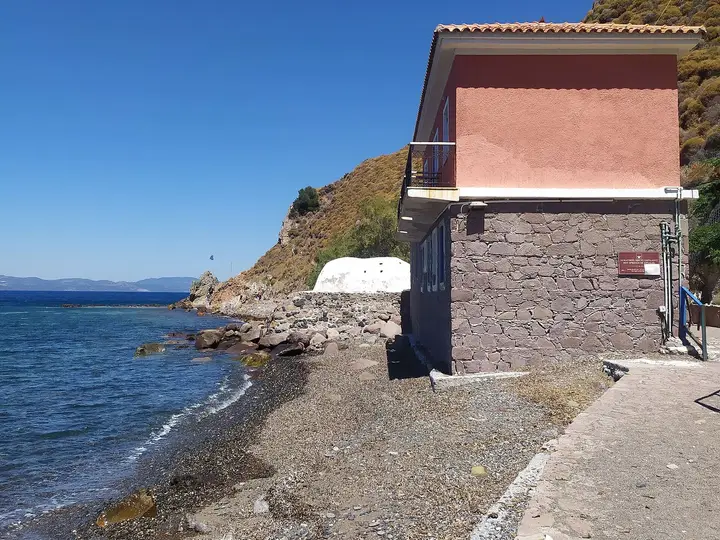
Eftalou Hot Springs (Bathhouse)
Lesbos, Greece
21 mi away, ~35 min drive
109-115°F43-46°C Paid Short walk
Near Ezine
Resort or spa
Kestanbol Kaplıcaları (Alexandria Troas Kestanbol Thermal Springs)
Çanakkale, Turkey
46 mi away, ~1 hr drive
Temp n/a Paid Drive-up
Near Edremit
Resort or spa
Güre Thermal Springs (Güre Kaplıcaları)
Balıkesir, Turkey
51 mi away, ~1.5 hr drive
Temp n/a Paid Drive-up
95-97°F35-36°C
Resort or spa
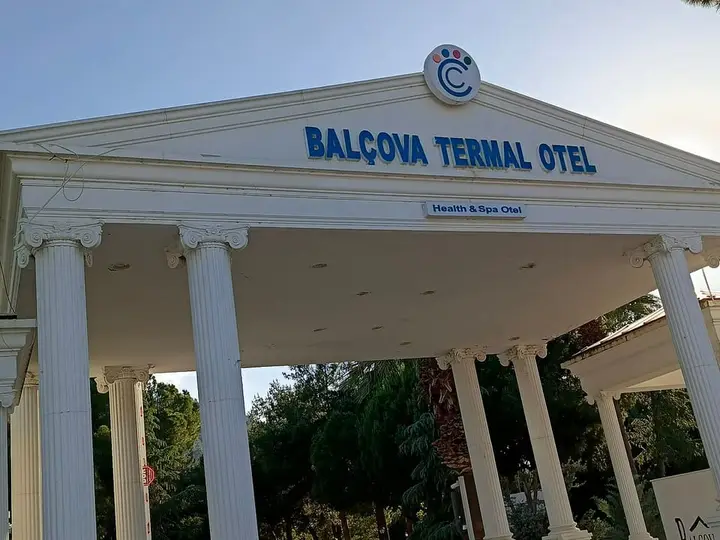
Şifne Termal Otel (Çeşme Şifne Thermal Springs)
İzmir, Turkey
53 mi away, ~1.5 hr drive
95-97°F35-36°C Paid Drive-up
95-99°F35-37°C
Public pool
Gülbahçe Roman Bath (Kleopatra Hamamı)
İzmir, Turkey
57 mi away, ~1.5 hr drive
95-99°F35-37°C Free Short walk
Sources we checked (6)
- aeolos.tv/143021/anastelletai-i-leitourgia-ton-iamatikon-pigon-polichnitou-ippokratis/
- emprosnet.gr/oikonomia/ippokratis-polixnitos-kataggelia
- lesvosnews.net/articles/news-categories/koinonia/iamatika-polihnitoy-den-parahorithike-mono-mia-pigi-alla-mellon
- travel.gr/how_to_travel/travel-news/se-trochia-syndyastikis-axiopoiisis-3-i/
- travel.gr/en/experiences-ee/activities-en/wellness-en/the-north-aegean-island-of-lesvos-hot-springs/
- kalispera.se/greece/lesvos/the-hot-springs-of-polichnitos-in-lesvos.html