Gülbahçe Roman Bath (Kleopatra Hamamı)
Near Urla, İzmir, Turkey
A small vaulted stone bathhouse on the shore at Gülbahçe, inside the İzmir Institute of Technology campus near Urla, built over a 95-99°F35-37°C spring that mixes with seawater.
- Water temperature
- 95-99°F35-37°C
- Entry
- Free
- Getting in
- Short walk
- Type
- Public pool
- A single natural pool inside a barrel-vaulted stone building, right where the Tatar stream meets the sea.
- The water is 95-99°F35-37°C at the surface and about four-fifths seawater.
- Restored by the İzmir Institute of Technology (IZTECH), which says it is open to the public.
- Nobody knows when it was built; the "Roman" and "Cleopatra" names are local tradition.
What to expect
On the shore of Gülbahçe Bay, west of Urla on the İzmir peninsula, a small stone building sits right at the waterline where a stream called the Tatar Deresi runs into the sea. Locals call it the Roma Hamamı (Roman Bath) or Kleopatra Hamamı (Cleopatra’s Bath). Inside is a single pool of warm mineral water. People in Gülbahçe have bathed here for generations, mostly for skin and joint complaints, and the habit continues.
The building is a simple rectangle, oriented northwest to southeast, made of rough-cut stone and rubble with some brick, under a barrel vault. You enter through an arched doorway on the west side. The pool takes up most of the floor, with stone ledges about 50 cm wide along the long sides to sit on and a recess on the northeast side. Water rises into the pool through an opening in the floor and drains out on the southwest side to the sea. Behind the bath, more warm water seeps from cracks in the limestone, and bubbles rise at points along the beach.
The water at the surface is about 95-99°F35-37°C, close to body temperature: a long, mild soak rather than a hot one. It is a sodium chloride water with a flow of about 10 litres a second and a pH of 6.8-7.2. The reason it is so salty is the sea. Geologists estimate the deep reservoir at 212-225°F100-107°C, but cold groundwater and seawater mix in on the way up, and seawater makes up roughly 76-82% of what reaches the pool. At high water, the bath and the sea can run together.
History
No one knows when the bath was built. The “Roman” and “Cleopatra” names are tradition rather than evidence. Late Roman remains near the site suggest the spring was in use then, and there are Hellenistic ruins and a 5,000-year-old mound, Değirmen Höyük, nearby. Mine Turan, an architect at IZTECH, has said the building’s features could point to the 15th century, though no document confirms it.
By 2018 the building was close to collapse. IZTECH began a restoration in late 2020 with funding from the İzmir Governorship, aiming to keep it as close to its original form as possible, and the stone structure was restored in 2021-2022. A 2021 IZTECH master’s thesis documented the bath and its conservation problems. The university has also talked about tidying the surroundings, adding open-air baths and creating a space for cultural events. We found no sign that those later phases have been built.
Getting there
- From Urla: Drive west about 14 km (9 miles), around 15 minutes, to Gülbahçe and the IZTECH campus.
- From İzmir city centre: About 52 km (32 miles) west on the Çeşme motorway, roughly 40 minutes.
- From Çeşme: About 42 km (26 miles) east, roughly 30 minutes.
The bath is about 1 km southeast of Gülbahçe village, on the shore inside the campus grounds. The university says the bath is open to public access, but campus entry and parking rules are set by IZTECH, so ask at the gate if you are stopped and check where visitors may park.
When to go
You can visit at any time of year. Spring and autumn are the most pleasant: warm enough to dry off outside, and without the summer crowds of the Urla and Çeşme coast. In winter the 95-99°F35-37°C water feels warmer by contrast; a resident told Yeni Asır that it stays warm inside even on cold days. Calm, low-water days are best, since high seas and storms can push seawater into the pool.
Rules and etiquette
There are no staff, no posted opening hours and no fee that we could find. That puts the burden on visitors:
- It is a protected historic building. Do not climb on the vault, chip the stone or move anything.
- No soap, shampoo or oils in the pool. It is small and the water turns over slowly.
- Wear a swimsuit. This is a public place on a university campus in a fairly traditional area.
- Share the pool and keep the noise down; it holds only a few people.
- Take your rubbish with you. There are no bins or facilities at the bath.
Bathing culture
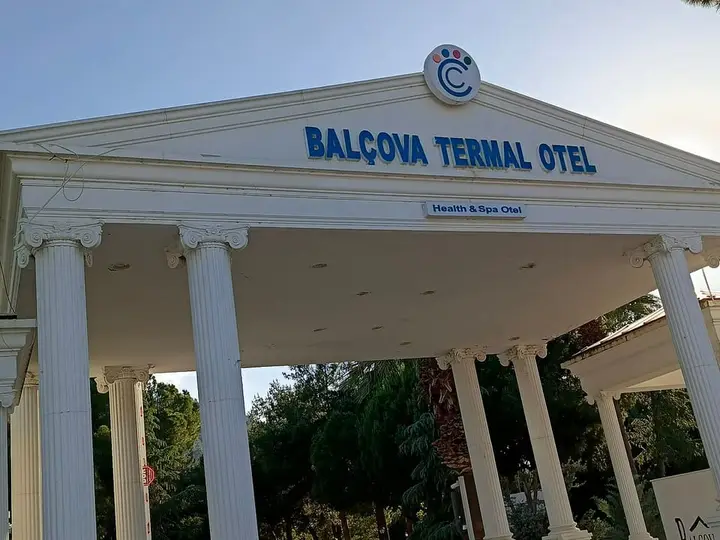
The Gülbahçe bath is closer to a village ılıca than to a Turkish hotel spa. People come for a quiet soak, often older locals following a family habit, and there is no hamam ritual, scrub or attendant. Keep to the local custom: men and women may both be present, so dress modestly to and from the pool. For a staffed thermal spa with a hamam, go to Balçova Termal (Agamemnon Baths) in İzmir.
Where to stay nearby
There is no lodging at the bath. Urla, 14 km (9 miles) east, has boutique hotels, guesthouses and a vineyard route inland. Çeşme and Alaçatı, about half an hour west, have the widest choice on the peninsula, plus the Şifne thermal springs. İzmir city is about 40 minutes away.
Safety notes
- Do not drink the water. It is very hard and contains arsenic.
- Untreated water: The pool is not managed or tested. Keep your head above the water, do not swallow it, and skip it if you have open cuts.
- Slippery stone: The pool edges and the shore are wet, uneven rock. Wear water shoes.
- Sea conditions: In rough weather, waves can reach the building. Do not bathe in a storm.
- Sun and heat: In summer, bring water and shade; the shore is exposed.
Nearby stops worth adding
Klazomenai, the ancient Ionian city on the coast at Urla İskele, is an excavated site worth an hour. Urla’s old town is good for a long lunch. The better-known warm pool with a Cleopatra name, Cleopatra’s Pool at Hierapolis, is far inland in Denizli Province and a very different, ticketed place.
Map and nearby springs
GPS: 38.32978, 26.65365
Gülbahçe Roman Bath (Kleopatra Hamamı): common questions
Where is the Gülbahçe Roman Bath?
On the shore of Gülbahçe Bay in Urla district, İzmir, about 1 km southeast of Gülbahçe village where the Tatar stream (Tatar Deresi) reaches the sea. It lies within the grounds of the İzmir Institute of Technology (IZTECH) campus.
Can you swim in the Gülbahçe Roman Bath?
IZTECH says the bath is open to public access, and people have long bathed in its pool. There is no staff, no posted timetable and no water testing that we could find, so you soak at your own risk.
Is it really Roman, or connected to Cleopatra?
Probably not in any provable way. Locals call it the Roma Hamamı or Kleopatra Hamamı, but its building date is unknown. Late Roman remains nearby suggest the spring was used then, and one IZTECH architect has suggested the present building could be about 15th-century.
How hot is the water?
About 95-99°F35-37°C at the surface, close to body temperature. The deep reservoir is far hotter, at about 212-225°F100-107°C, but cold groundwater and seawater mix in on the way up. Seawater makes up roughly 76-82% of what reaches the pool.
Is this the same as Cleopatra's Pool at Pamukkale?
No. The well-known Cleopatra's Pool is at Hierapolis above Pamukkale in Denizli Province, far inland. There is also a Kleopatra Hamamı ruin near Dalaman in Muğla. The Gülbahçe bath is a different and much smaller place.
Closest hot springs to Gülbahçe Roman Bath (Kleopatra Hamamı)
95-97°F35-36°C
Resort or spa
Şifne Termal Otel (Çeşme Şifne Thermal Springs)
İzmir, Turkey
14 mi away, ~20 min drive
95-97°F35-36°C Paid Drive-up
Near Therma
Public pool
108°F42°C
Resort or spa
Polichnitos Hot Springs (Hippocrates Thermal Baths)
Lesbos, Greece
57 mi away, ~1.5 hr drive
108°F42°C Paid Drive-up
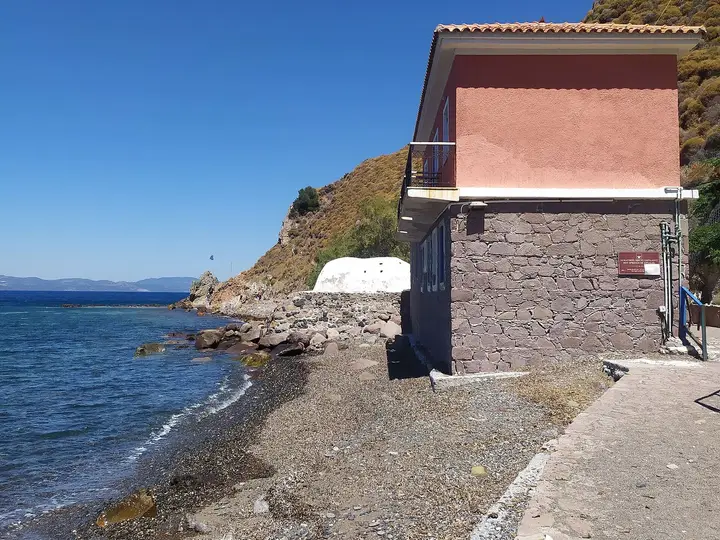
Eftalou Hot Springs (Bathhouse)
Lesbos, Greece
76 mi away, ~2 hr drive
109-115°F43-46°C Paid Short walk