Sheepeater Hot Springs
Idaho, United States
A set of three wild soaking pools on a terrace above Sheepeater Camp, at about mile 13 of the Middle Fork of the Salmon River in the Frank Church-River of No Return Wilderness, reached by river trip.
- Water temperature
- Not published
- Entry
- Paid
- Getting in
- Boat access
- Type
- Wild & natural
- Three pools that range from very hot to comfortable, on a terrace a short uphill walk from the river camp.
- Sheepeater Camp, on river left at about mile 13, is a common first-night stop for groups launching at Boundary Creek.
- Every party needs a Middle Fork float permit, and summer launches are won in a winter lottery.
- Named for the Tukudeka, the Sheepeater band of Shoshone people who lived in these canyons.
What to expect
Sheepeater Hot Springs is a river trip soak. It sits above the Middle Fork of the Salmon River at about river mile 13, inside the Frank Church-River of No Return Wilderness, one of the largest roadless areas in the lower 48 states. There is no trailhead parking lot and no road nearby. For nearly everyone who soaks here, the springs are a stop on a multi-day float that started at the Boundary Creek launch the same morning or the day before.
The springs are on a terrace above Sheepeater Camp, on river left. One outfitter describes the soak as a short uphill walk from camp. Other accounts put it about half a mile from the river. That difference probably reflects where you land and which path you take. Either way, it is a walk you do in camp shoes, not a hike.
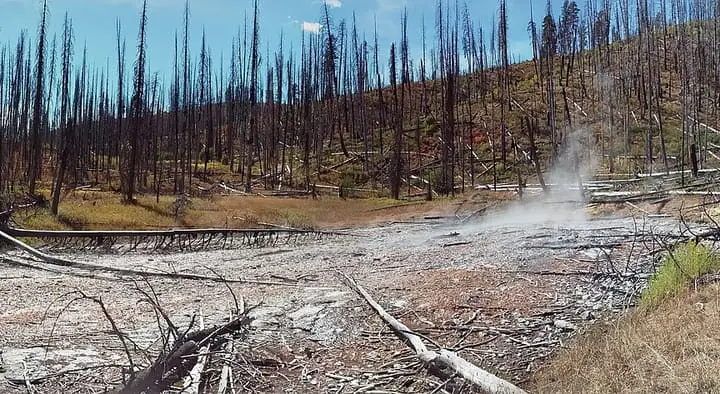
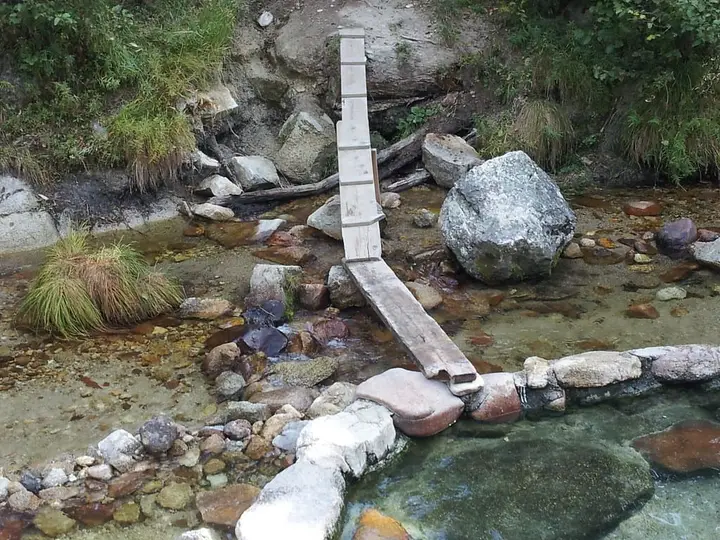
There are three pools, usually described as running from very hot to just right. They are undeveloped, with natural and rock-lined edges, and their temperatures change through the season. Nobody publishes a measured temperature, so feel the water before you get in and move to a cooler pool if the top one is too much.
The Middle Fork has six natural hot springs in its first 52 miles, and Sheepeater is the second you pass after Trail Flat Hot Spring at about mile 7. That makes it the classic first-evening soak, after a day of cold technical whitewater in the upper river.
Getting there
By river. This is the only practical way in for most people. Trips normally launch at Boundary Creek, the upper put-in on the Middle Fork, and reach Sheepeater on the first day. The campsite list published by the Forest Service puts Joe Bump Cabin camp at mile 11.8, Scout Camp at mile 12.7 and Sheepeater Camp at mile 13.0, all on river left. Parties camped at Scout or Joe Bump can walk to the springs too.
The landing can be awkward at low water, when the river spreads out and runs shallow here. Pick your spot early and avoid rushing a crowded beach.
On a guided trip. Several licensed outfitters run Middle Fork trips that stop here. If you do not want to deal with permits, gear and whitewater yourself, this is the simplest route.
On foot. The Middle Fork corridor can be reached by wilderness trails and backcountry airstrips, but that is a serious multi-day undertaking. This listing does not cover an overland route. If you want to try one, talk to the Salmon-Challis National Forest Middle Fork river office first.
When to go
June to early September is the main floating season, and it overlaps the Forest Service control season of May 28 to September 3. That is when you need a lottery permit or a guided trip. Expect other parties at the springs in these months. Sheepeater Camp is rated high use in June.
Early season brings high, cold water and big rapids upstream. The springs are a welcome warm-up after that.
Late summer can bring low water at Boundary Creek. Some years, boaters fly in to a lower launch instead, which may skip Sheepeater entirely. Check flows and launch options with the river office.
Fall is outside the control season. Launches are still limited to seven a day and need a permit, but they are first come, first served. Nights are cold, which makes an evening soak all the better.
Rules and etiquette
- Permit first. A float permit is required year-round between Dagger Falls and the main Salmon. During control season the permit holder must be 18 or older, must go on the trip, and cannot transfer the permit.
- Fees: a non-refundable $6 lottery or reservation fee, plus $4 per person per day or a Salmon Rivers Season Pass.
- Camp where you are assigned. Middle Fork camps are assigned to permitted parties, and the Forest Service allows only one hot springs camp per trip.
- Share the pools. Several groups may land here in an afternoon. Do not monopolize the springs, and let a group camped at Sheepeater have the evening.
- Wilderness rules apply. No motors, bicycles or drones. Carry a portable toilet and a fire pan, and pack out all trash and human waste.
- No soap or shampoo in or near the pools.
- Clothing: No rule is posted at the spring. Because you share it with other parties and their guides, wear a swimsuit unless you have the place to yourselves.
Where to stay nearby
- Sheepeater Camp (mile 13.0, river left, 30 people) is the obvious choice. It is popular, so it depends on your camp assignment.
- Scout Camp (mile 12.7) and Joe Bump Cabin (mile 11.8) are just upstream on the same side, each sized for 30, with access to the springs on foot.
- Before launch: Groups usually stage near Boundary Creek and Stanley the night before. Stanley has lodges, motels and campgrounds.
Safety notes
- Hot water. The top pool can be hotter than is comfortable. Test with a hand, keep soaks short, and do not soak after drinking.
- Footing. The path from camp is short but can be loose and dark after sunset. Bring a headlamp and closed shoes.
- Remoteness. You are a day or more from a road, with no cell service. Groups must be self-sufficient, with first aid and a way to call for help such as a satellite communicator.
- River hazards. The Middle Fork above Sheepeater includes some of the river’s most demanding rapids, especially at high water. This is not a trip for first-time boaters without a guide.
- Wildlife. Black bears and wolves live in the canyon. Keep a clean camp and store food properly.
History
The spring and camp take their name from the Tukudeka, a Shoshone band whose name translates as “Sheepeaters.” They lived in the Middle Fork canyons and hunted bighorn sheep here long before the river became a rafting destination. The 1879 Sheepeater War, fought in this same wilderness, also carries the name.
Nearby stops worth adding
The springs come in a chain. Upstream, Trail Flat Hot Spring at about mile 7.3 is a small riverside soak that can disappear under high water. Downstream, Sunflower Hot Springs has five pools and a hot shower off a rock face, and Lower Loon Creek Hot Spring, about a mile and a half up Loon Creek, has a wooden tub above the creek. Upstream of the launch, Bear Valley Hot Springs is a hike-in soak in the same headwaters country.
Map and nearby springs
GPS: 44.62800, -115.19700
Sheepeater Hot Springs: common questions
How do you get to Sheepeater Hot Springs?
Almost everyone arrives by raft or kayak on a Middle Fork of the Salmon River trip, landing at or near Sheepeater Camp at about river mile 13 below the Boundary Creek launch. From camp it is a short uphill walk to the pools. There is no road access; the springs are deep in the Frank Church-River of No Return Wilderness.
Do you need a permit to visit Sheepeater Hot Springs?
You need a Middle Fork float permit to be on the river at all, year-round. During the control season, May 28 to September 3, launches are allocated by lottery (apply December 1 to January 31). Outside that season, launches can be reserved first come, first served. Fees are a $6 application or reservation fee plus $4 per person per day or a Salmon Rivers Season Pass.
How many pools are at Sheepeater Hot Springs?
Three, according to most descriptions, ranging from too hot for most people to a comfortable soak. They are undeveloped and their temperatures shift with the season and with how visitors have set up the inflow.
Can you camp at Sheepeater Hot Springs?
Yes, if your trip is assigned Sheepeater Camp, a 30-person site on river left at about mile 13. Camps on the Middle Fork are assigned to permitted parties, and the Forest Service limits trips to one hot springs camp each. Nearby Scout Camp and Joe Bump Cabin camp are also within walking distance of the springs.
Is Sheepeater Hot Springs clothing optional?
There is no posted rule at the spring. It is shared with other float parties and their guides, so most people wear swimsuits, and a swimsuit is the safe choice.
Is this the same as Sheepeater Cliff in Yellowstone?
No. Sheepeater Cliff and the Sheepeater ski trail are in Yellowstone National Park in Wyoming. Sheepeater Hot Springs is in central Idaho on the Middle Fork of the Salmon River.
Closest hot springs to Sheepeater Hot Springs
Near Stanley
Wild & natural
Wild & natural
Loon Creek Hot Springs (Lower Loon Creek)
Idaho, United States
23 mi away, ~35 min drive
Temp n/a Paid Boat access
Near Cascade
Wild & natural
Trail Creek Hot Springs
Idaho, United States
27 mi away, ~40 min drive
100-110°F38-43°C Free Short walk
Near Challis
Wild & natural
All hot springs in IdahoAll hot springs in United StatesOpen the full map