Pamukkale Travertines and Hierapolis (Pamukkale Travertenleri)
Near Pamukkale, Denizli, Turkey
A white travertine slope of warm spring-fed pools below the ruins of Hierapolis. You walk it barefoot on a marked route and wade in the shallow pools that are filled that day. It is not a soak.
Photos: Karelj (CC BY-SA 3.0); Carole Raddato from FRANKFURT, Germany (CC BY-SA 2.0); shankar s. from Dubai, united arab emirates (CC BY 2.0). Resized and cropped for this page.


- Water temperature
- Not published
- Entry
- Paid
- Getting in
- Short walk
- Type
- Public pool
- The white travertine formation is about 2,700 m long, 600 m wide and 160 m high.
- Shoes, slippers and socks are banned on the terraces, so you walk the whole route barefoot.
- One €30 ticket (2026, foreign visitors) covers the travertines, the Hierapolis ruins and the archaeology museum.
- Inscribed as a UNESCO World Heritage Site in 1988; the last two hotels on top of the slope were demolished in 2001.
What to expect
Pamukkale is the white hillside above the village of the same name in Denizli province: a long slope of travertine, the stone that warm, mineral-heavy spring water leaves behind as it cools and loses its carbon dioxide. The formation is about 2,700 m (1.7 miles) long, 600 m wide and 160 m high. UNESCO describes the springs coming out at the top of a cliff almost 200 m high, and the deposits form steps that range from less than a metre to about 6 m tall. Fresh calcium carbonate keeps the surface white.
On top of the slope sits Hierapolis, a spa city that the Attalid kings of Pergamon founded at the end of the 2nd century BC on the site of an older cult. Its theatre, baths, churches and a huge necropolis spread across the plateau. The travertines and the ruins are one site, on one ticket, and were inscribed together as a UNESCO World Heritage Site in 1988.
Be clear about what you can do here. This is a walk, not a soak. The area has 17 hot springs, ranging from about 95-212°F35°C to 100°C, and the water used on the terraces runs about 320 m from its source to the head of the slope. The spring that feeds the visitor area is listed at about 96°F35.6°C. What you meet on the marked route are shallow, milky-blue basins, warm at best, that you wade through and sit beside. The large natural terraces you see in photos are fenced off, and the flow is moved around so different sections can rest and whiten. On any given day some pools along the route are full and others are dry.
If you want to swim in spring water, that happens up in the ruins at Cleopatra’s Pool, the Antique Pool full of fallen marble columns, which costs extra.
Which pools you can wade in
The terraces are split between protected natural travertines, which you look at from the path, and a marked pedestrian route where barefoot walking and wading are allowed. A January 2026 Turkish guide says barefoot walking is allowed on the pools outside the protected zone and along the marked routes where water is flowing, and that stepping into pools closed for protection or whitening can bring an administrative fine.
The visitor pools have a history. For decades a road climbed across the terraces to the plateau and hotels stood on top of the slope beside the ruins. After the UNESCO listing the hotels were cleared, with the last two demolished in 2001, and the road through the terraces was closed. A 2002 UNESCO report noted that bathing on the terraces was the main draw for tourists and that plans were being drawn up for new travertine areas to meet that demand, away from the protected formations. It also noted the new water channels. You will see the channels that move water from section to section as you walk.
Because the water is rotated, do not count on a particular pool being full. Walk the route and use whichever basins are wet that day.
Getting there
Pamukkale is about 18 km (11 miles) north of Denizli city, roughly 20 minutes by car. Follow the Pamukkale and Hierapolis signs north from the centre.
- By minibus: Minibuses to Pamukkale leave from the lower level of the Denizli intercity bus terminal (otogar) every 15 to 20 minutes, according to a January 2026 guide.
- By air: Denizli Çardak Airport is about 70 km (43 miles) away, roughly an hour by road.
The site has three entrances, and which one you use shapes the visit:
- Pedestrian entrance (village): at the foot of the travertines in Pamukkale village. You take your shoes off and climb the white slope to the ruins. This is the classic way in. It closes at 17:00, earlier than the other gates.
- South Gate: closest to the top of the travertines. An electric shuttle runs from the upper gate area to the terraces (reported in January 2026 as €3 for foreigners and ₺80 for Turkish visitors).
- North Gate: enters through the necropolis of Hierapolis, so you walk past tombs on the way to the ruins and the terraces.
When to go
The site is open every day. In October 2026 the Ministry of Culture and Tourism lists 08:00 to 18:00, with the ticket office closing at 17:00. The South and North gates close at 18:00 and the pedestrian entrance from the village at 17:00. Summer hours run later: a January 2026 guide gave 08:00 to 21:00 in summer, with lit sections of the travertines open until 23:00 on a separate night ticket. Night openings are tied to the ministry’s night museum programme and change from year to year, so check the ministry page.
Pamukkale gets more than two million visitors a year. Tour coaches from the coast tend to arrive mid-morning and leave mid-afternoon, so arrive at opening or come for the last two hours of the day. Spring and autumn are the most comfortable seasons. July and August bring heat and strong glare off the white rock, with almost no shade. Winter is quiet, but bare feet on wet stone in cold air is a real consideration.
Prices and rules
Tickets (2026): the Hierapolis-Pamukkale site ticket is €30 for foreign visitors and covers the travertines, the ruins and the Hierapolis Archaeology Museum. Turkish citizens use the Müze Kart, and a 2026 guide lists free entry for Turkish students under 18, citizens 65 and over, and disabled visitors with one companion. Swimming in Cleopatra’s Pool is an extra charge paid at the pool (₺350 for Turkish visitors and €15 for foreigners in January 2026). The ministry shows € prices on its English page only. Turkish prices change often, so check at the gate.
Rules on the terraces:
- No shoes, slippers or socks on the travertines. Carry your footwear in a bag.
- Stay on the marked route. The protected terraces are closed to visitors, and entering closed pools can be fined.
- Wear something you can get wet. Swimsuits or shorts are normal for wading. This is a mixed public site with many families.
- Leave the stone alone. Do not chip, scrape or carry off travertine.
Bathing culture
The travertines are a sightseeing walk in swimwear, not a Turkish bath. If you want the full thermal experience, stay a night in one of the spa hotels in nearby Karahayıt, where many hotels run thermal pools and a hamam. Hamam customs apply there: wrap a peştamal (thin cotton cloth) around your waist, expect a kese scrub with a rough mitt if you book one, and rinse at the marble basins before you get into a shared pool. Traditional baths keep men and women apart, either in separate halls or at separate times, and couples and families book a private cabin.
Where to stay nearby
There is no lodging inside the archaeological site. Pamukkale village, at the foot of the travertines, has many small hotels and pensions within walking distance of the pedestrian entrance. Karahayıt, about 5 km (3 miles) north, has most of the area’s large thermal hotels. Denizli, about 18 km (11 miles) south, has city hotels and the bus terminal.
Safety notes
- Footing: wet travertine is slippery in some places and rough in others. Walk slowly, and keep a hand free.
- Sun and glare: the white rock reflects a lot of light and there is little shade. Wear a hat and sunglasses, use sunscreen, and carry water.
- Bare feet: soft feet suffer on a long climb. Take it in stages and rest in the pools.
- Children: keep them close near terrace edges and the drops between steps, some of which are several metres high.
Nearby stops worth adding
Inside the site, Cleopatra’s Pool is a short walk from the top of the terraces. The Hierapolis theatre, the archaeology museum and the Martyrium of St. Philip are all on the same ticket. North of the site, the Karahayıt red springs show the same kind of water stained red by iron, free to see. Near Denizli, the ruins of Laodikeia are a quieter second stop.
Map and nearby springs
GPS: 37.92448, 29.11901
Pamukkale Travertines and Hierapolis (Pamukkale Travertenleri): common questions
Can you swim in the Pamukkale travertines?
Not really. You can wade and sit in the shallow pools along the marked barefoot route when they are filled, but they are shallow paddling basins, not soaking pools. The protected natural terraces are closed to visitors. For a proper swim in warm spring water, pay extra for Cleopatra's Pool up in the Hierapolis ruins.
Do you have to take your shoes off at Pamukkale?
Yes. Shoes, slippers and socks are not allowed on the white travertines. Carry them in a bag and put them back on when you reach the ruins at the top or the village at the bottom. Entering pools that are closed for protection can be fined.
How much is the Pamukkale ticket in 2026?
The Hierapolis-Pamukkale site ticket is €30 for foreign visitors in 2026 and covers the travertines, the ruins and the Hierapolis Archaeology Museum. Turkish citizens use the Müze Kart. Cleopatra's Pool costs extra to swim in (reported in January 2026 as €15 for foreigners). Turkish prices change often, so check at the gate.
Which entrance should I use at Pamukkale?
There are three. The pedestrian entrance in Pamukkale village puts you at the bottom of the white slope for the classic barefoot climb, but it closes at 17:00. The South Gate is closest to the top of the travertines, with an electric shuttle. The North Gate brings you in past the Hierapolis necropolis.
Are Pamukkale and Cleopatra's Pool the same thing?
They share one site ticket but are different places. The travertines are the white terraces on the slope. Cleopatra's Pool (the Antique Pool) is a warm spring pool full of fallen Roman columns in the middle of Hierapolis, a short walk from the top of the terraces, and swimming there costs extra.
What time does Pamukkale open?
In October 2026 the Ministry of Culture and Tourism lists 08:00 to 18:00 every day, with ticket sales ending at 17:00 and the pedestrian entrance from the village closing at 17:00. Summer hours run later, so check the ministry page before you go.
Closest hot springs to Pamukkale Travertines and Hierapolis (Pamukkale Travertenleri)
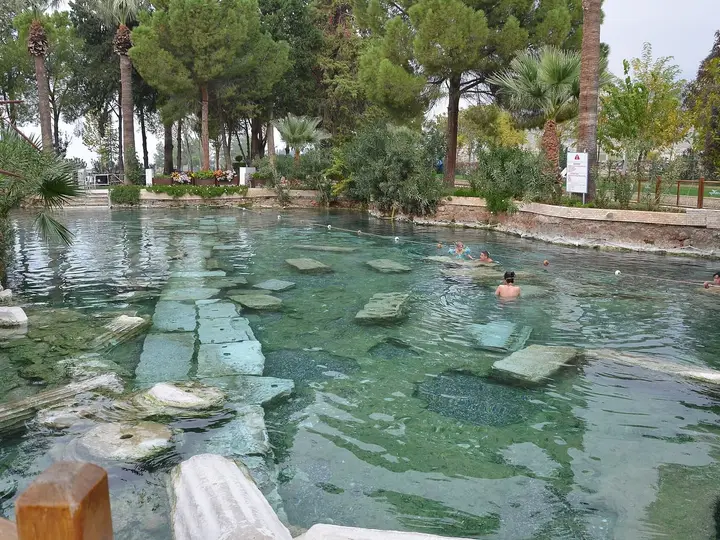
Cleopatra's Pool (Antique Pool, Hierapolis)
Denizli, Turkey
0 mi away, ~10 min drive
97°F36°C Paid Short walk
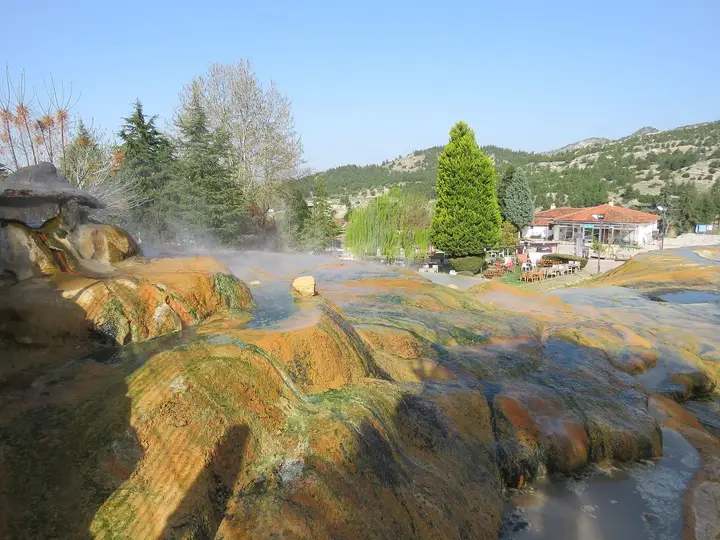
Near Gediz
Public pool
Gediz Murat Dağı Thermal Baths (Kocahamam and Hacıdâna)
Kütahya, Turkey
76 mi away, ~2 hr drive
Temp n/a Paid Drive-up
91-106°F33-41°C
Resort or spa
Ömer-Gecek Thermal Springs (Ömer-Gecek Kaplıcaları)
Afyonkarahisar, Turkey
95 mi away, ~2.5 hr drive
91-106°F33-41°C Paid Drive-up
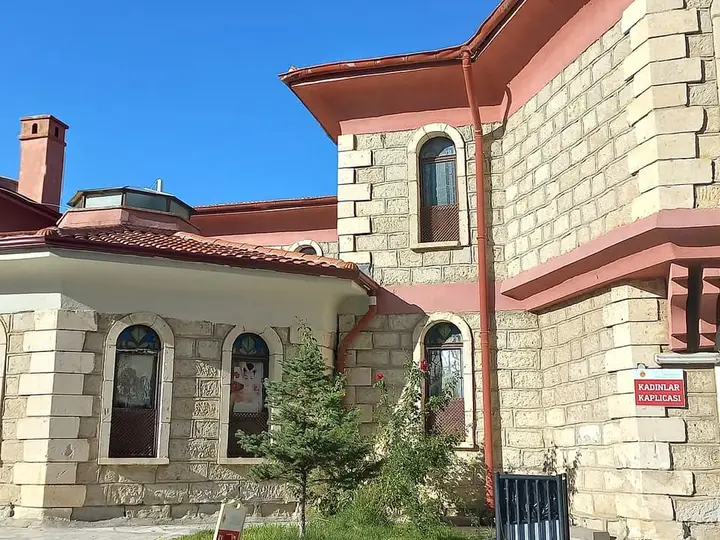
Gazlıgöl Thermal Springs (Gazlıgöl Kaplıcaları)
Afyonkarahisar, Turkey
102 mi away, ~2.5 hr drive
Temp n/a Paid Drive-up
86-100°F30-38°C
Resort or spa
Hisaralan Thermal Springs (Hisaralan Kaplıcaları)
Balıkesir, Turkey
102 mi away, ~2.5 hr drive
86-100°F30-38°C Paid Drive-up