Osorezan Onsen (Bodai-ji Temple Baths)
Near Mutsu, Aomori Prefecture, Japan
Free sulfur baths in wooden bath huts inside the grounds of Osorezan Bodai-ji, the temple on a volcanic crater lake that Japanese tradition links with the dead. Open May to October only.
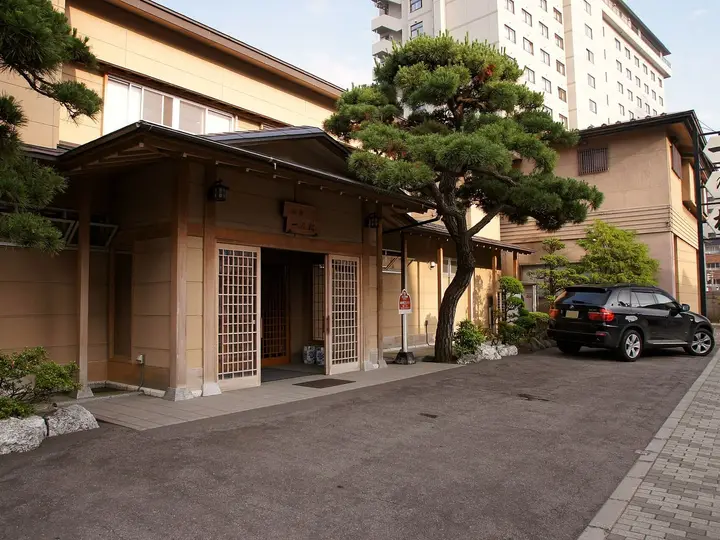
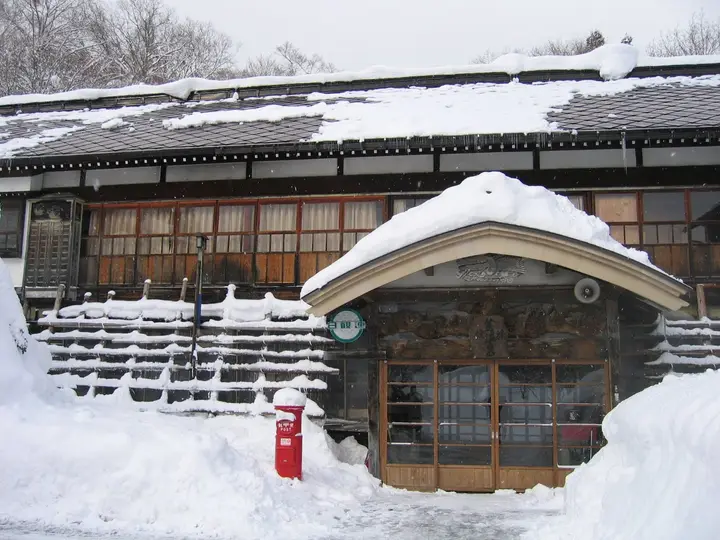
Photos: Kamakura (CC BY-SA 3.0); Soica2001 ( talk ) (Public domain); Daderot (CC0). Resized and cropped for this page.


- Water temperature
- Not published
- Entry
- Paid
- Getting in
- Drive-up
- Type
- Public pool
- Bathing is free for everyone who pays the ¥900 temple entry, and the bath huts stand right beside the main approach.
- Of the four bath huts, three are in use; Hanazome-no-yu, the mixed bath behind the lodging, is closed for adjustment.
- The temple opens only from May 1 to October 31, and from October 1 its gates close at 17:00.
- You can stay overnight at the temple lodging, Kisshokaku, for ¥17,000 with two vegetarian meals.
What to expect
Osorezan, Mt. Osore, is a volcanic basin in the middle of the Shimokita Peninsula in northern Aomori. The Sōtō Zen temple Osorezan Bodai-ji sits on the shore of its crater lake, Usori-ko, ringed by eight peaks. The temple says it was founded in 862 by the monk Ennin. It is counted with Mt. Kōya and Mt. Hiei as one of Japan’s three great sacred mountains, and locals have long said that the dead go to Osorezan.
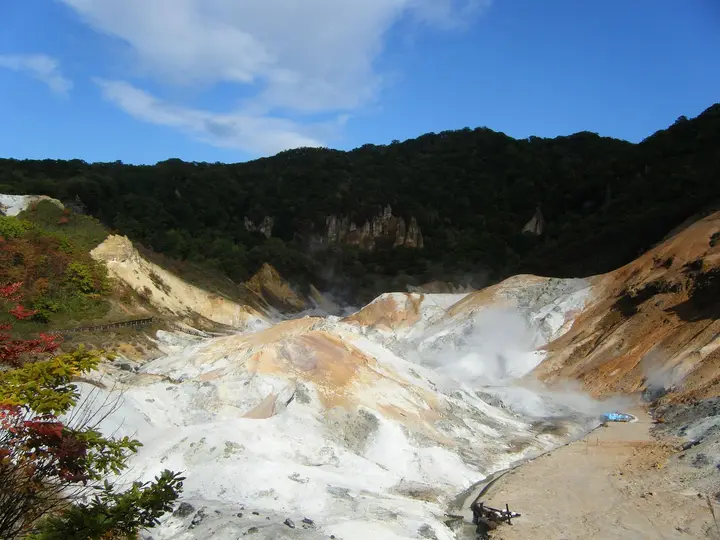
The grounds feel like nowhere else. You cross the Taiko-bashi bridge over a stream called the Sanzu River, the river of the dead in Buddhist belief, then walk through bare grey rock that steams and smells of sulfur. The temple has named its parts after the afterlife: hell valleys, a blood pool, the Sai-no-Kawara riverbank where parents stack stones and plant pinwheels for children who died, and the white-sand Gokuraku-hama on the lake. It is a working place of memorial, not a theme park.
Most visitors come for the temple. The baths are the bonus, and they are older than the temple’s history. The temple thinks local people found the springs and used them as a cure spot before the mountain became a religious site, and the waters were long taken by pilgrims as medicinal baths.
The baths
There are four bath huts in the grounds, the temple says, where there were once five:
- Yakushi-no-yu, on the right of the main approach.
- Hie-no-yu (also Hienuke-no-yu), on the left of the approach.
- Kotaki-no-yu, also on the left.
- Hanazome-no-yu, behind the Kisshokaku lodging. This is a mixed bath, and the temple says it is currently closed for adjustment.
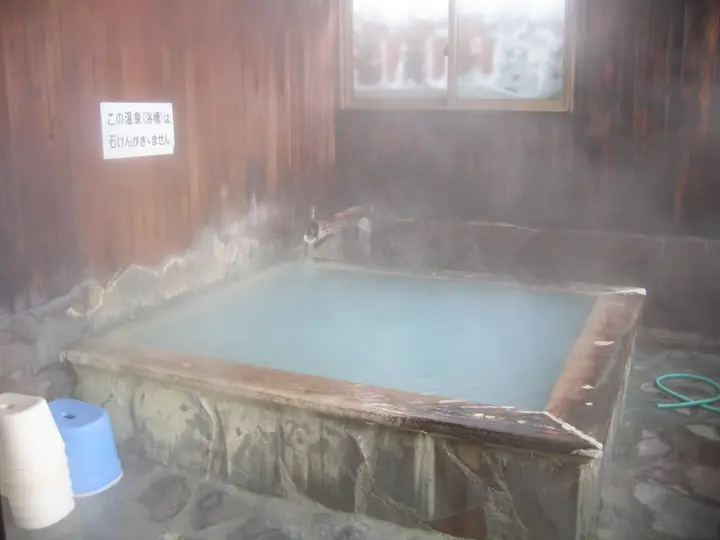
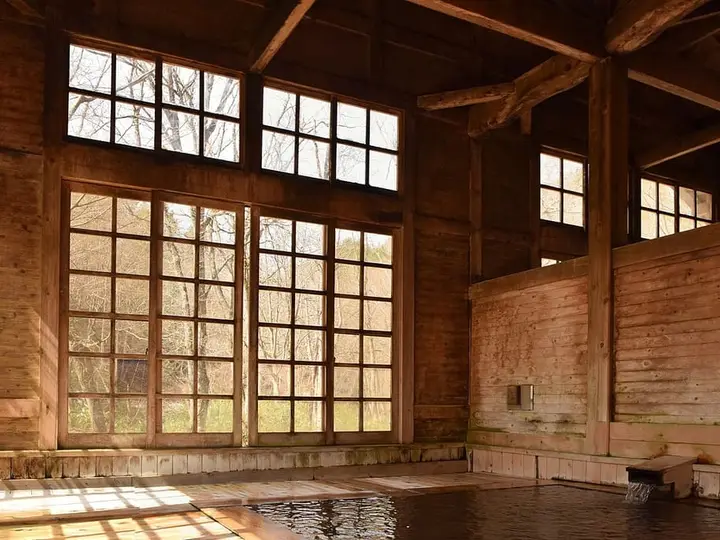
The three huts in use change between men and women from day to day, so check the sign on each door. They are simple wooden huts with tubs of strong-smelling sulfur water. The temple’s pages give no temperatures, water analysis or facility list, so bring your own towel and expect a basic soak rather than a spa. The temple assigns each bath its own traditional benefit, from eye complaints to the stomach, but these are traditions, not medical advice.
Prices and booking
Entry fees from the temple’s site in October 2026:
| Ticket | Price |
|---|---|
| Adult | ¥900 |
| Group of 20 or more, each | ¥800 |
| Elementary school child | ¥400 |
| Preschool child | Free |
| Disability certificate holder and one helper | Free |
You pay at the main reception before the gate and get a ticket and a guide leaflet. The baths cost nothing more. No booking is needed.
Kisshokaku, the temple lodging, costs ¥17,000 per person per night with dinner and breakfast, plus the entry fee. Elementary school children pay half and preschoolers stay free. Groups of 20 or more pay ¥15,000 each and ¥800 entry. Book by phone (0175-22-3826 for the lodging, per Mutsu city) or by letter. Arrive by 17:00. Dinner is at 18:00, lights out at 22:00, and everyone is asked to join the 6:30 morning service before breakfast. Check-out is 10:00. Meals are vegetarian temple food with no meat or fish. Yukata, towels and toothbrushes are provided, and the lodging’s large bath uses the same spring water as the huts.
Rules and etiquette
The temple asks every visitor to:
- Stay on the marked route. High-temperature volcanic gas vents in places across the grounds, and they are dangerous.
- Leave everything as it is. Do not touch or take statues, offerings, plants or stones.
- Behave quietly. Many people come here to mourn.
In the bath huts, follow normal onsen manners: rinse off first, keep towels out of the water and bathe naked in the single-sex huts. Pets are not allowed anywhere in the grounds. Filming and photography for media or the web need the temple’s permission in advance.
Getting there
Osorezan Bodai-ji is at 3-2 Usoriyama, Tanabu, Mutsu, Aomori Prefecture.
- By train and bus: take the JR Ominato Line to Shimokita Station in Mutsu. The Shimokita Kōtsū Osorezan bus takes about 40 to 45 minutes and stops at the end of the line, right by the temple. In October 2026 the last bus back to Shimokita leaves at 15:55, earlier than in summer, so plan around it.
- By car: about 30 to 40 minutes from Shimokita Station, or about 30 minutes from JR Ōminato Station, over the mountain road into the basin. There is free parking for about 300 cars.
The Shimokita Peninsula is remote, and buses into the basin are few, so plan your connections before you set out.
When to go
The temple grounds open only from May 1 to October 31 each year and close from November through April. In the main season the gates open at 6:00 and close at 18:00. From October 1 they close at 17:00, and the prefecture says entry stops at 16:30. With bus times as they are, an early start is the safest plan.
Two festivals bring big crowds. The summer grand festival runs July 20 to 24, with the head priest’s ascent ceremony on the 22nd. The autumn festival is the three days ending on Sports Day in October. At both, itako, the female spirit mediums of the region, have traditionally held séances on the grounds. The temple notes that the itako are independent of it and that only a few still come. Outside those dates, weekday mornings are quiet. The prefecture lists Osorezan among its autumn-colour spots, and October is the last month before the gates shut.
Where to stay nearby
Kisshokaku, inside the grounds, is the only place to sleep at Osorezan itself, and staying gets you the baths after the day visitors leave. Otherwise, the nearest town is Mutsu, around Shimokita Station, 30 to 45 minutes away. The prefecture also lists Oku-Yagen Onsen, with its Kappa-no-yu baths in the Yagen valley, among the sights near Osorezan.
For more historic Aomori onsen, see Lamp no Yado Aoni Onsen, elsewhere in Aomori Prefecture.
Safety notes
- Volcanic gas: hot gas still vents across the grounds. Stay on the path, keep children close and do not linger in hollows where gas can collect.
- Heat: the springs are strong and hot. Keep soaks short and cool off between them.
- Weather: the basin is high and exposed, and the season ends before winter. Bring a warm layer for early mornings and October visits.
- Getting stuck: buses are few and the last one leaves early in autumn. Without a car, check the return time before you go in.
Map and nearby springs
GPS: 41.32771, 141.09000
Osorezan Onsen (Bodai-ji Temple Baths): common questions
Are the hot springs at Osorezan free?
Yes, once you are inside. The temple charges ¥900 for adults and ¥400 for elementary school children to enter the grounds, and the bath huts inside can be used at no extra cost. Preschool children enter free.
When is Osorezan open?
The temple grounds open every year from May 1 to October 31 and close from November to the end of April. In 2026 the gates close at 17:00 from October 1, and the last bus back to Shimokita Station leaves at 15:55.
Are the Osorezan baths mixed?
Not at the moment. The three huts in use, Yakushi-no-yu, Hie-no-yu and Kotaki-no-yu, switch between men and women from day to day. The fourth, Hanazome-no-yu behind the lodging, is a mixed bath, but the temple says it is closed for adjustment.
How do I get to Osorezan?
The temple is about 45 minutes by bus or 30 to 40 minutes by car from Shimokita Station, at the end of the JR Ominato Line in Mutsu. Shimokita Kotsu runs the Osorezan bus, which stops right by the temple. There is free parking for about 300 cars.
Can I stay overnight at Osorezan?
Yes. Kisshokaku, the temple lodging, charges ¥17,000 per person with two vegetarian meals, plus the ¥900 entry. Arrive by 17:00. Guests are expected at the 6:30 morning service. Its large bath uses the same water as the temple baths.
Can I bring my dog?
No. The temple does not allow pets in the grounds.
Closest hot springs to Osorezan Onsen (Bodai-ji Temple Baths)
Yagen Onsen (Okuyagen Kappa no Yu)
Aomori Prefecture, Japan
5 mi away, ~10 min drive
Temp n/a Paid Drive-up