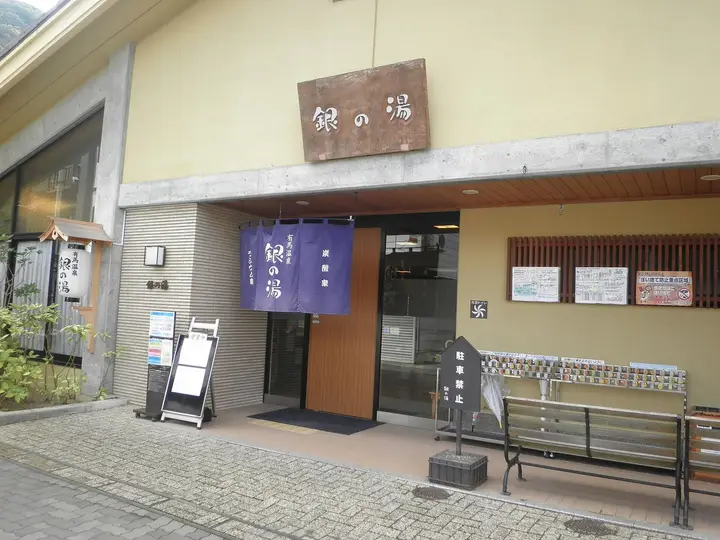
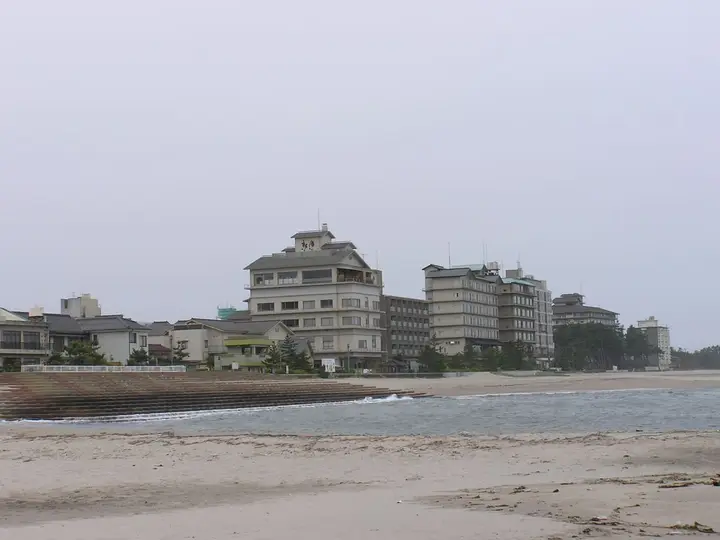
Jizō-yu (Kinosaki Onsen)
Near Kinosaki (Toyooka), Hyogo Prefecture, Japan
One of the public bathhouses of Kinosaki Onsen, a few minutes from the station. Once the villagers' everyday bath, it is named for a Jizō statue said to have emerged from its spring.

- Water temperature
- 108°F42°C
- Entry
- Paid
- Getting in
- Drive-up
- Type
- Public pool
- About 350 m (0.2 miles) north of JR Kinosaki Onsen Station, so it is often the first or last bath of a visit.
- Opens at 7:00 and runs to 23:00, longer than Mandara-yu and Yanagi-yu, which open only from 15:00.
- A Jizō statue said to have come out of the spring is enshrined in the grounds.
- The ¥1,500 Yumepa day pass covers it along with the town's other public baths.
Which Jizō-yu this is
“Jizo-yu” is a common bath name in Japan. Jizō is the Buddhist guardian of children and travellers, and bathhouses all over the country carry his name, from neighbourhood sentō in Tokyo and Nagoya to the free communal Jizō-no-yu in Kusatsu Onsen, Gunma. We have taken this slug to mean Jizō-yu in Kinosaki Onsen, Hyogo Prefecture. It is the only one of these that is a well-known stop for travellers and whose official English name is spelled exactly “Jizo-yu”. It is one of the public bathhouses (sotoyu) of Kinosaki, and the Kusatsu bath is noted below in the FAQs.
What to expect
Kinosaki is a small spa town in northern Hyogo, 2 to 3 km (about 1.5 miles) inland from the Sea of Japan, and touring its public baths one after another is the classic way to spend a stay. The inns have their own baths, but the town’s identity rests on its outdoor-access public baths, which the tourism association says locals still use as their everyday bath.
Jizō-yu is the closest of these to the station end of town. In the Edo period so many villagers bathed here that it was called “the villagers’ bath”. According to the tourism association, a statue of Jizō emerged from the spring source, which gave the bath its name, and the statue is still enshrined in the grounds. Each Kinosaki bath has a theme of blessings; Jizō-yu’s are household safety and memorial prayers for lost infants (mizuko kuyō).
Inside, the baths are split by gender. Upstairs there is a family bath, which the association lists as currently out of use, and a large tatami rest area. The association’s page does not mention an outdoor bath here. If you want an open-air soak, Goshono-yu and Mandara-yu are the ones it singles out for their rotenburo.
The water
All of Kinosaki’s public baths share the same spring water: a sodium-calcium chloride, high-temperature spring. The tourism association lists the common bath temperature as 108°F42°C. Since 1972 the town has gathered its sources at a central facility, where water from wells ranging from 99°F to 181°F37-83°C is blended and held at an average of about 135°F57°C, then piped to the public baths and to the inns. The association does not say whether Jizō-yu’s tubs are circulated or chlorinated.
Chloride water is salty and holds heat well. Expect to feel warm for a while after you get out.
Prices and booking
Prices are from the Kinosaki Onsen Tourism Association in October 2026.
| Ticket | Adults | Children (3 to elementary) |
|---|---|---|
| Single entry, Jizō-yu | ¥800 | ¥400 |
| Yumepa all-day pass (all public baths) | ¥1,500 | ¥750 |
Pay at the window when you arrive. No booking is needed or possible. The Yumepa is sold at every public bath, so you can buy it here and use it for the rest of the day. Most visitors who plan two or more baths find it pays for itself.
Some third-party listings still show ¥700 and a Friday closing day. The tourism association’s current page gives ¥800 and Monday, which we follow here.
Planning around closing days
Each public bath closes one day a week, on a rotating schedule, so the town always has several open. According to the tourism association:
- Jizō-yu: 7:00-23:00, closed Monday
- Kōno-yu: 7:00-23:00, closed Tuesday
- Ichi-no-yu: 7:00-23:00, closed Wednesday
- Mandara-yu: 15:00-23:00, closed Wednesday
- Goshono-yu: 7:00-23:00, closed Thursday
- Yanagi-yu: 15:00-23:00, closed Thursday
Last entry everywhere is 30 minutes before closing. If you arrive on a Monday, start at Ichi-no-yu or Goshono-yu instead.
Onsen etiquette
Kinosaki’s baths follow standard Japanese public bath manners:
- Wash and rinse at the seated showers before you get into the tub.
- Bathe naked. Swimsuits are not used, and your small towel stays out of the water. Tie up long hair.
- No phones or cameras in the changing rooms or the bath.
- Do not bathe after drinking.
- Rinse your stool and bucket and put them back. Dry off before you step into the changing room.
Tattoos: the association’s bath page publishes no tattoo policy, and we found no official statement either way. Call Jizō-yu (0796-32-2228) before you go rather than risk being turned away at the door.
Getting there
Jizō-yu is on the main road in the Kinosaki district of Toyooka, about 350 m (0.2 miles) north of JR Kinosaki Onsen Station, a short walk on flat pavement.
- From Osaka: the JR limited express Kounotori runs from Osaka Station to Kinosaki Onsen in about 2 hours 40 minutes. Zentan highway buses also run from Osaka (Umeda), Kobe (Sannomiya) and Kyoto Station.
- From Kyoto: the limited express Kinosaki runs direct.
- From Tokyo: take the Shinkansen to Kyoto and change to the limited express Kinosaki, about 4 hours 40 minutes in total. You can also fly from Haneda via Itami to Kounotori Tajima Airport, then take a bus for about 40 minutes.
- By car from Osaka: about 2 hours 30 minutes via the Chūgoku Expressway, Maizuru-Wakasa Expressway and Kitakinki Toyooka Expressway to the Toyooka-Izushi IC.
The inns run a shared shuttle bus from the station for their guests.
When to go
The baths are open all year, and the only regular closure is Jizō-yu’s weekly day off. Weekends and Japanese holidays are the busiest times, as in any onsen town within reach of Osaka and Kyoto. Summer is hot and humid, which makes an early-morning or late-evening soak more pleasant than a midday one.
Jizō-yu opens at 7:00, earlier than Mandara-yu and Yanagi-yu, which makes it a good first bath before day-trippers arrive by train. At the other end of the day, last entry is 22:30.
Where to stay nearby
There are no rooms at Jizō-yu. Kinosaki has dozens of ryokan and small hotels, most within walking distance, listed on the Kinosaki Onsen Tourism Association site. The inns draw their water from the same central supply as the public baths.
Safety notes
- Heat: the tubs run at around 108°F42°C. Keep each soak short, sit out between dips and drink water afterwards.
- Alcohol: avoid bathing after drinking, a real risk when you are hopping between baths after an inn dinner.
- Floors and footwear: tiled floors are slippery, and wet streets between the baths call for care, especially in wooden sandals.
- Children: small children should always bathe with an adult of the same changing room.
Map and nearby springs
GPS: 35.62680, 134.81269
Jizō-yu (Kinosaki Onsen): common questions
Which Jizō-yu is this?
This page covers Jizō-yu in Kinosaki Onsen, Hyogo, whose official romanised name is exactly "Jizo-yu". Kusatsu Onsen in Gunma has a free communal bath called Jizō-no-yu on Jizō-dōri, and many city bathhouses (sentō) across Japan also use the name. If you meant Kusatsu, see our Kusatsu Onsen coverage instead.
How much does Jizō-yu cost?
A single visit is ¥800 for adults and ¥400 for children aged 3 to the end of elementary school. If you plan two or more baths in a day, the Yumepa pass (¥1,500 adults, ¥750 children) gives unlimited entry to Kinosaki's public baths and is sold at each bath's window.
What are Jizō-yu's opening hours and closing day?
It opens from 7:00 to 23:00, with last entry 30 minutes before closing. The Kinosaki tourism association lists Monday as its regular closing day. Some older guides say Friday, so check before you go.
Are tattoos allowed at Jizō-yu?
The tourism association's public bath page says nothing about tattoos, and we could not find an official policy. Call Jizō-yu on 0796-32-2228 before your visit.
Is there a family or private bath at Jizō-yu?
There is a family bath upstairs, but the tourism association says it is currently out of use. The ground-floor baths are separate for men and women.
Closest hot springs to Jizō-yu (Kinosaki Onsen)