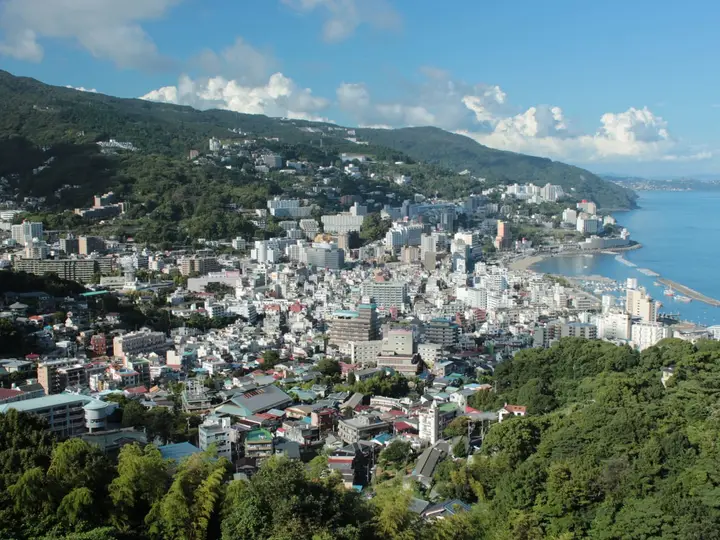
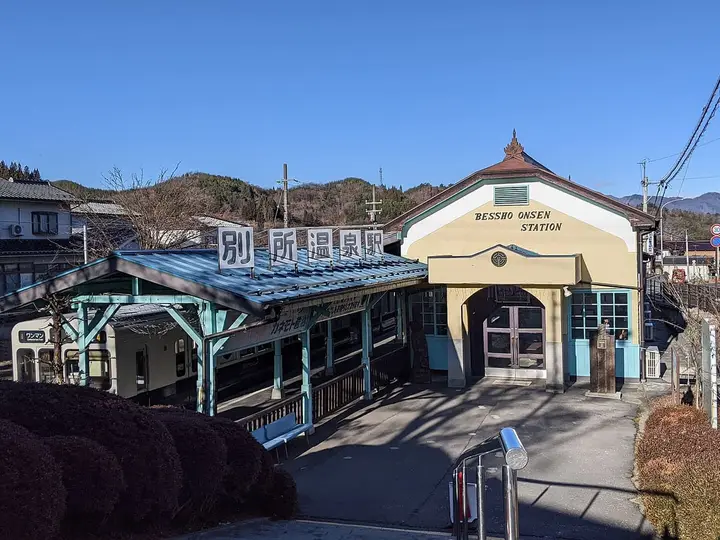
Hottarakashi Onsen
Near Yamanashi, Yamanashi Prefecture, Japan
Two hilltop outdoor baths at about 700 m above the Kofu Basin, one facing Mount Fuji, the other the sunrise and the city lights, opening an hour before dawn every day.
Photos: kaidog (CC0); Asacyan (CC BY-SA 3.0); Σ64 (CC BY 3.0). Resized and cropped for this page.


- Water temperature
- Not published
- Entry
- Paid
- Getting in
- Drive-up
- Type
- Resort or spa
- It opens about an hour before sunrise every day of the year, so you can watch dawn from the water.
- Kocchi no Yu, the original bath, looks straight at Mount Fuji. Acchi no Yu, opened in 2003, is twice the size and faces the sunrise and the Kofu Basin.
- The water is strongly alkaline at pH 10.1 and feels soft on the skin.
- Tattoos are allowed, which is still rare at Japanese day baths.
What to expect
Hottarakashi Onsen sits on a hillside above the town of Yamanashi, about 700 m up on the eastern rim of the Kofu Basin. The name means roughly “left alone”, and the place has kept a deliberately rough-edged feel: two separate open-air bathing areas, a couple of food stands, a log-cabin rest house and a big car park, all on a slope covered with fruit orchards and looking out over the basin.
People come for the view. On a clear morning Mount Fuji rises over the mountains to the south, and the lights of Kofu spread out below after dark. Because the baths open about an hour before sunrise every day of the year, a dawn soak is the classic visit.
There are two baths, each with its own entrance and ticket:
- Kocchi no Yu (“this bath”) is the original. It faces Mount Fuji head-on, with one outdoor bath in wood and one in rock, plus an indoor bath that smells of timber. It is the quieter of the two.
- Acchi no Yu (“that bath”) opened in 2003 and is about twice the size. It looks across the Kofu Basin, so it is the better choice for watching the sun come up and for the night view.
Both are split into men’s and women’s sides. There are no private baths. In rain, the baths keep sedge hats (sugegasa) by the outdoor tubs so you can stay in with your head covered.
The water
The operator describes the water as a strongly alkaline spring at pH 10.1, gentler on the skin than sulphur water and soft to the touch. The prefectural tourism site lists it as a simple spring and says the Acchi no Yu source comes from a fracture zone about 1,500 m below ground. Neither source gives a bathing temperature, and the operator does not say whether the water is heated, circulated or chlorinated.
Prices and booking
Prices are from the operator’s site in October 2026.
| Item | Price |
|---|---|
| One bath, adults | ¥900 |
| One bath, children (0 to 6th grade) | ¥400 |
| Hottarakashi towel | ¥200 |
| Bath towel | ¥1,000 |
| Locker | ¥100 per use |
The fee is per bath. If you want both Acchi no Yu and Kocchi no Yu, you pay twice. Payment is cash only. There is no booking system; you simply turn up.
Shampoo and body soap are free in both baths, and there are hair dryers in the changing rooms. Towels are sold, not rented.
Hours run from about one hour before sunrise until 22:00, with last entry at 21:30. The operator’s rough guide to opening times is 4:30 in summer, 5:30 in spring and autumn and 6:30 in winter. Each bath sometimes closes for repairs while the other stays open. In 2026, Acchi no Yu shut from about 9:00 to 15:00 on August 6, and Kocchi no Yu closed on September 10 and 11. Check the news page on the official site before you go.
Onsen etiquette
Hottarakashi follows the usual Japanese public bath rules, and states a few of its own:
- Wash before you get in, keep towels out of the water and do not swim.
- No swimsuits. Bath covers for breast cancer patients are allowed.
- No phones or cameras in the bathing areas, and no photos or video inside.
- No bathing after drinking alcohol.
- Tattoos are allowed.
Children of any age can come. Under the Yamanashi prefectural ordinance, children up to age 6 may go into the opposite-sex side with a parent; elementary school children should use their own side.
Food and rest
Two stands sit by the car park. Kimagure-ya is known for its egg-on-rice (tamago kake gohan) and its curry, and starts serving at sunrise, which makes it a breakfast stop after a dawn soak. Momotarō serves udon, ramen and a deep-fried soft-boiled egg. A shop, Shinsen Yamanashi, sells local fruit, wine and souvenirs. The log-house rest area is open from opening time until about 16:00. Smoking is outdoors only.
Getting there
The address is 1669-18 Yatsubo, Yamanashi City, off the Fruit Line farm road in the hills above Yamanashi-shi Station.
- By train: JR Chūō Line limited express from Shinjuku to Yamanashi-shi Station, about 90 minutes. From there a taxi takes about 10 minutes and costs about ¥2,400 each way. The front desk has taxi phone numbers for the trip back.
- By bus: a municipal bus runs 4 times a day to Fruit Park, about a 20-minute walk from the baths. With so few buses, it is no help for a sunrise visit.
- By car: about 25 minutes from Katsunuma IC or Ichinomiya-Misaka IC on the Chūō Expressway, about 30 minutes from Kofu via Route 20, or about 90 minutes from Chichibu via Route 140 and the Karisaka Tunnel. Parking is free for about 280 cars.
- Winter: snow is fairly light, but the operator recommends winter tyres or chains because the road can ice over.
When to go
Weekday daytime is the quietest. Weekends and public holidays are busy, and the operator singles out the middle day of a three-day weekend as the most crowded. For the sunrise, check the sunrise time the day before and aim to arrive soon after opening. For the night view, come 30 to 60 minutes after sunset, when the basin lights come up and stars appear overhead. The operator is clear that whether you see Fuji depends entirely on the weather.
Where to stay nearby
The Hottarakashi Camp site is a 5-minute walk from the baths and is the easiest way to be in the water at opening time. Otherwise, the town of Yamanashi below the hill and the city of Kofu, about 30 minutes away by car, have hotels and inns. If you are building a wider Fuji-area trip, Hakone in Kanagawa has its own listings: Hakone Kowakien Yunessun and Hakone Yuryo.
Safety notes
- Dark and cold: pre-dawn visits mean walking from the car park in the dark, and winter mornings at 700 m are well below freezing. Bring a torch and warm layers for the walk back.
- Heat: the operator gives no bathing temperatures. Test the water, take breaks, and drink water.
- Road ice: the access road can freeze in winter. Drive slowly on the way up before sunrise.
- Alcohol: bathing after drinking is banned. Have your beer after the last soak, not between baths.
Map and nearby springs
GPS: 35.70629, 138.65212
Hottarakashi Onsen: common questions
What time does Hottarakashi Onsen open?
About one hour before sunrise, so the time changes through the year. The operator gives rough times of 4:30 in summer, 5:30 in spring and autumn, and 6:30 in winter. It closes at 22:00, with last entry at 21:30, and is open every day of the year.
How much does Hottarakashi Onsen cost?
Each bath costs ¥900 for adults and ¥400 for children from newborns to 6th grade (2026). Acchi no Yu and Kocchi no Yu are separate, so bathing in both costs ¥1,800 for an adult. Payment is cash only. A towel is ¥200 and a bath towel ¥1,000, and lockers take a ¥100 coin.
Which bath has the Mount Fuji view?
Kocchi no Yu, the original bath, faces Mount Fuji. Acchi no Yu, which opened in 2003 and is twice the size, looks over the Kofu Basin and is better for sunrise and the night view. Fuji is only visible in clear weather.
Are tattoos allowed at Hottarakashi Onsen?
Yes. The operator says guests with tattoos are welcome to bathe. Swimsuits are not allowed, except bath covers worn by breast cancer patients.
How do I get to Hottarakashi Onsen without a car?
Take a JR Chūō Line limited express from Shinjuku to Yamanashi-shi Station, about 90 minutes, then a taxi for about 10 minutes (about ¥2,400 one way). A city bus runs 4 times a day to Fruit Park, about a 20-minute walk from the baths.
Can children go to Hottarakashi Onsen?
Yes, from age 0. Under a Yamanashi prefectural ordinance, a child can go into the opposite-sex bath with a parent only up to age 6. Elementary school children should use the bath for their own sex.
Closest hot springs to Hottarakashi Onsen
Near Hakone-Yumoto
Resort or spa
Near Hakone-Yumoto
Resort or spa