Hell's Gate Mud Bath & Spas (Tikitere)
Near Rotorua, Bay of Plenty, New Zealand
A geothermal reserve and mud spa at Tikitere, just east of Rotorua, where you coat yourself in warm grey mud, then soak in sulphur pools at 99-106°F37-41°C.
Photo: Pseudopanax at English Wikipedia (Public domain). Resized and cropped for this page.

- Water temperature
- 99-106°F37-41°C
- Entry
- Paid
- Getting in
- Drive-up
- Type
- Resort or spa
- The operator says it runs the only geothermal mud spa in New Zealand, with mud collected from the reserve.
- Sulphur pools run 99-106°F37-41°C depending on the season, followed by a cool plunge pool.
- Kakahi Falls, which the operator calls the largest hot waterfall in the Southern Hemisphere, is on the geothermal walk.
- A free shuttle runs from central Rotorua three times a day if you book ahead.
What to expect
Hell’s Gate is a commercial geothermal park on the north-eastern edge of Rotorua, in an area known in Māori as Tikitere. It has two halves. One is a walking track through about the most active geothermal ground you can visit near the city: boiling pools, steaming cliffs, a mud volcano and Kakahi Falls, a hot waterfall. The other half is the spa, where you climb into a tub of warm, silky mud, coat yourself from head to toe, then rinse off and sink into sulphur pools.
The mud bath is the reason most people come. The operator says it is the only geothermal mud spa in New Zealand. Each container holds 40 to 60 kg of fine mud collected from the reserve, sitting in geothermal water. The texture is smooth rather than gritty, and the smell of sulphur is strong. After the mud, you move to the outdoor sulphur spas, then to a cool plunge pool if you want a shock to finish.
This is a staffed, booked attraction with changing rooms and showers, not a wild pool. The bathing areas are outdoors but have shade covers, so rain does not stop a session.
The mud bath and spas
The operator puts the spa water at 99-106°F37-41°C, varying with the season and the weather on the day. The session order is set: mud first, then the sulphur spa, then the cool plunge pool.
Two rules matter more than anything else:
- 20 minutes in the mud per person per day. Hell’s Gate set this after consulting health professionals and kaumātua. Staff enforce it.
- Drink water and keep children’s soaks short. Mud and hot mineral water together are tiring, especially for kids.
Changing rooms have showers and body wash. Your belongings go in a portable container that is stored in a secure hut while you bathe. Swimsuits, shorts and towels can be hired at reception for NZ$5 per item, and these are commercially laundered after each use. There is also a small range of swimsuits for sale.
Prices and booking
Hell’s Gate sells three main packages (2026 prices on the operator’s site):
- Hell’s Gate Mud Bath and Spas: mud bath, sulphur spas and cool plunge pool. Adult NZ$90, child NZ$45, family NZ$250.
- The Hell’s Gate Experience: the mud bath and spas plus the geothermal walk (1 to 1.5 hours) and a Māori carving session. Adult NZ$115, child NZ$57.50, family NZ$320.
- Hell’s Gate Geothermal Walk: the walk and carving only, no bathing. Adult NZ$45, child NZ$22.50, family NZ$125.
Children are counted as ages 5 to 15. The minimum age is 2.5 years for the mud bath and 6 months for the sulphur spa, and under-15s must be supervised by a caregiver. Guided tours of the reserve are complimentary, or you can go self-guided.
Booking ahead is recommended and can be done online, by phone (+64 7 345 3151) or by email. In winter the operator has also run a separate evening Twilight Spa session; check its website for dates.
Getting there
Hell’s Gate is at 351 State Highway 30, Tikitere, just outside Rotorua’s city centre. From the city, head east on SH30. About five minutes past Rotorua Airport, turn right towards Whakatāne; Hell’s Gate is 3 km (1.9 miles) down that road. Typing “Hell’s Gate” into a map app works better than the address. There is plenty of parking for cars and campervans.
If you do not have a car, the operator runs a free shuttle from central Rotorua. It must be booked by phone, and booking a pick-up automatically books you on the matching return:
- Pick-up 9:50am, return from Hell’s Gate 1:30pm
- Pick-up 1:50pm, return 5:30pm
- Pick-up 4:15pm, return 7:30pm
When to go
Hell’s Gate is open every day except Christmas Day. From 30 September 2026 the operator extended its hours to 10am to 9pm for the summer, with last entry at 5:30pm for the walk and the Experience package and 7:30pm for the mud bath. Hours can be shorter in the cooler months, so check the contact page before an evening visit.
Rain is no reason to cancel. Steam and activity in the reserve increase noticeably in wet weather, and the spa areas are covered. Ponchos are sold at the ticket office if you forgot a jacket. Midday on summer weekends and during school holidays is the busiest time; mornings are quieter.
The geothermal walk
The walk through the reserve takes 1 to 1.5 hours and follows tracks made from local stone. It passes steaming fumaroles, boiling pools (some above 212°F100°C), land coral, sulphur crystals and what newzealand.com describes as the largest mud volcano in New Zealand. Kakahi Falls, a waterfall of warm geothermal water in native bush, is sacred to local Māori. Stay on the marked tracks: the ground here is genuinely dangerous.
History and culture
The area’s Māori name, Tikitere, comes from a story more than 650 years old. A woman named Hurutini, mistreated by her husband, threw herself into a boiling pool, and her mother’s cry of grief, “Auē tāku tiki nei,” was shortened to Tikitere. The operator says local Māori have used the mud and waters for more than 800 years, including to heal warriors after battle. Tikitere has drawn spa visitors since 1871. The English name dates from 1934, when the playwright George Bernard Shaw reportedly called the place “the very gates of hell.”
Treat Kakahi Falls and the reserve as a place with cultural weight. Follow guide instructions about where you can go and what you can touch.
Where to stay nearby
There is no lodging at Hell’s Gate. Rotorua, a short drive west, has the full range of hotels, motels, holiday parks and backpacker hostels, and the shuttle times make it easy to visit from the city without a car.
Safety notes
- Time in the mud: keep to the 20-minute guideline, drink water, and get out if you feel faint.
- Pregnancy and health conditions: if you are pregnant or have a heart condition or other health concern, ask your doctor before booking. The operator’s FAQ also points people to a health professional when in doubt.
- Jewellery and swimwear: the mud and water tarnish metal, especially silver. Light-coloured swimsuits can discolour; the operator suggests rinsing at Hell’s Gate, then washing the suit separately in cold water with cloudy ammonia and drying it on a line.
- On the walk: boiling water and unstable ground sit right beside the track. Keep children close and stay behind the barriers.
- Accessibility: the spa facility is wheelchair accessible with suitable bathrooms. The stone tracks through the reserve suit only off-road wheelchairs with an experienced helper.
Map and nearby springs
GPS: -38.06441, 176.36070
Hell's Gate Mud Bath & Spas (Tikitere): common questions
How much is the Hell's Gate mud bath in 2026?
The Mud Bath and Spas package is NZ$90 for adults, NZ$45 for children aged 5 to 15 and NZ$250 for a family. The Hell's Gate Experience, which adds the guided or self-guided geothermal walk and a Māori carving session, is NZ$115, NZ$57.50 and NZ$320. The walk on its own is NZ$45 for adults.
How long can you stay in the mud bath at Hell's Gate?
Hell's Gate recommends 20 minutes per person per day. The limit came from consultation with health professionals and kaumātua (respected elders), and staff apply it for safety reasons.
Can children go in the mud baths at Hell's Gate?
Yes. The minimum age is 2.5 years for the mud baths and 6 months for the sulphur spa. Children under 15 must be supervised at all times, and the operator suggests short soaks and plenty of water for kids.
What should I bring to Hell's Gate?
Bring an old or dark swimsuit and a towel, or hire either at reception for NZ$5 per item. Leave jewellery at home: the mud and water tarnish most metals, silver in particular, and staff suggest keeping jewellery off for 24 hours after bathing. Showers and body wash are provided.
How do I get to Hell's Gate from Rotorua?
Drive east from the city on State Highway 30 past Rotorua Airport. About five minutes past the airport, turn right towards Whakatāne, and Hell's Gate is 3 km (1.9 miles) along at 351 State Highway 30, Tikitere. A free shuttle from central Rotorua runs if you book by phone.
Closest hot springs to Hell's Gate Mud Bath & Spas (Tikitere)
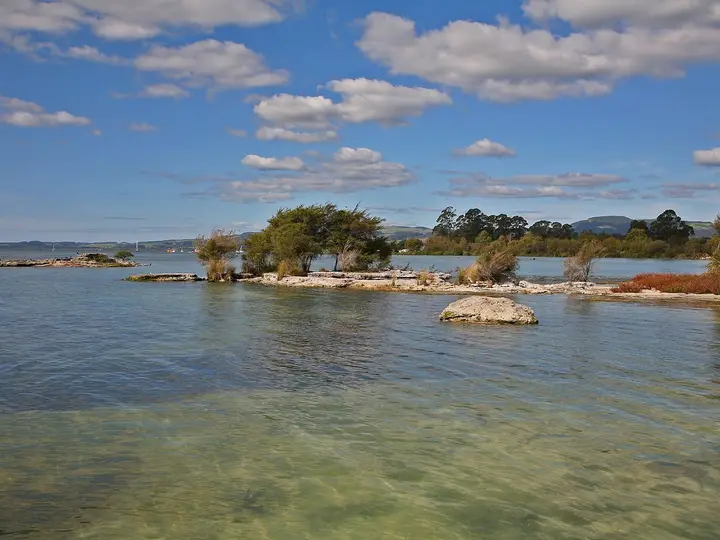
Wai Ariki Hot Springs and Spa
Bay of Plenty, New Zealand
7 mi away, ~10 min drive
Temp n/a Paid Drive-up
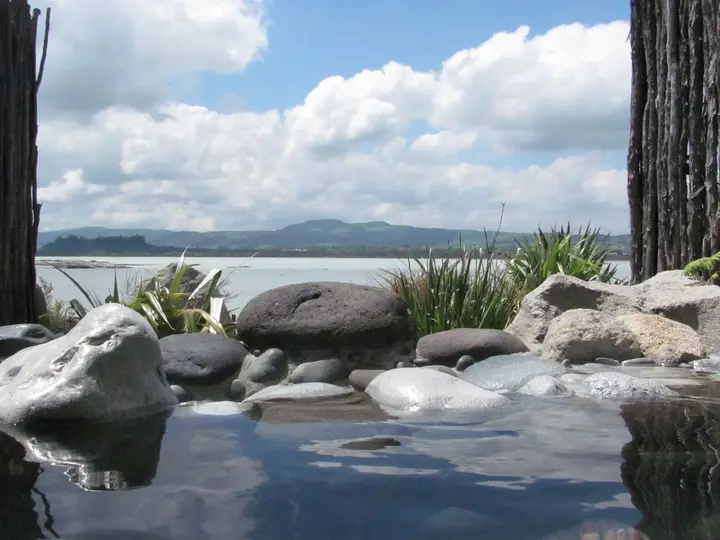
104°F40°C
Resort or spa
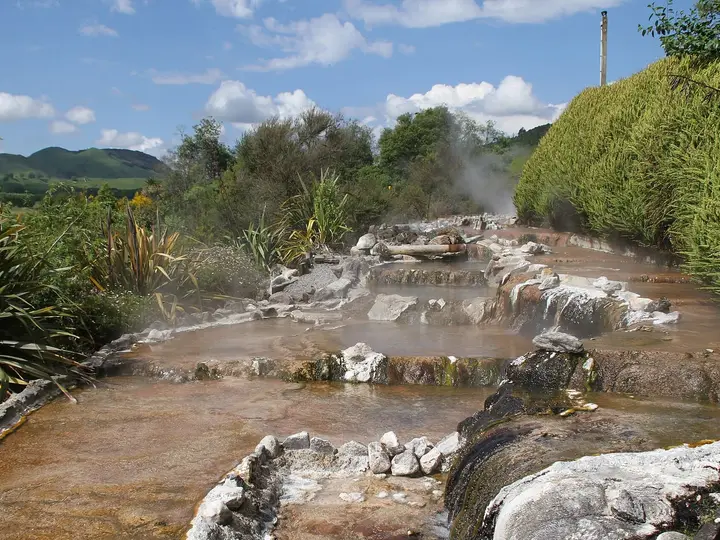
Waikite Valley Thermal Pools
Waikato, New Zealand
18 mi away, ~30 min drive
86-106°F30-41°C Paid Drive-up
Kerosene Creek (Hakereteke Stream)
Waikato, New Zealand
19 mi away, ~30 min drive
Temp n/a Free Short walk
Near Taupō
Resort or spa
Wairakei Terraces and Thermal Health Spa
Waikato, New Zealand
41 mi away, ~1 hr drive
Temp n/a Paid Drive-up